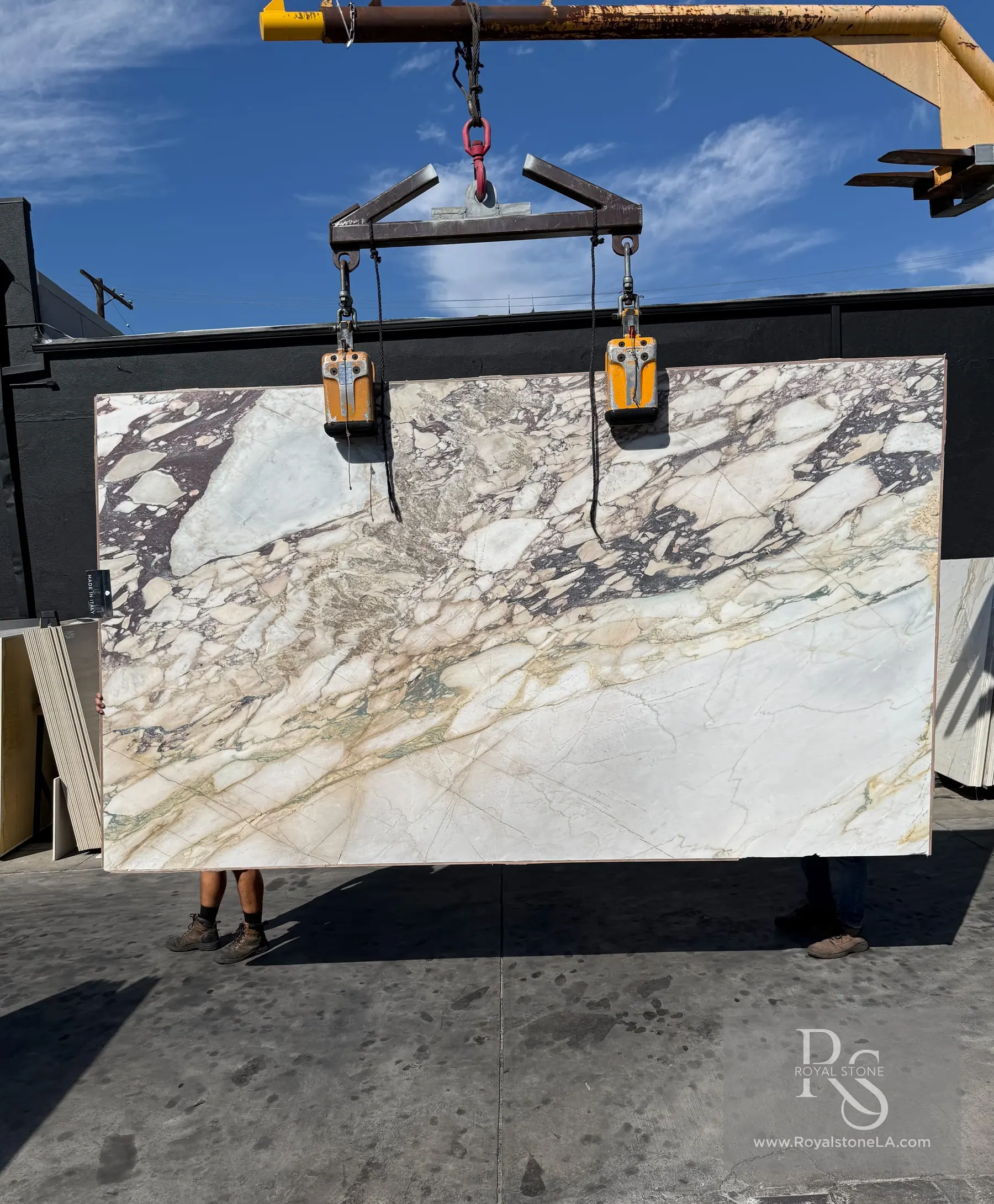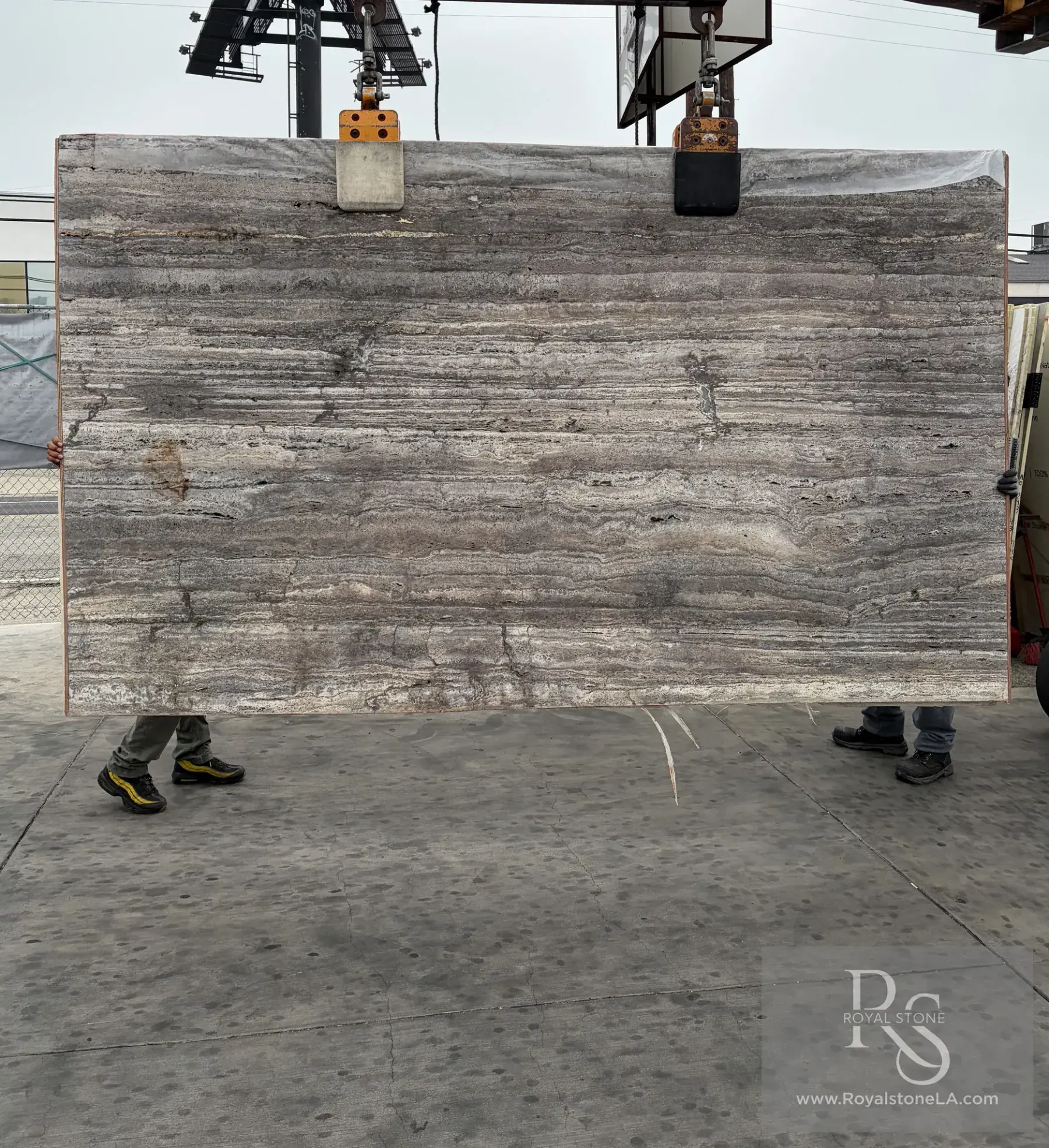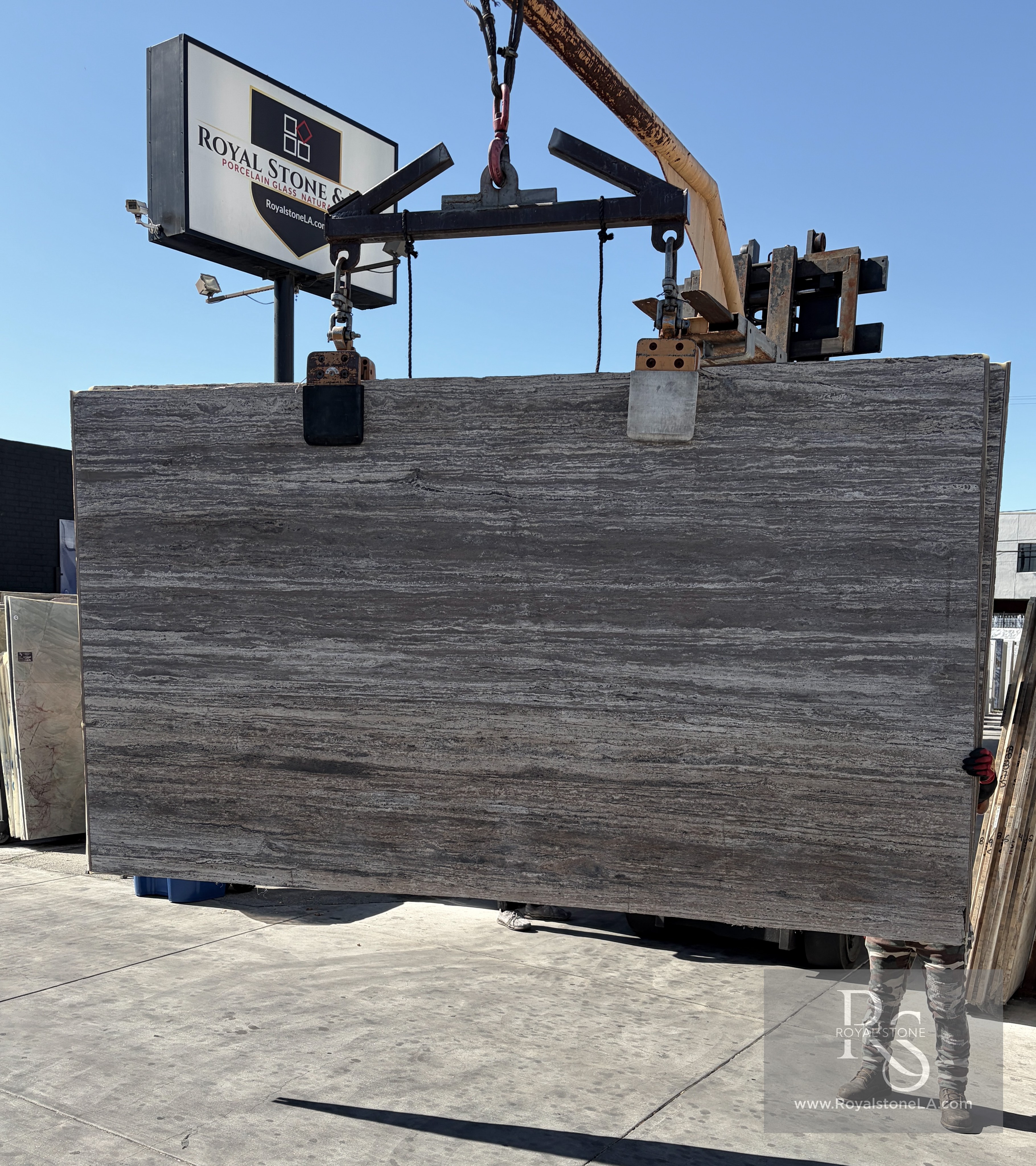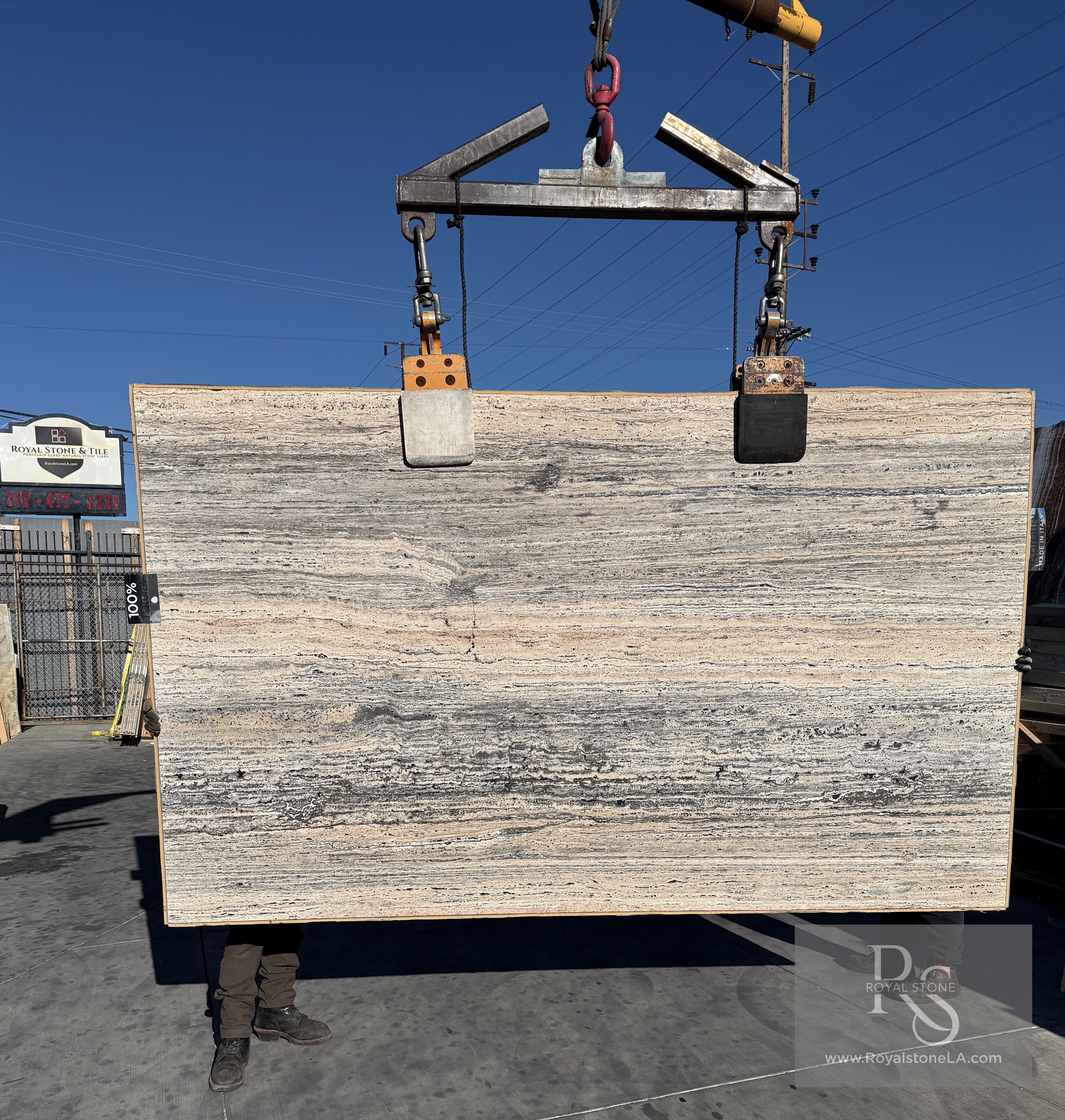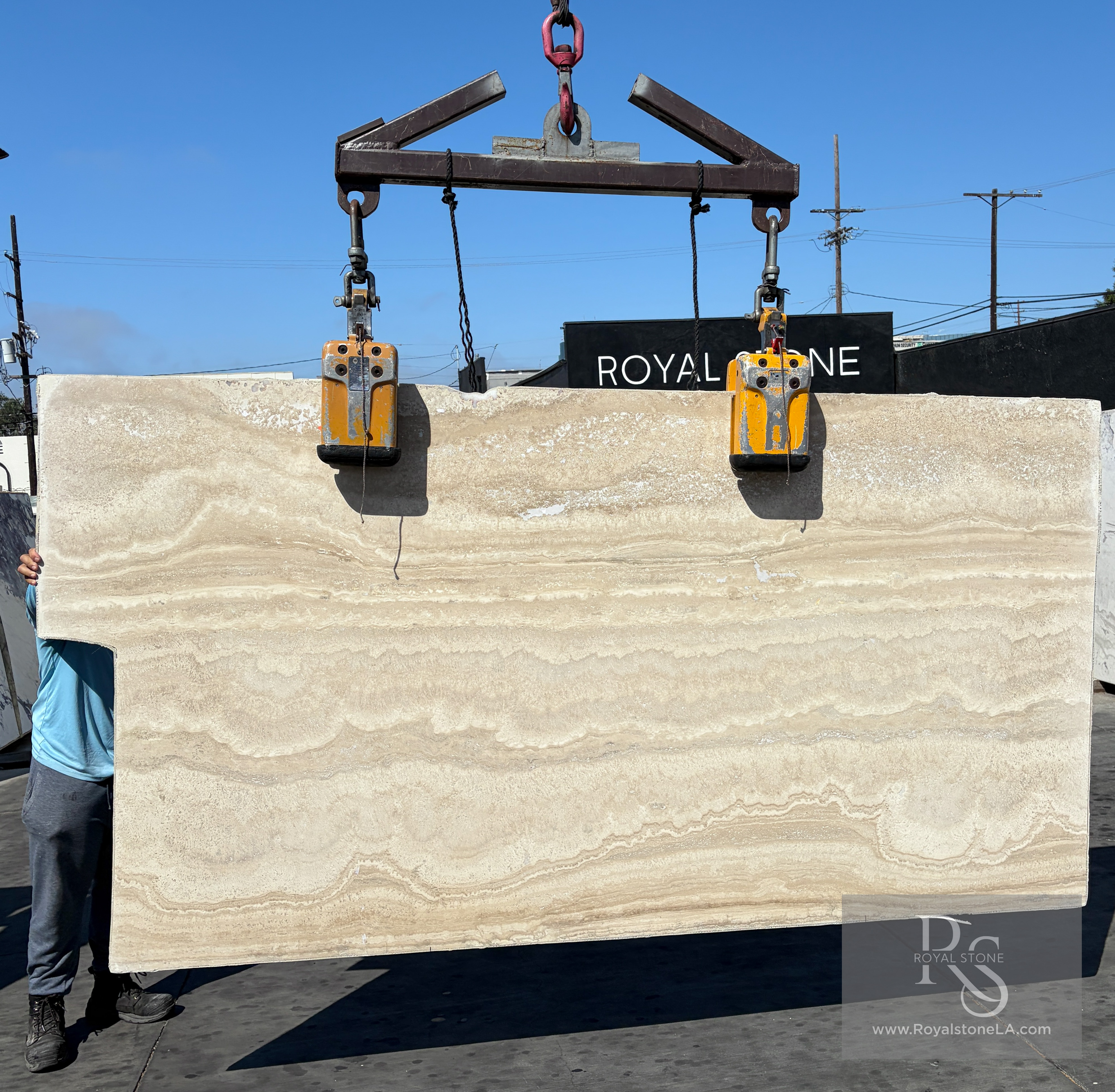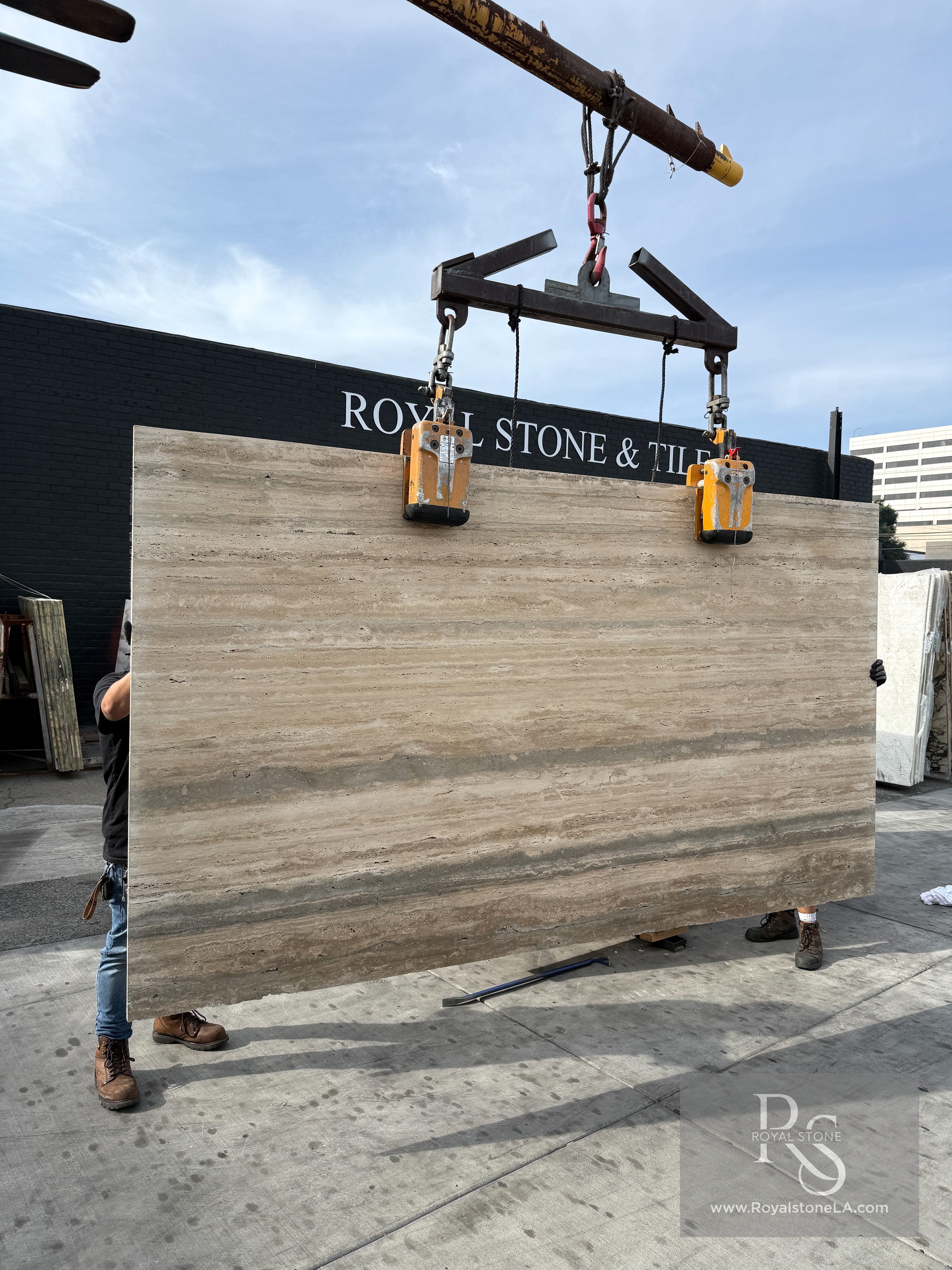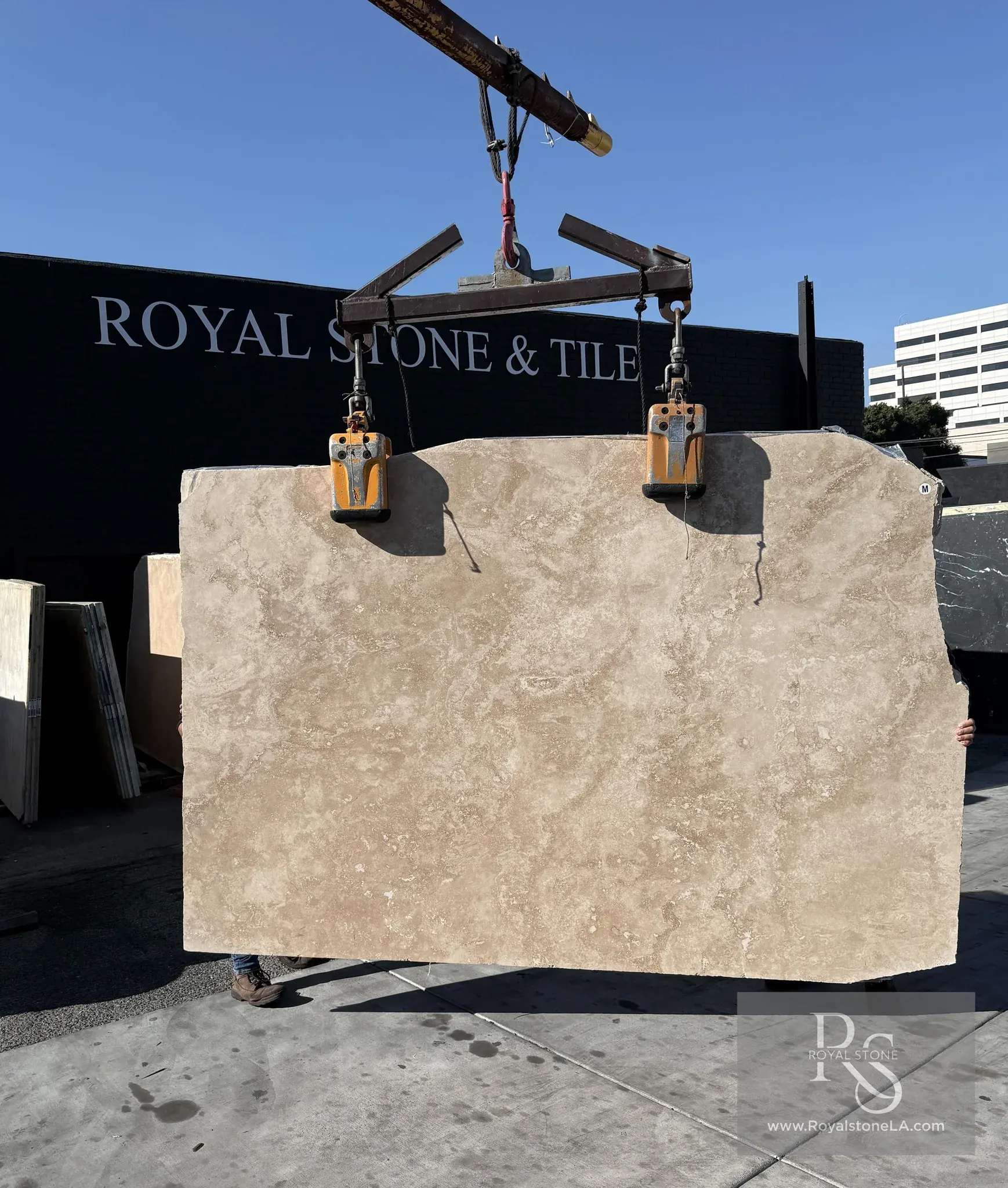
Cross-cut travertine is the calmer read. Where vein-cut reveals the bedding plane as long horizontal current, cross-cut slices perpendicular to the layers and the surface resolves into soft, cloud-like passages — warm cream and oat tones with the occasional rust mineral pocket and dispersed natural vug. The pattern is gentler, more atmospheric, less directional. It's the cut you reach for when you want travertine to read as a quiet field rather than a graphic horizontal stripe.
Filled and honed. The natural vugs are tightened with a tinted resin and the face is ground to a soft matte. That combination makes the slab usable on horizontal work — kitchen islands and perimeter runs, primary bath vanities, dining surrounds, bar tops — without the maintenance baggage of an open-pore surface. The matte hand also reads correctly in California sun: no glare on a polished cross-cut field, and the cream warmth doesn't go yellow.
“The natural vugs are tightened with a tinted resin and the face is ground to a soft matte.”
Architecturally, cross-cut filled and honed travertine pairs cleanly with plaster, lime wash, unlacquered brass, walnut, oak, and warm whites. It's the travertine selection for projects that want the material as a textural ground rather than a hero — kitchens that should feel quiet, primary baths that lean spa, residential bars, and any surface where wood millwork and warm metal need a neutral stone to sit against.
2cm, 72" × 110". On the floor at Royal Stone. Designers and architects working in Los Angeles, Beverly Hills, Bel Air, Pacific Palisades, and Malibu — walk it in daylight. Cross-cut travertine shifts character from yard light to interior light, and the cream warms considerably under tungsten.
Tagged