Onyx
Translucent calcareous stone, formed slowly from mineral-rich water and ready to be lit from behind. Onyx is the material designers reach for when a single surface has to do the talking.
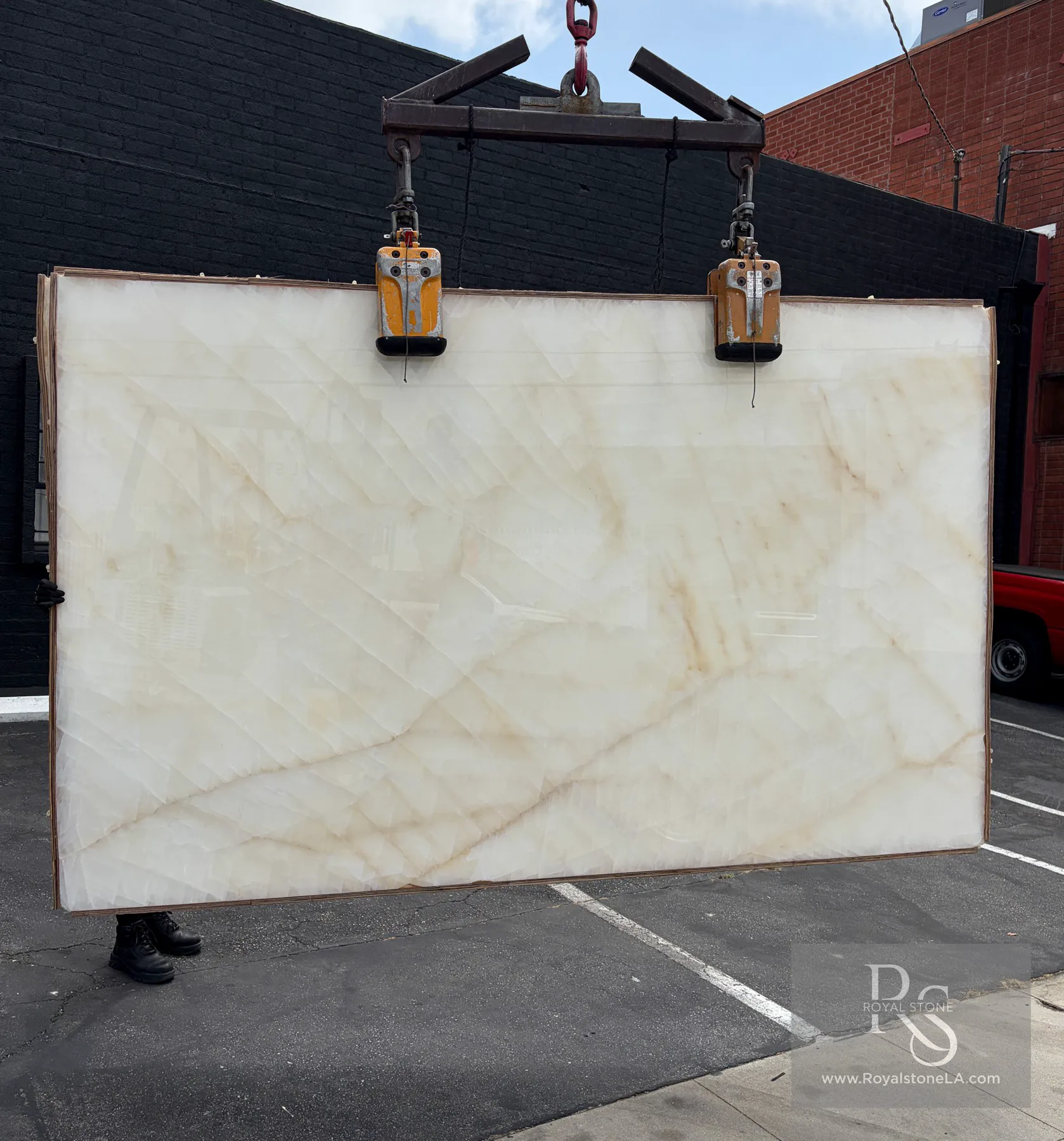
White Onyx Select · Onice Bianco — Polished
On Onyx
No. 04
Quarried in Iran, Pakistan, Mexico, Italy, and Turkey. Output is small, blocks are irregular, and each slab is resin-stabilized before it reaches the yard.
Onyx is a chemical sedimentary stone — bands of calcite laid down by groundwater over thousands of years. The bedding is what makes the slab: vein-cut runs the bands as long horizontal strata, cross-cut takes the cut perpendicular for concentric cloud-like pools, and wave-cut sits between the two with sweeping diagonals.
The defining property is translucency. Every onyx slab worth specifying should be walked with a flashlight to the back, or lit from behind in the yard — the read of the stone changes completely when light passes through it. Bars, fireplace surrounds, vanity panels, and powder bath walls are the canonical applications, almost always backlit with a discreet LED panel.
Onyx is structurally softer than marble and well below quartzite. It belongs on vertical surfaces and decorative horizontals — not on a daily-use kitchen island. Most slabs are sold resin-stabilized (Antolini AVP and equivalents); ask before specifying for water-exposed applications.
Translucent
Light Behavior
2cm
Standard Gauge
1 of 1
Every Slab
Onyx · Current Lots
Onyx,
currently on the floor.
Translucent onyx and TraOnyx slabs in stock now. Tap any slab for the full study, and ask us to light it from behind in person.
Showing 11 of 11 slabs
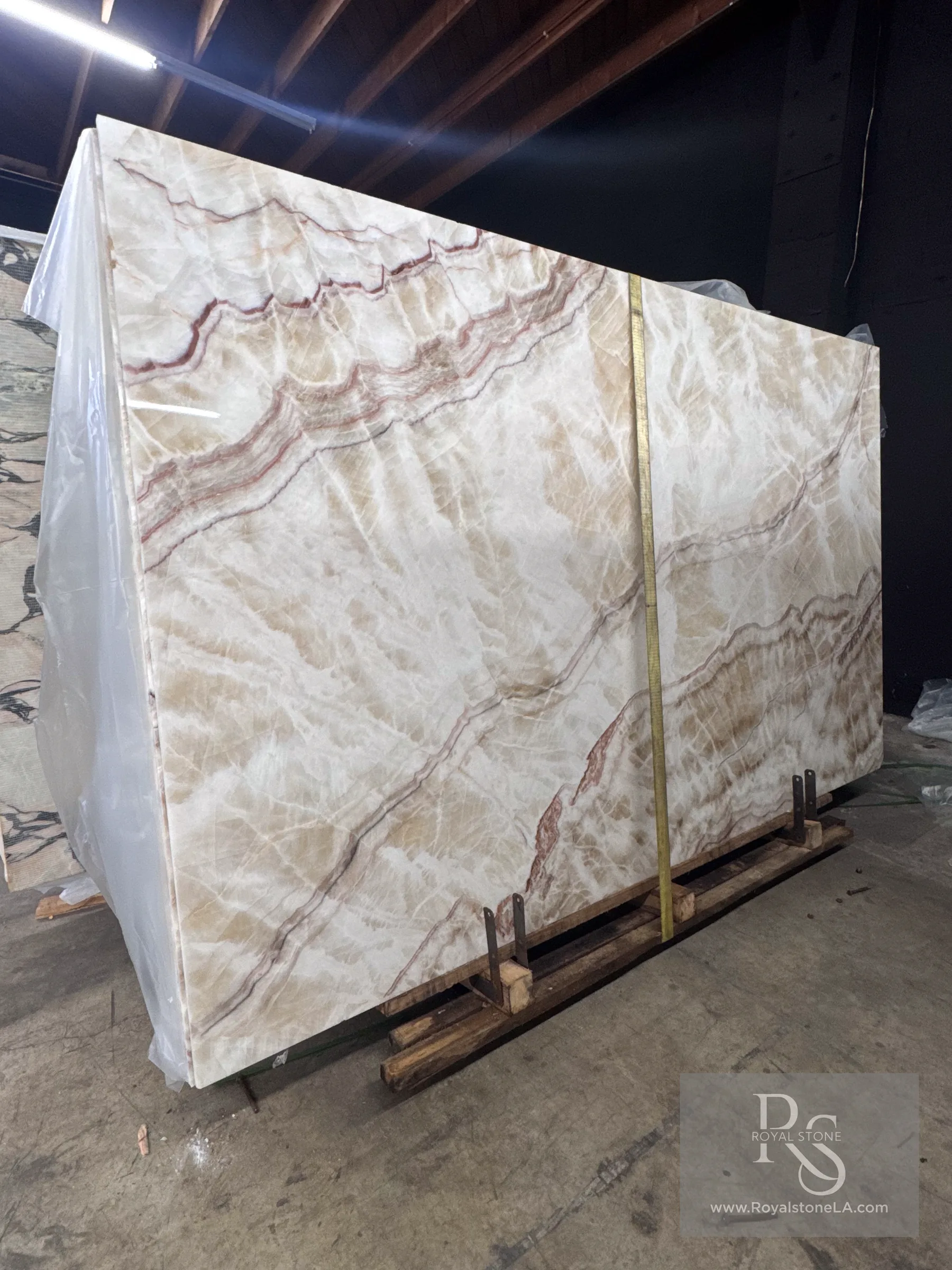
Slab Arrival
2cm Channel White Onyx Vein Cut Polished Finish 70" × 113"
Quartzite slabs in Los Angeles →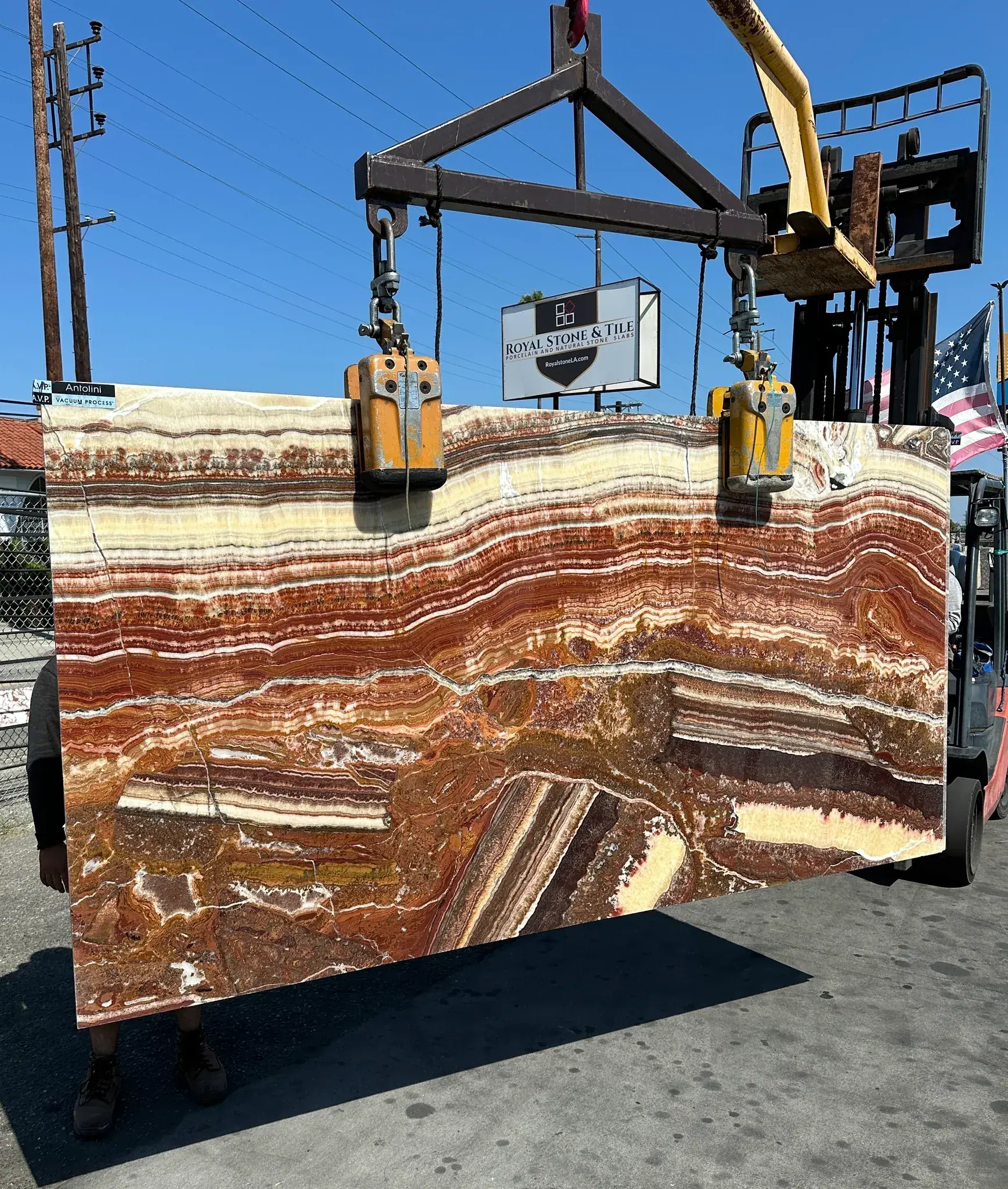
Slab Arrival
Antolini Red Onice Fantastico Polished 56" × 110"
Antolini dealer in Los Angeles →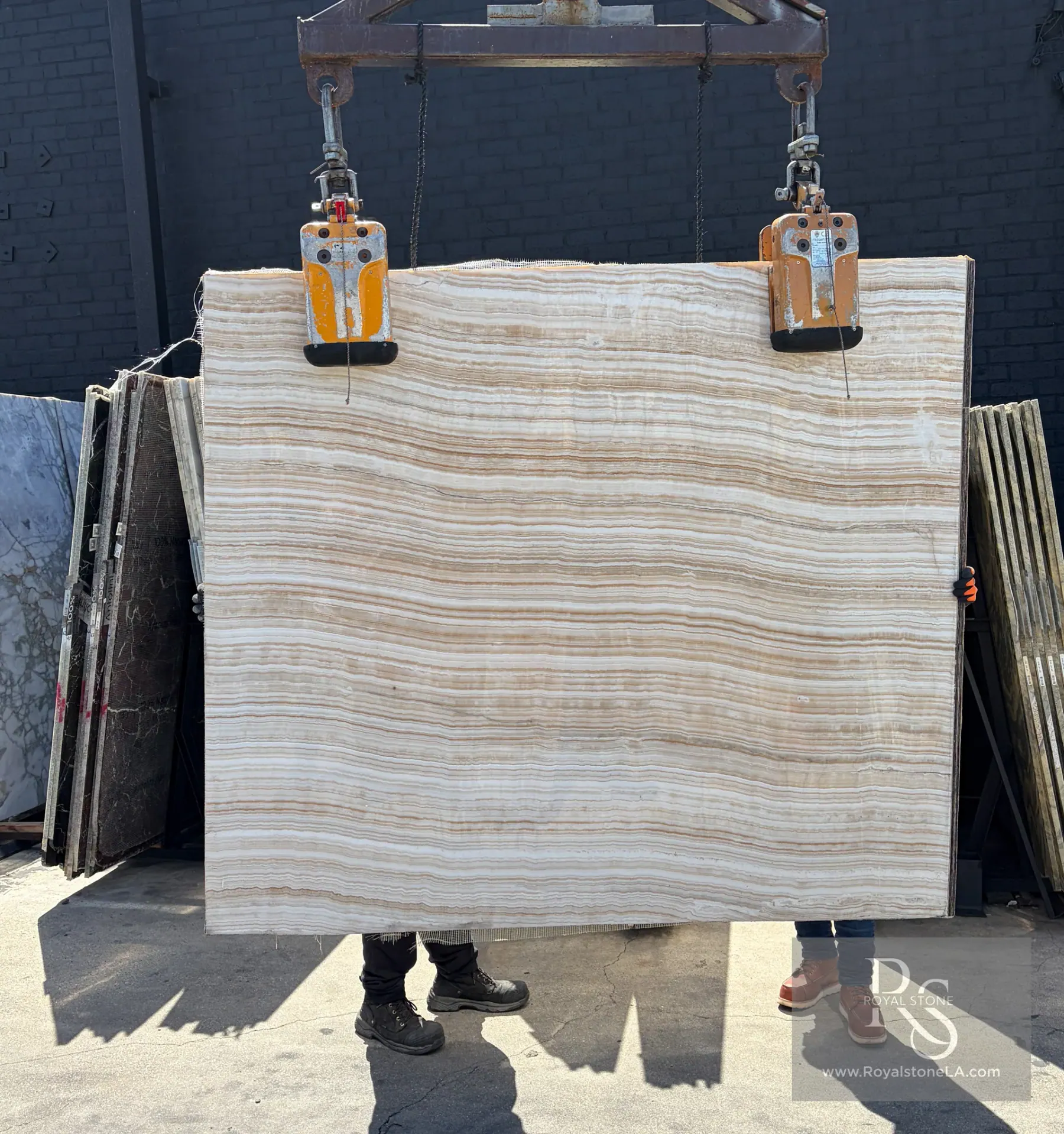
Slab Arrival
Bianco Ivory Linear White Onyx Polished 72" × 66"
Italian marble slabs in Los Angeles →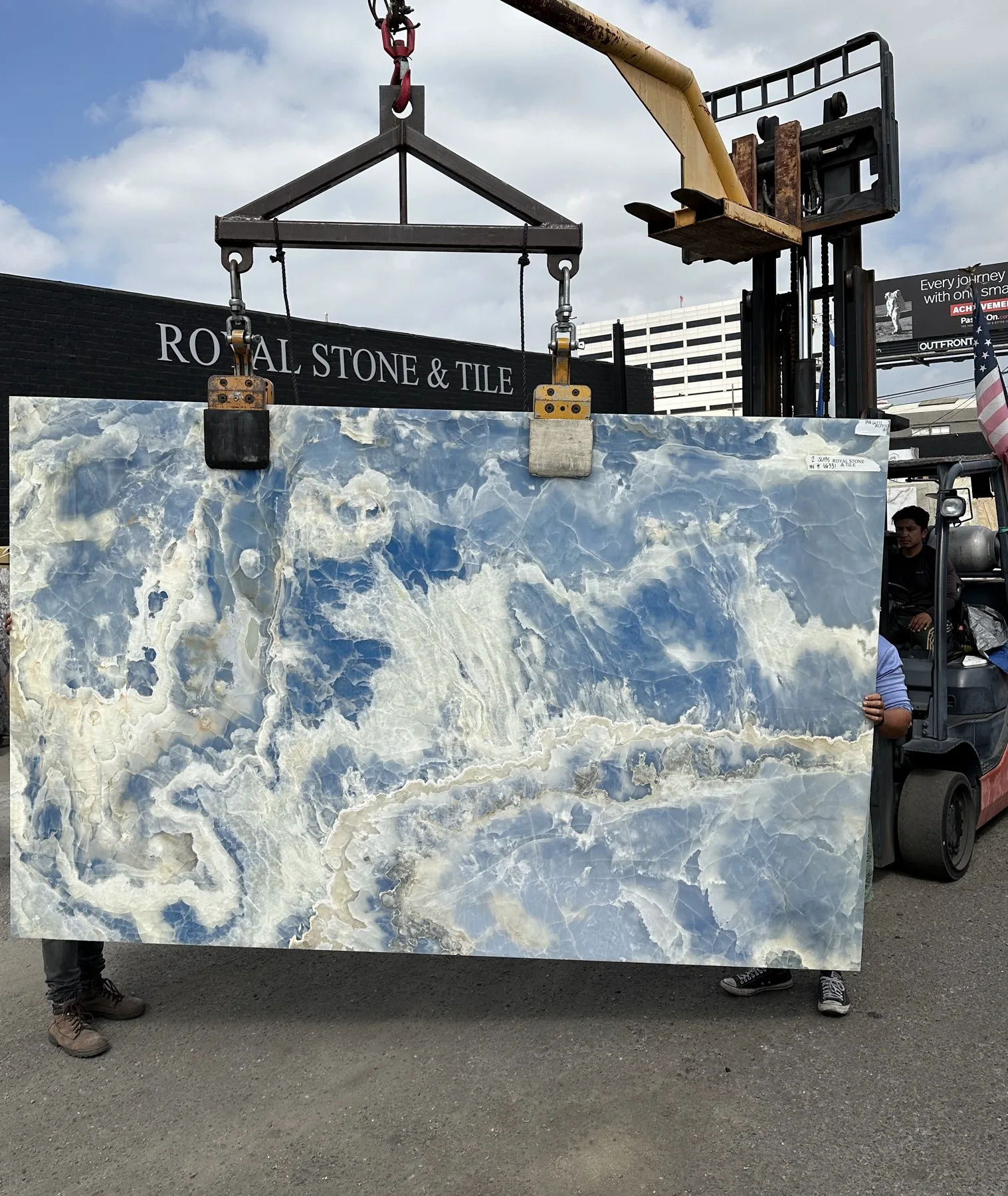
Slab Arrival
Blue Onyx Polished
Italian marble slabs in Los Angeles →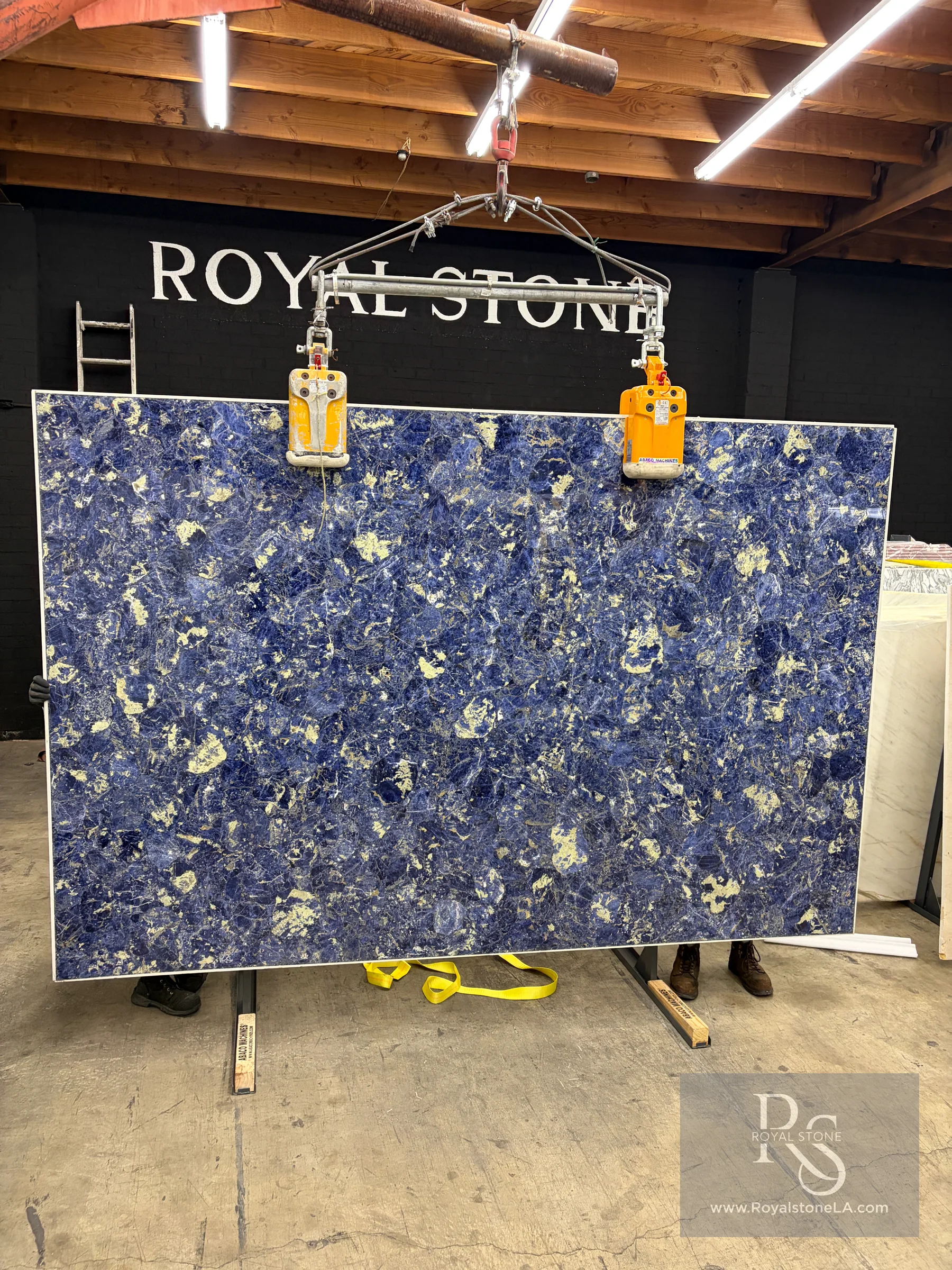
Slab Arrival
Blue Sodalite Semi-Precious Slab — Aluminum Backed, 73" × 126"
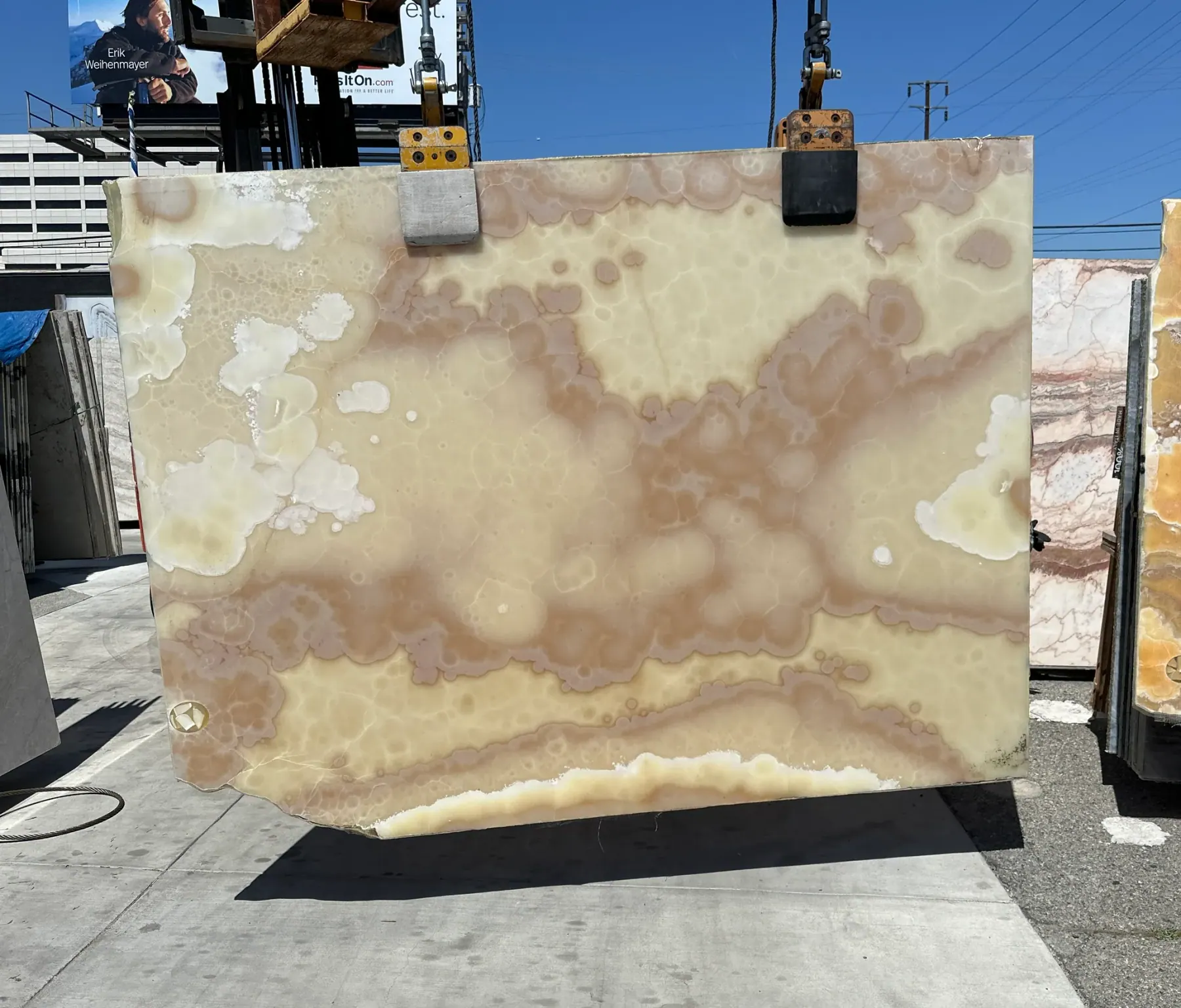
Slab Arrival
Honey Onyx Cross Cut Polished 102" × 69"
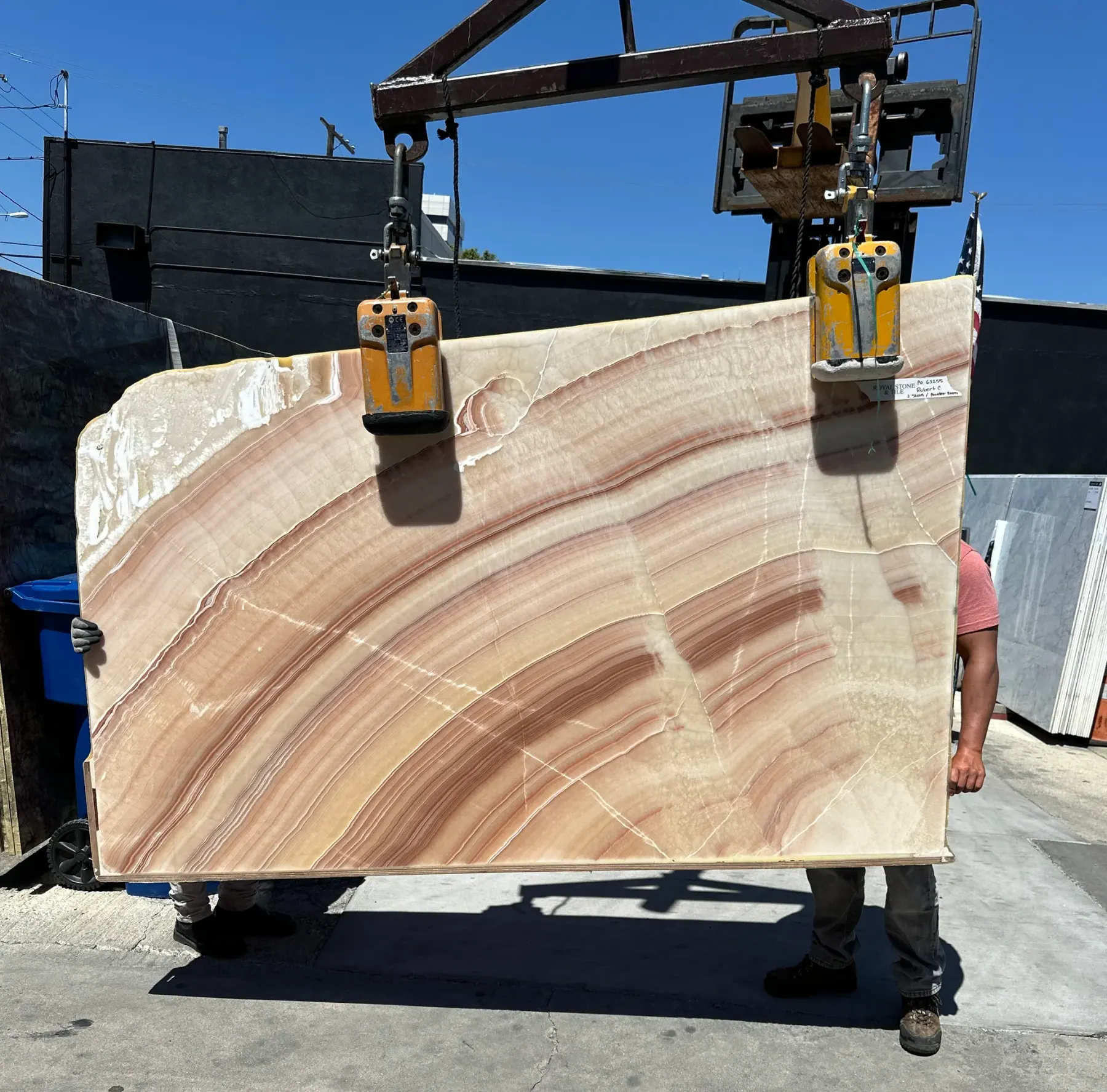
Slab Arrival
Honey Onyx Pure Wave Cut Polished 87" × 54"
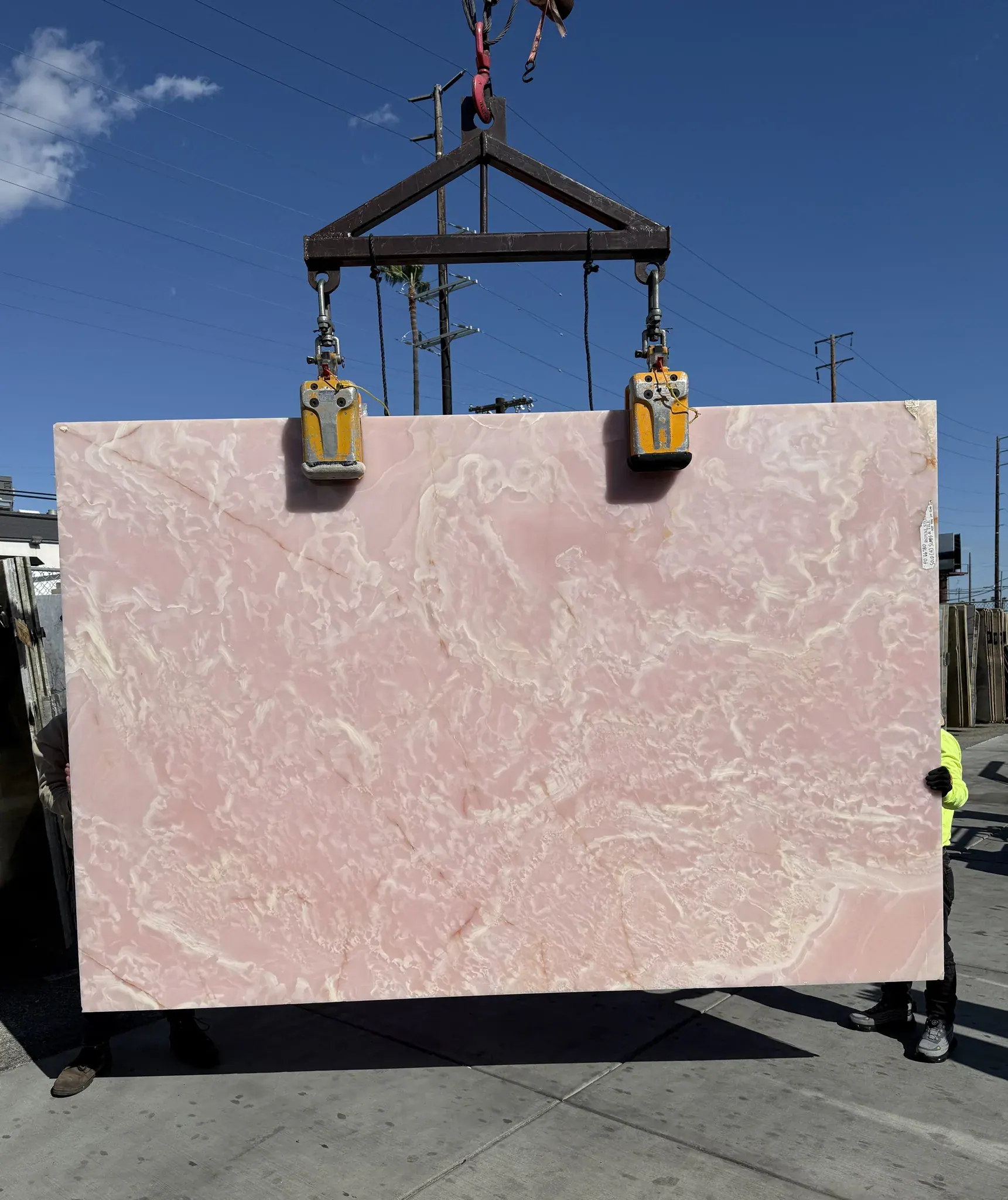
Slab Arrival
Pink Onyx Onice Rosa Polished
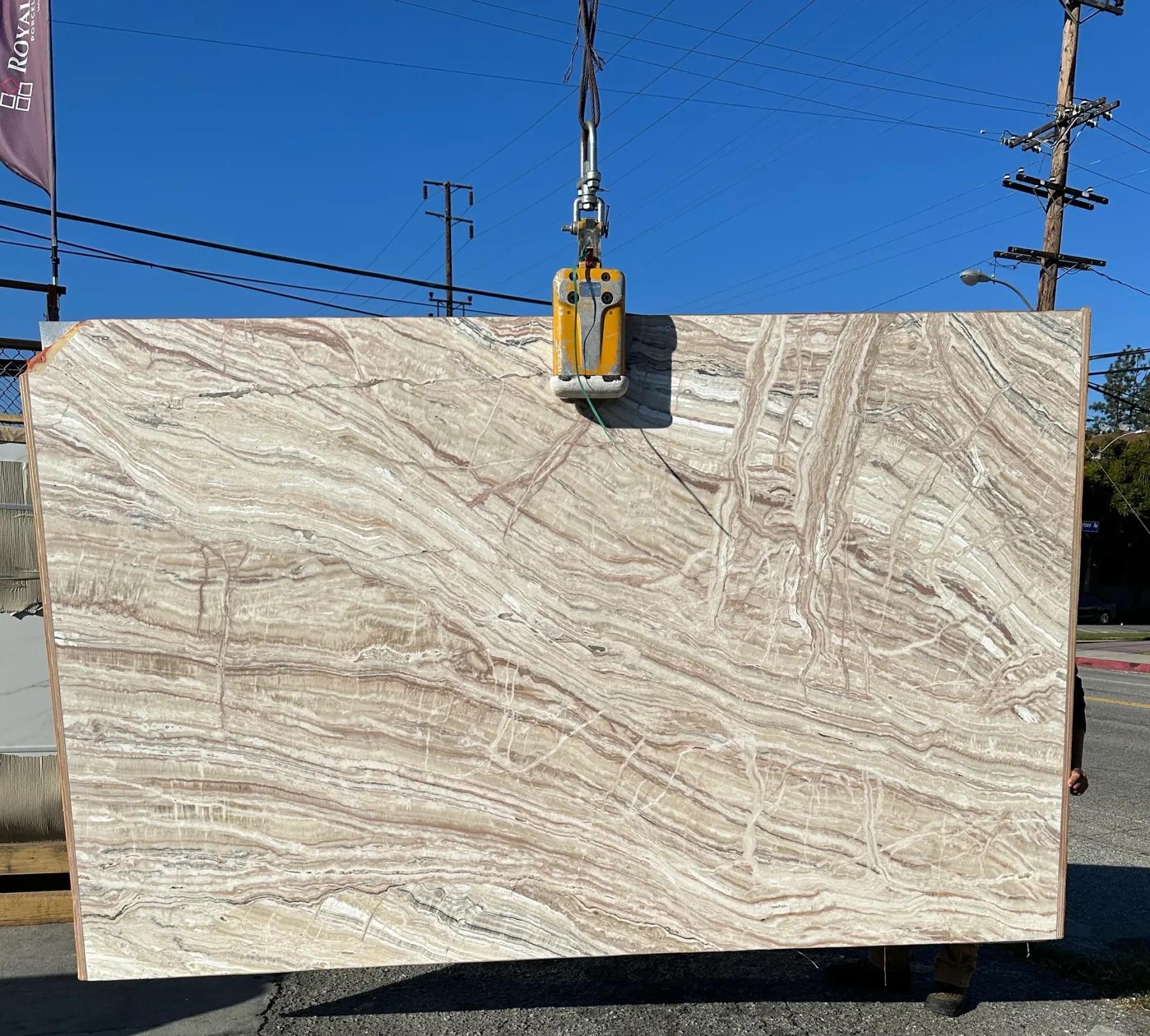
Slab Arrival
Synergy TraOnyx Rainbow Creme Leathered 71" × 113"
Travertine slabs in Los Angeles →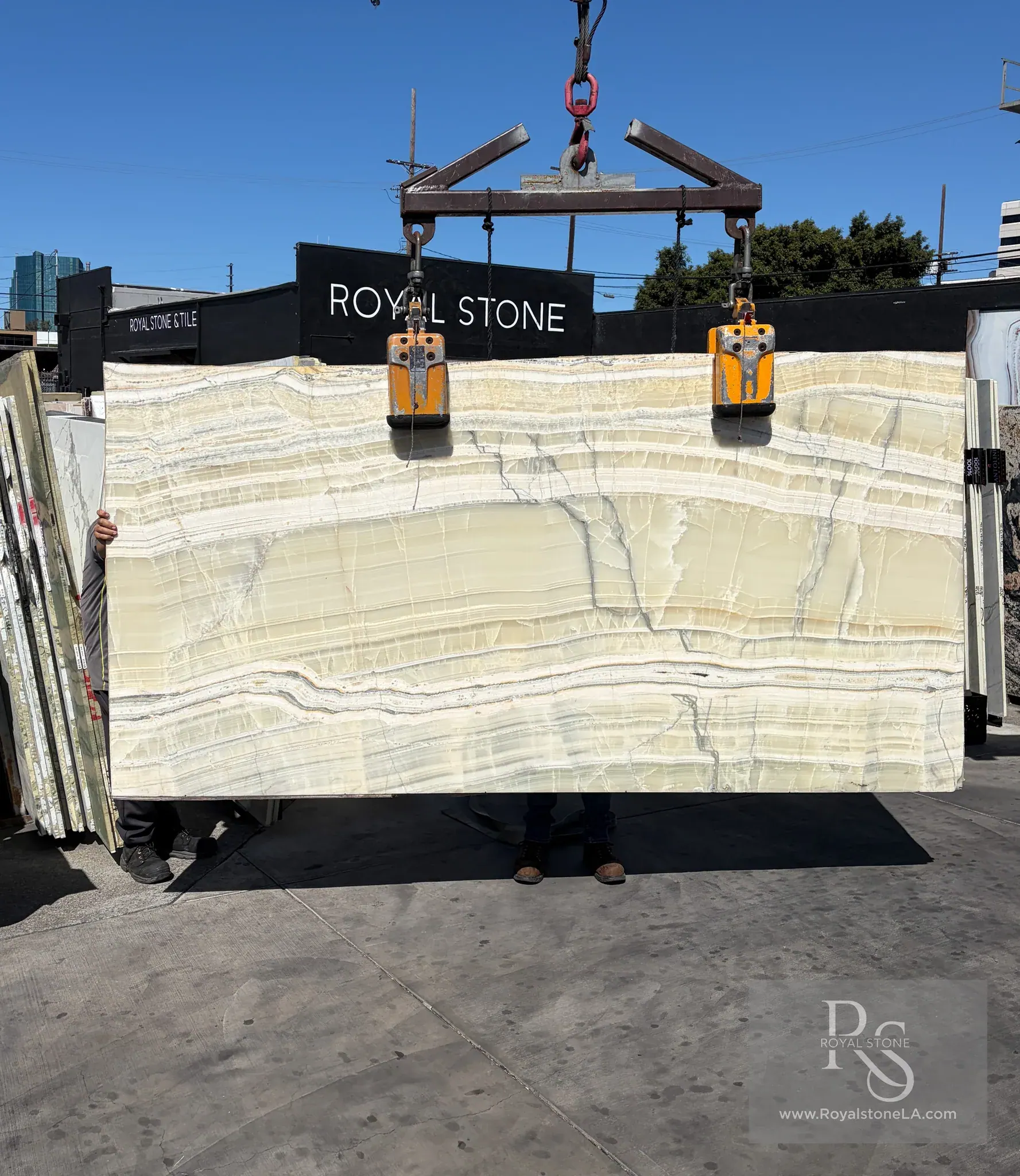
Slab Arrival
Vanilla Sage Vein Cut Onyx Polished 62" × 114"
Quartzite slabs in Los Angeles →Slab Arrival
White Onyx Select Onice Bianco Polished 72" × 118"
Italian marble slabs in Los Angeles →
Common Questions
Onyx
questions, answered.
- What is onyx stone?
- Onyx is a rare, translucent stone formed from layered mineral deposits, prized for its luminous bands of honey, green, white, and amber. Because it transmits light, it is most dramatic when backlit. Royal Stone stocks Italian onyx slabs at our Los Angeles yard.
- Can onyx be backlit?
- Yes — backlighting is onyx’s signature application. Its translucent body glows when lit from behind, making it a favorite for illuminated bar backs, feature walls, vanities, and reception desks. Royal Stone can help spec a lot suited to backlit installation.
- Is onyx durable enough for countertops?
- Onyx is softer and more delicate than marble or quartzite — it scratches and etches easily — so it is best reserved for vertical and feature surfaces rather than hardworking countertops. Sealing is recommended for any installation.
- Where can I see onyx slabs in Los Angeles?
- At Royal Stone, 2303 South Sepulveda Blvd, Los Angeles. We hold hand-selected onyx slabs in our yard and showroom, viewable by appointment. Call (310) 477-3223 to arrange a visit.
Plan the Material
See the Onyx lot
before you specify it.
Color, movement, finish, and scale change from lot to lot. Ask for current photographs or arrange a visit to review the actual piece with the Royal Stone team.