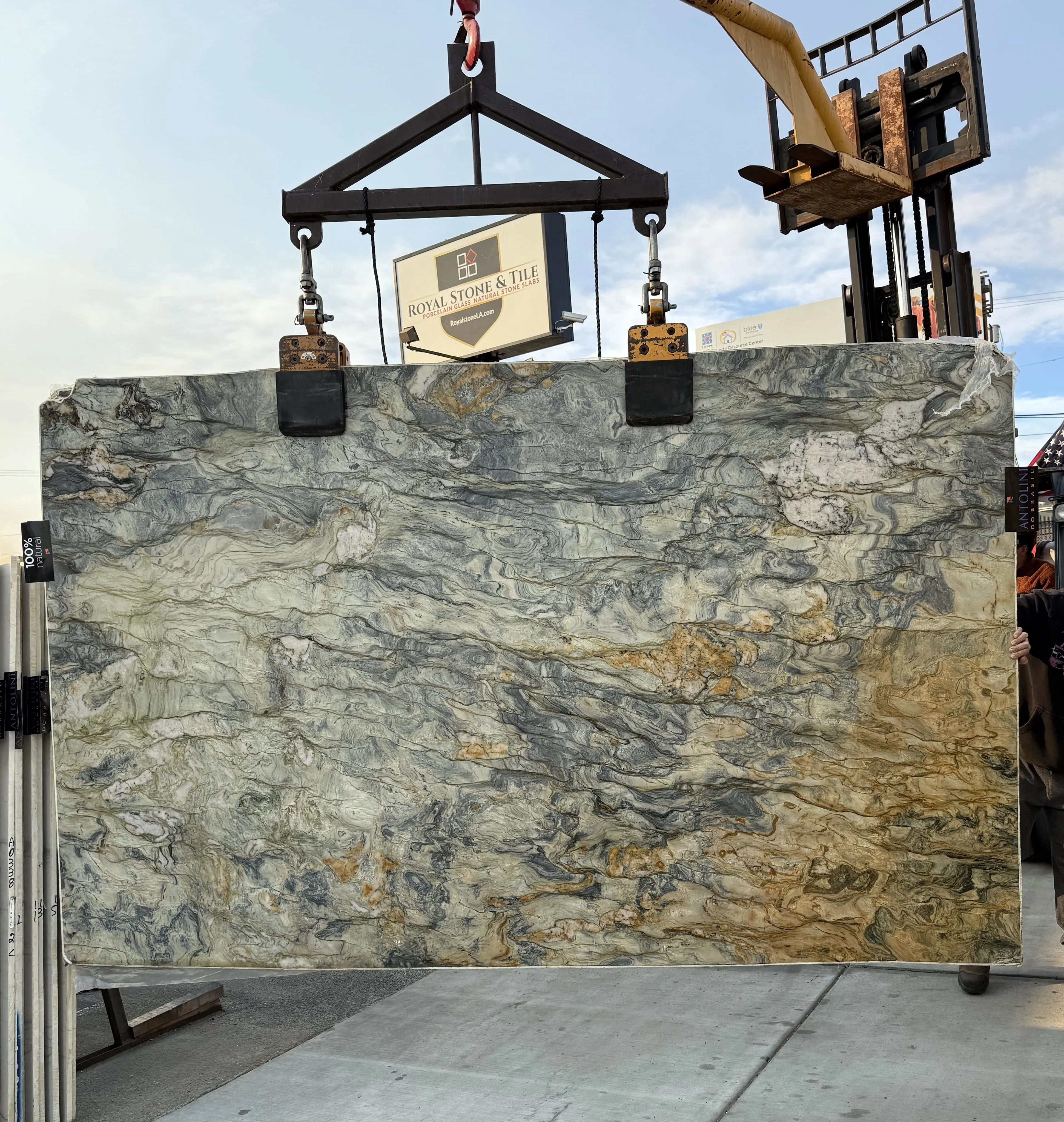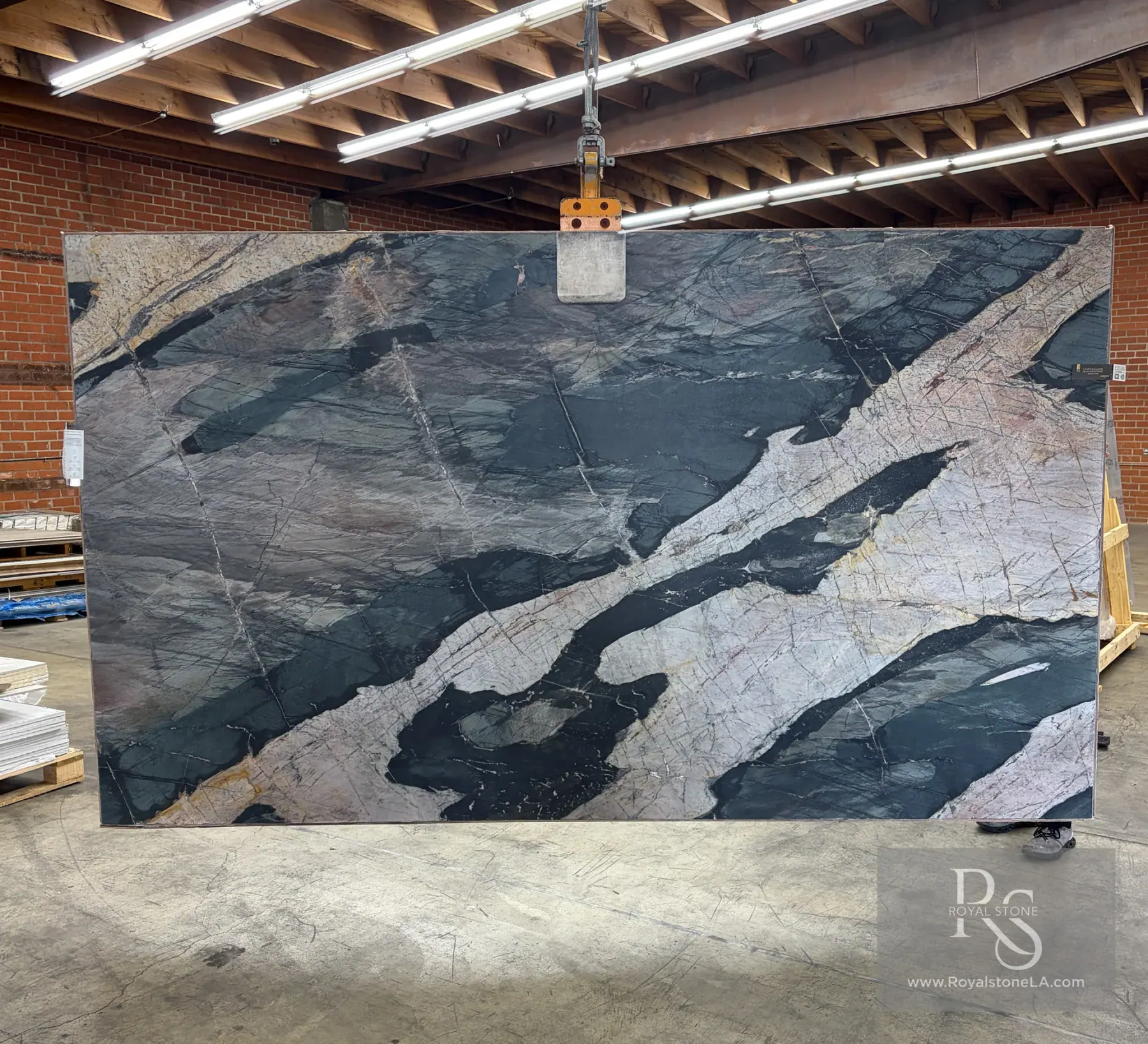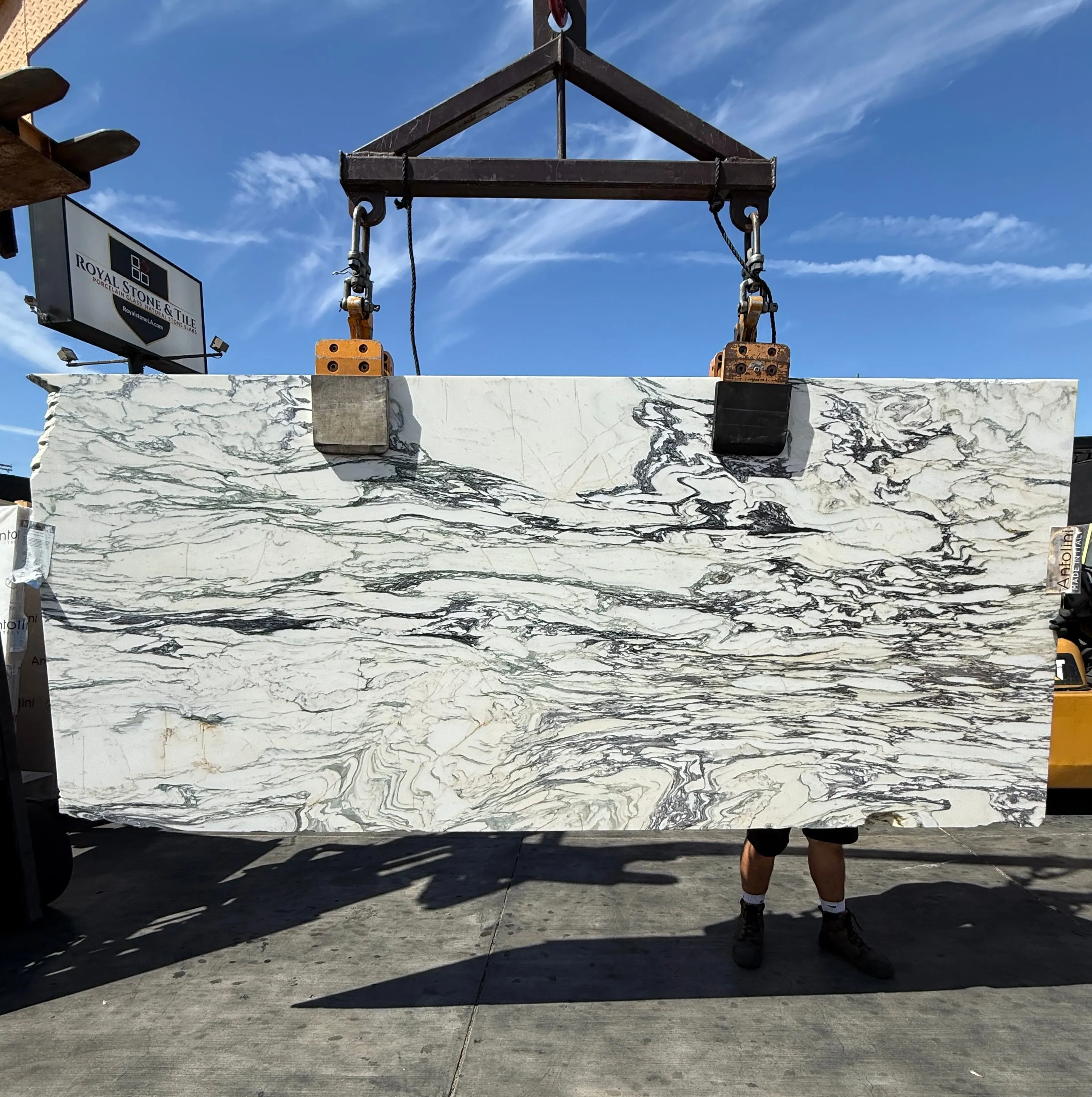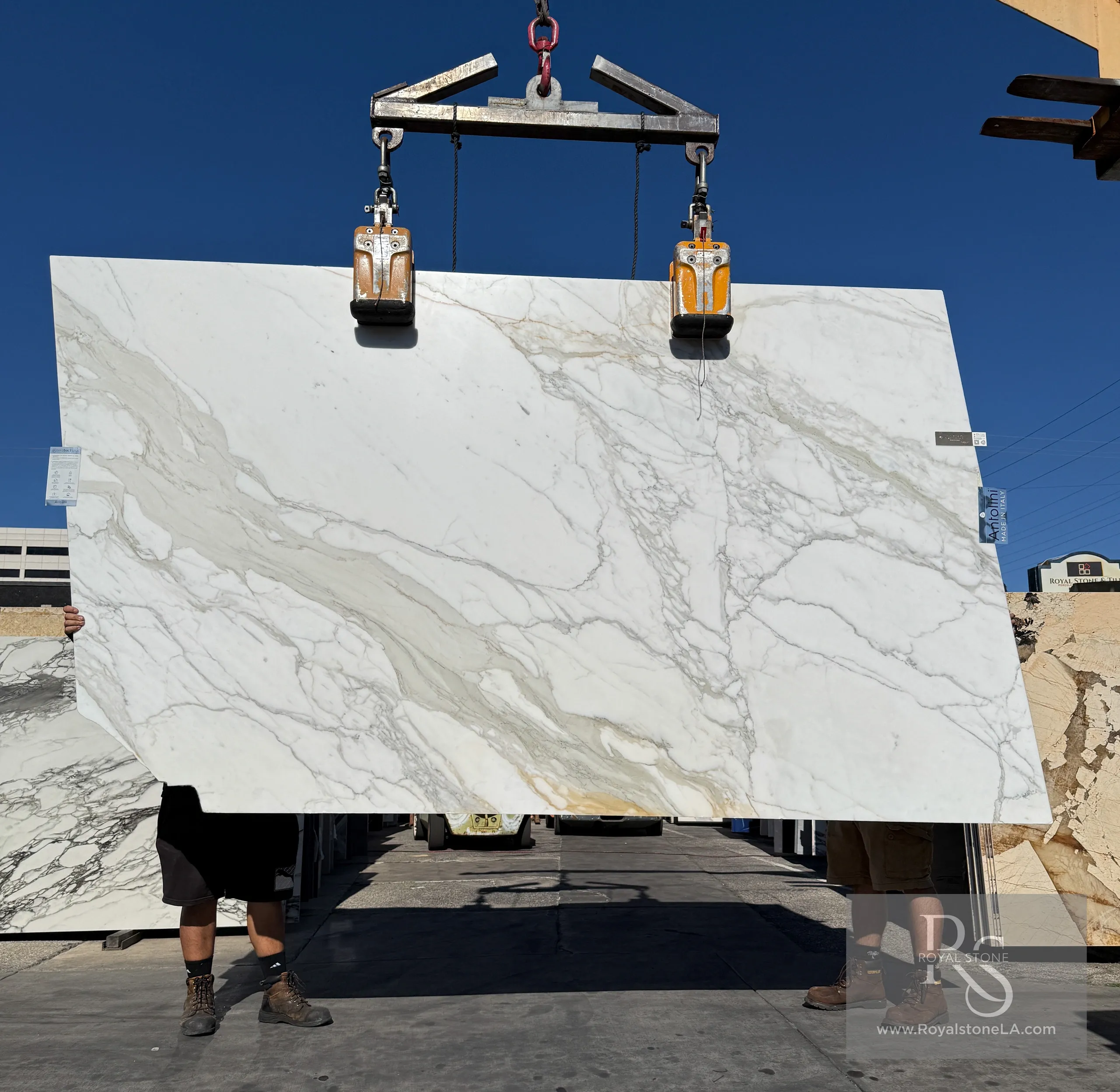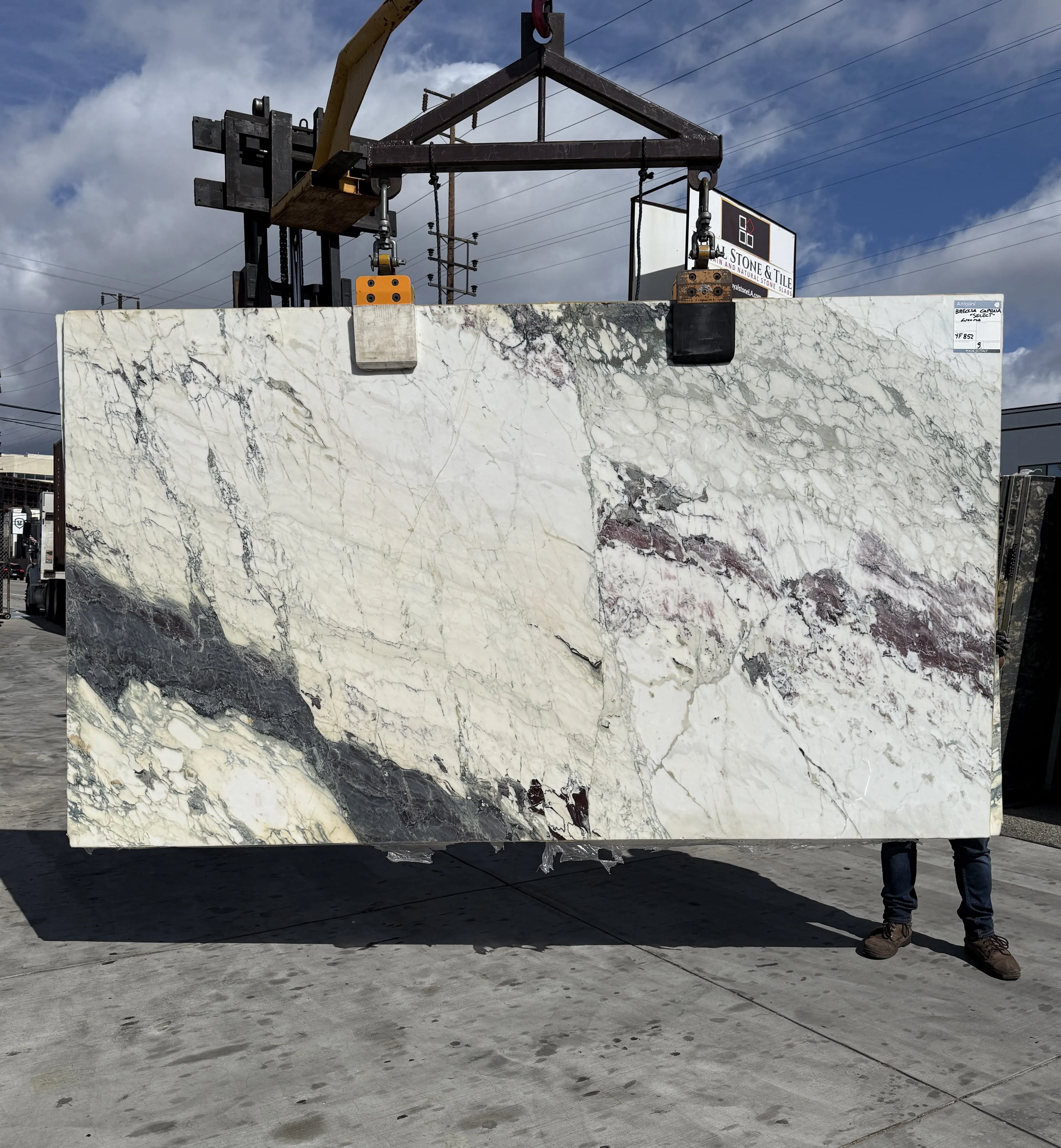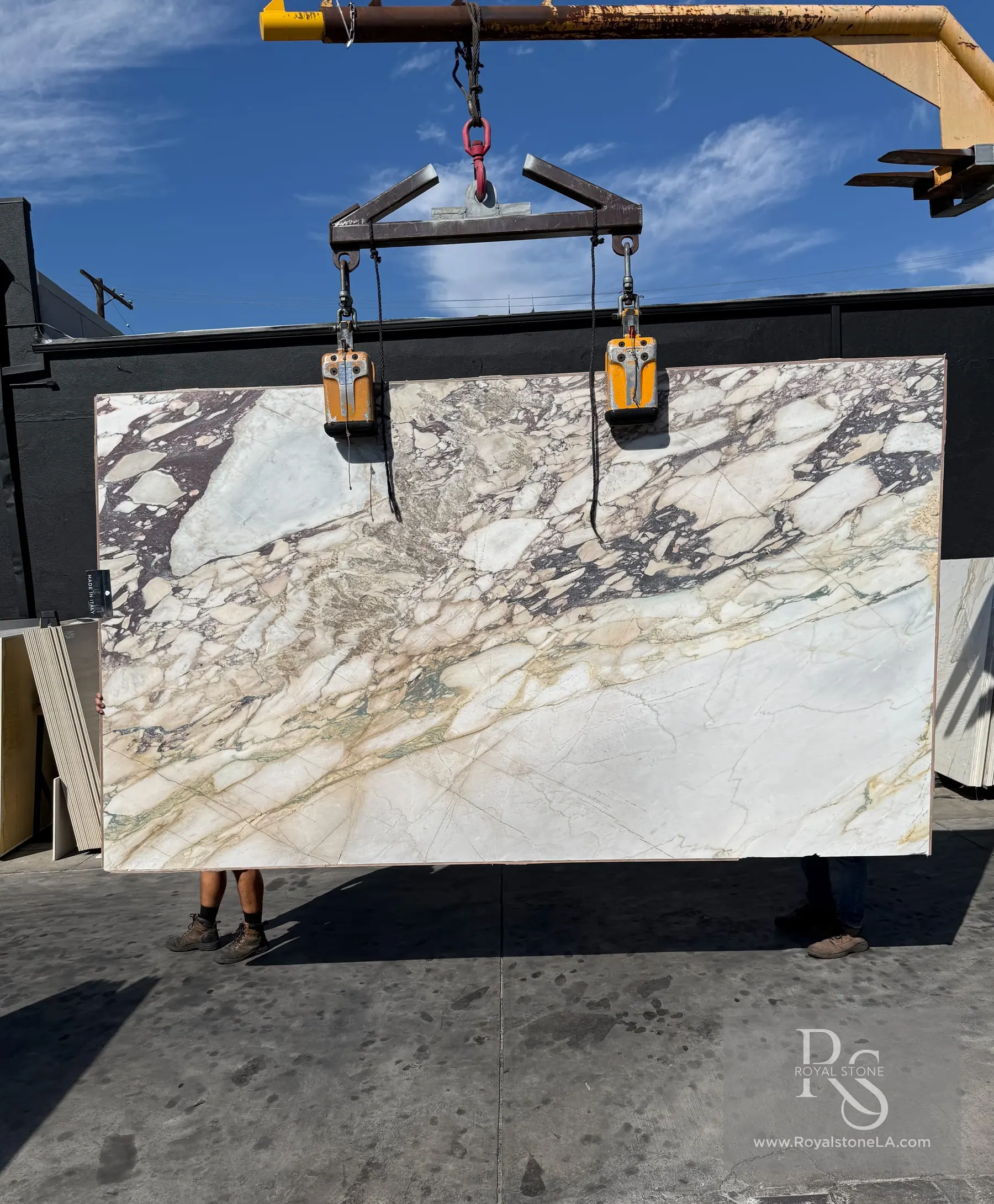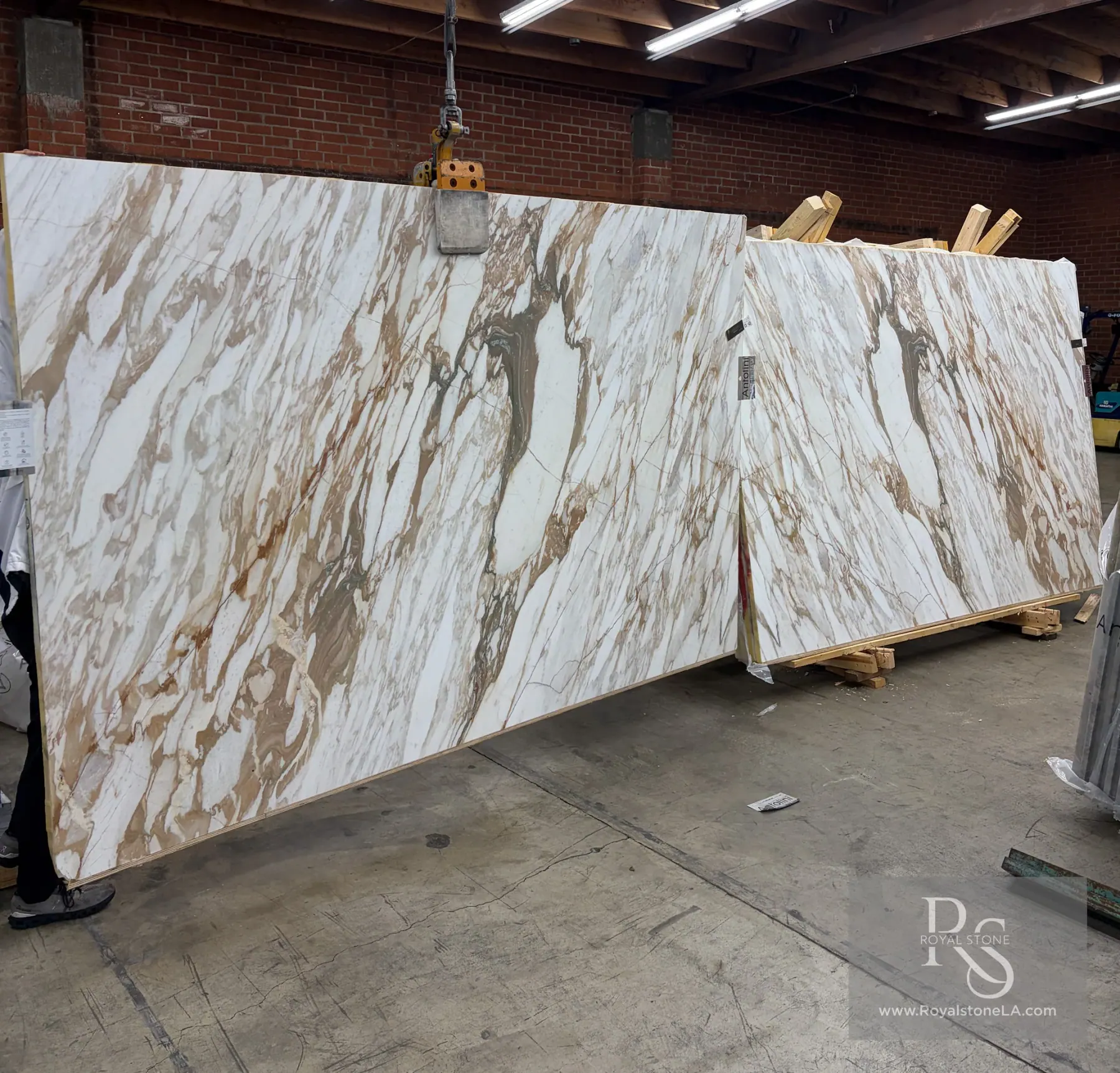
When a block of stone is cut, it comes off the gangsaw as a stack of consecutive slabs, each one a fraction deeper into the block than the last. Open two neighbours like the pages of a book and their veining mirrors across the seam — that is a book-match. Done well across a feature wall or a waterfall island, it turns separate slabs into one symmetrical composition, with veins flowing outward from a central spine like a Rorschach in stone.
This is why slab sequence matters so much, and why it has to be planned at the yard rather than the fabricator. Book-matching needs consecutive slabs kept in order, and dramatic stones — Calacatta Viola, the Patagonia and Fusion quartzites, bold breccias — reward it most because there is enough movement to mirror. Quieter, linear stones can also be vein-matched end to end so the pattern runs continuously across a long run rather than mirroring.
“This is why slab sequence matters so much, and why it has to be planned at the yard rather than the fabricator.”
A few practical notes: book-matching usually means buying slabs as a set and accounting for the extra material a symmetrical layout consumes, and the seam placement should be designed around the room, not left to chance. The payoff is a surface that looks intentional and bespoke rather than assembled.
We lay candidate slabs out on the floor so you can see the match before anything is cut. If a book-matched wall is the goal, tell us early — it changes which slabs we set aside and how many.
Tagged