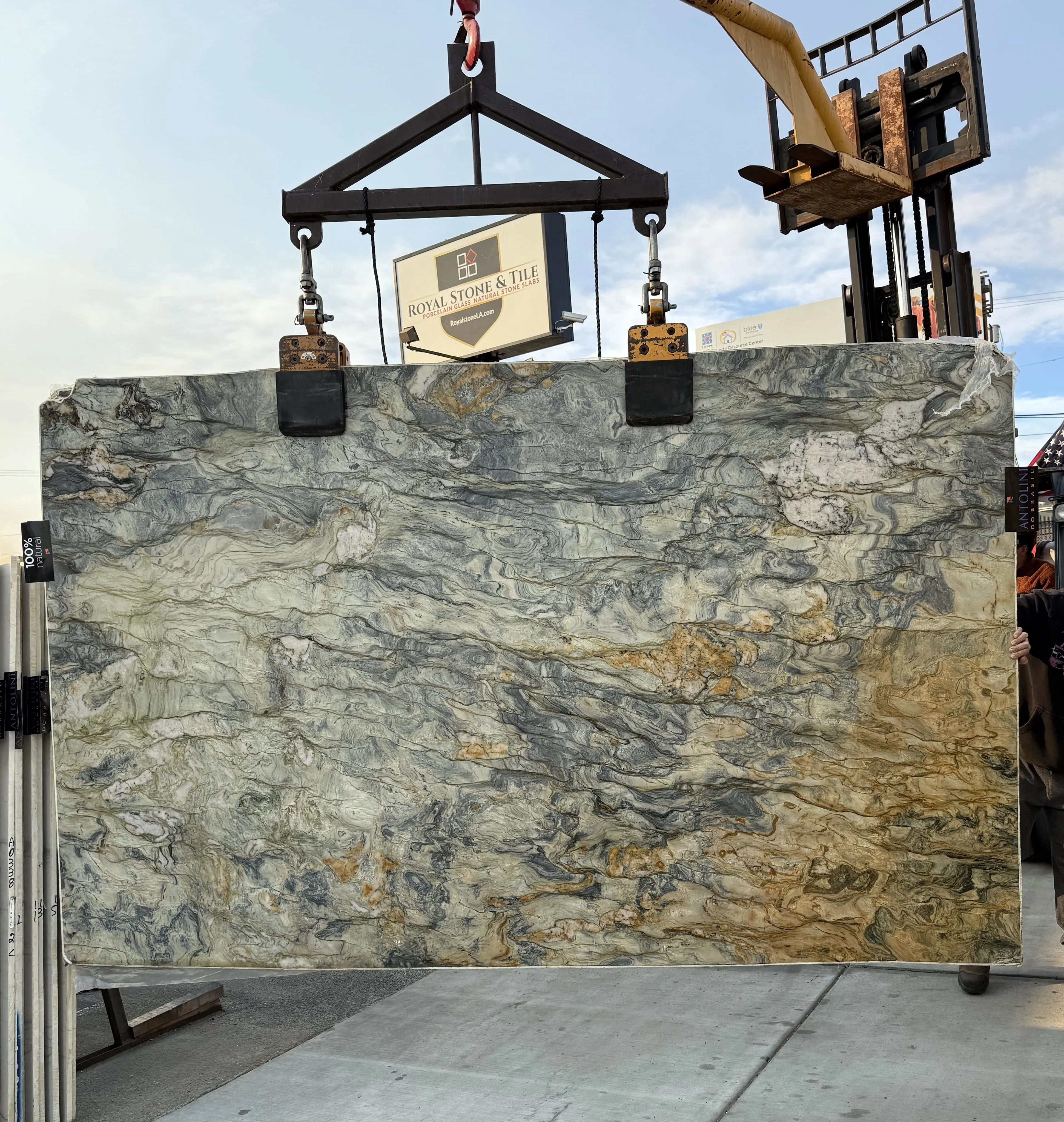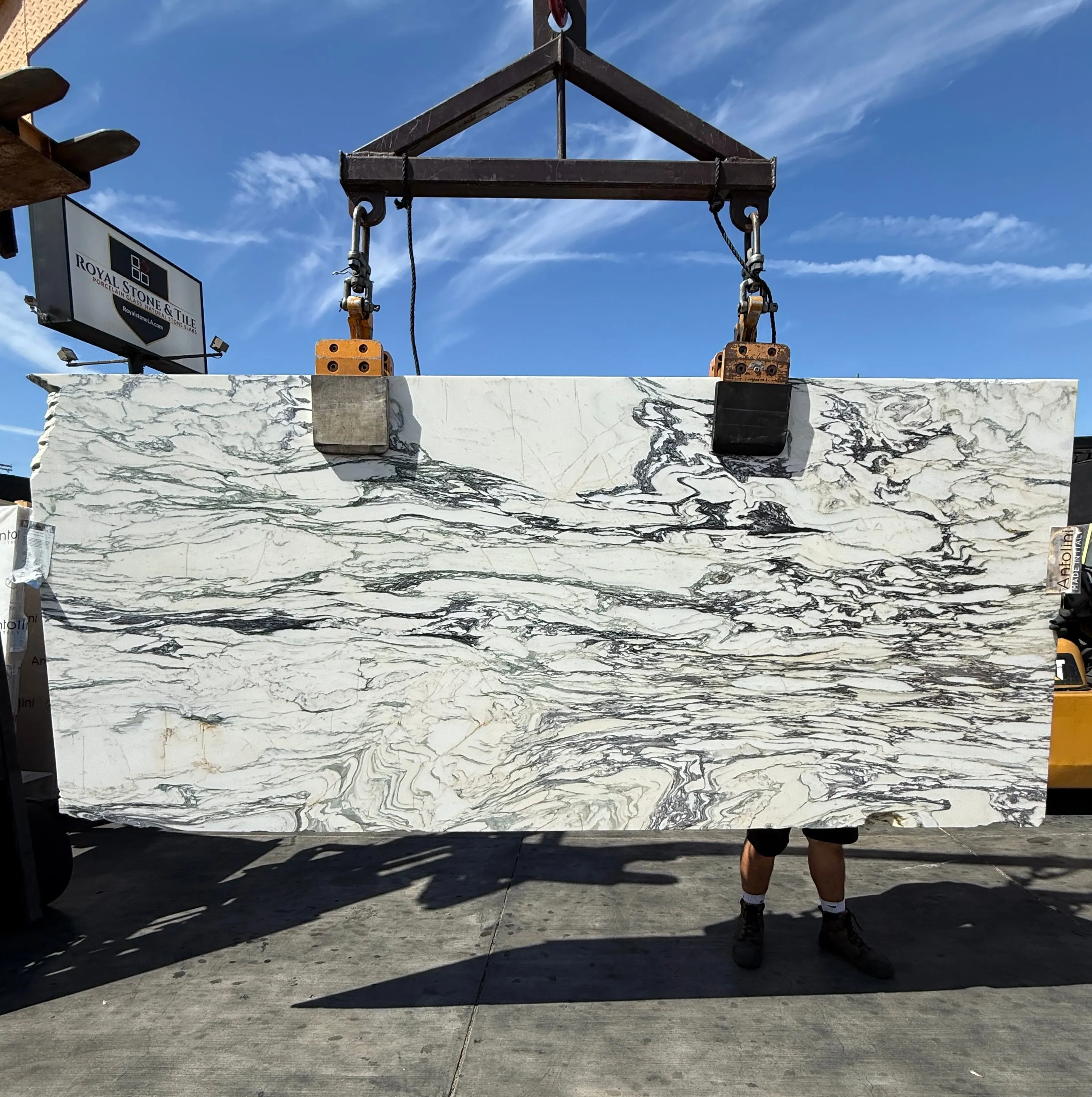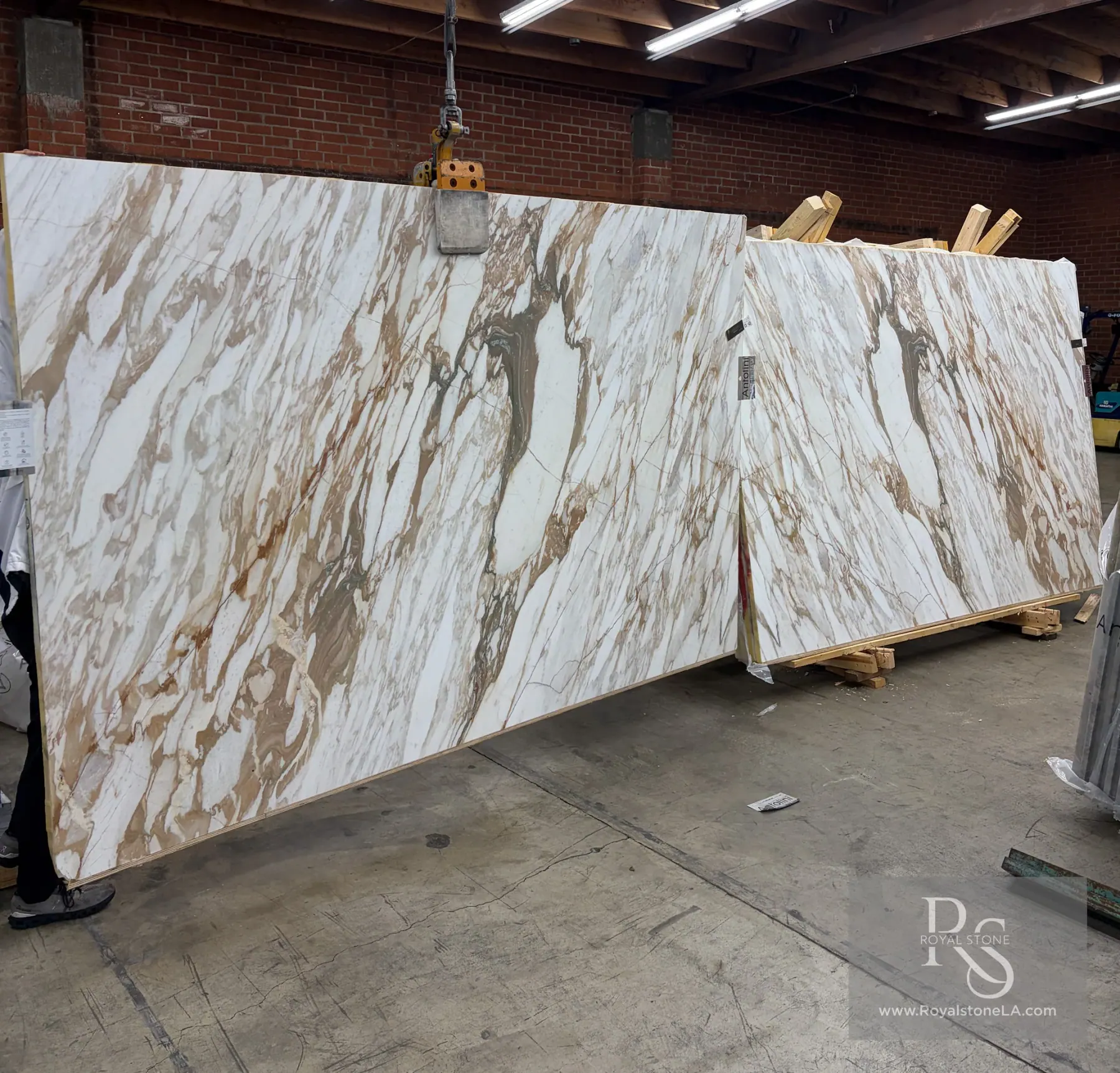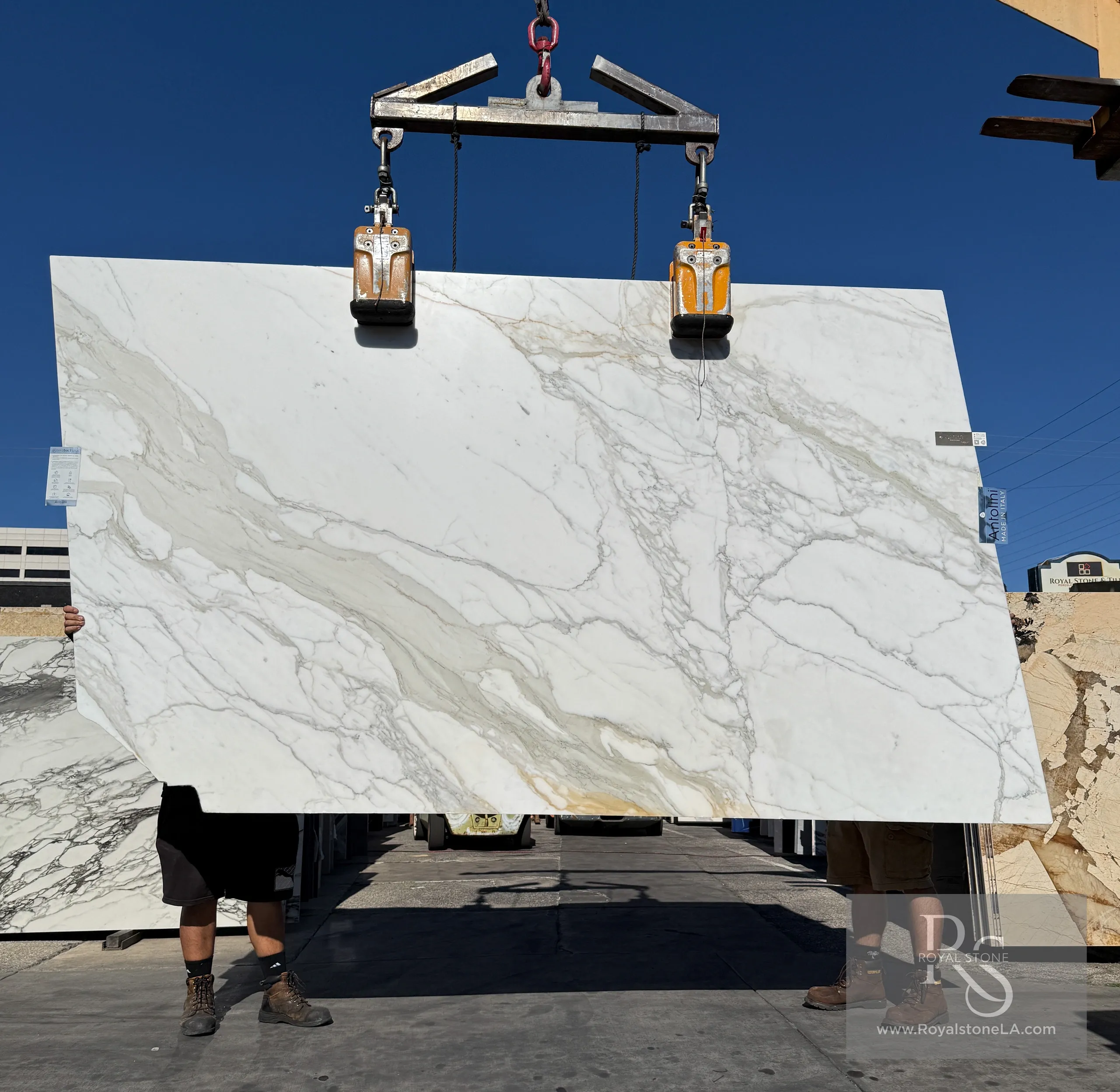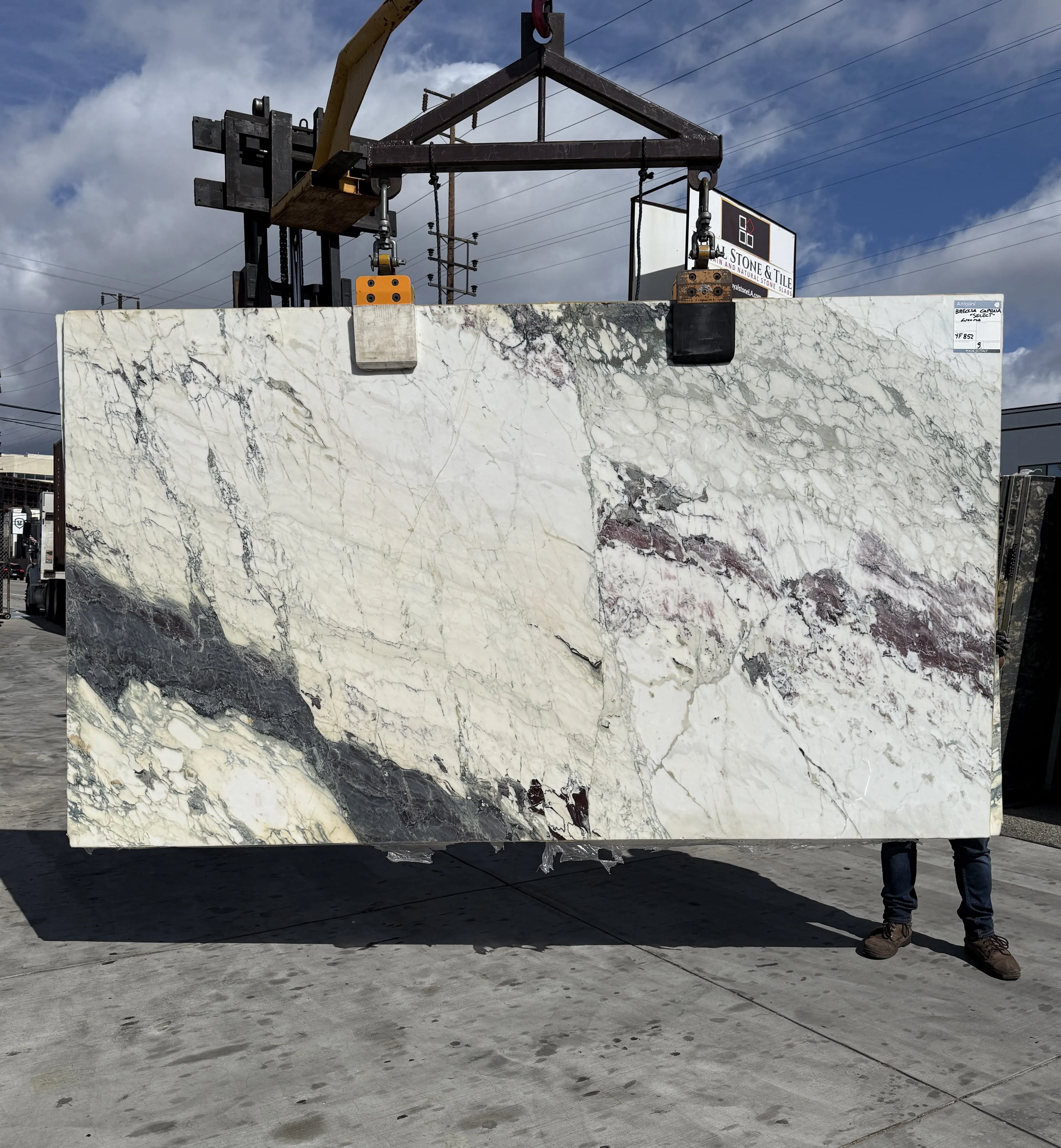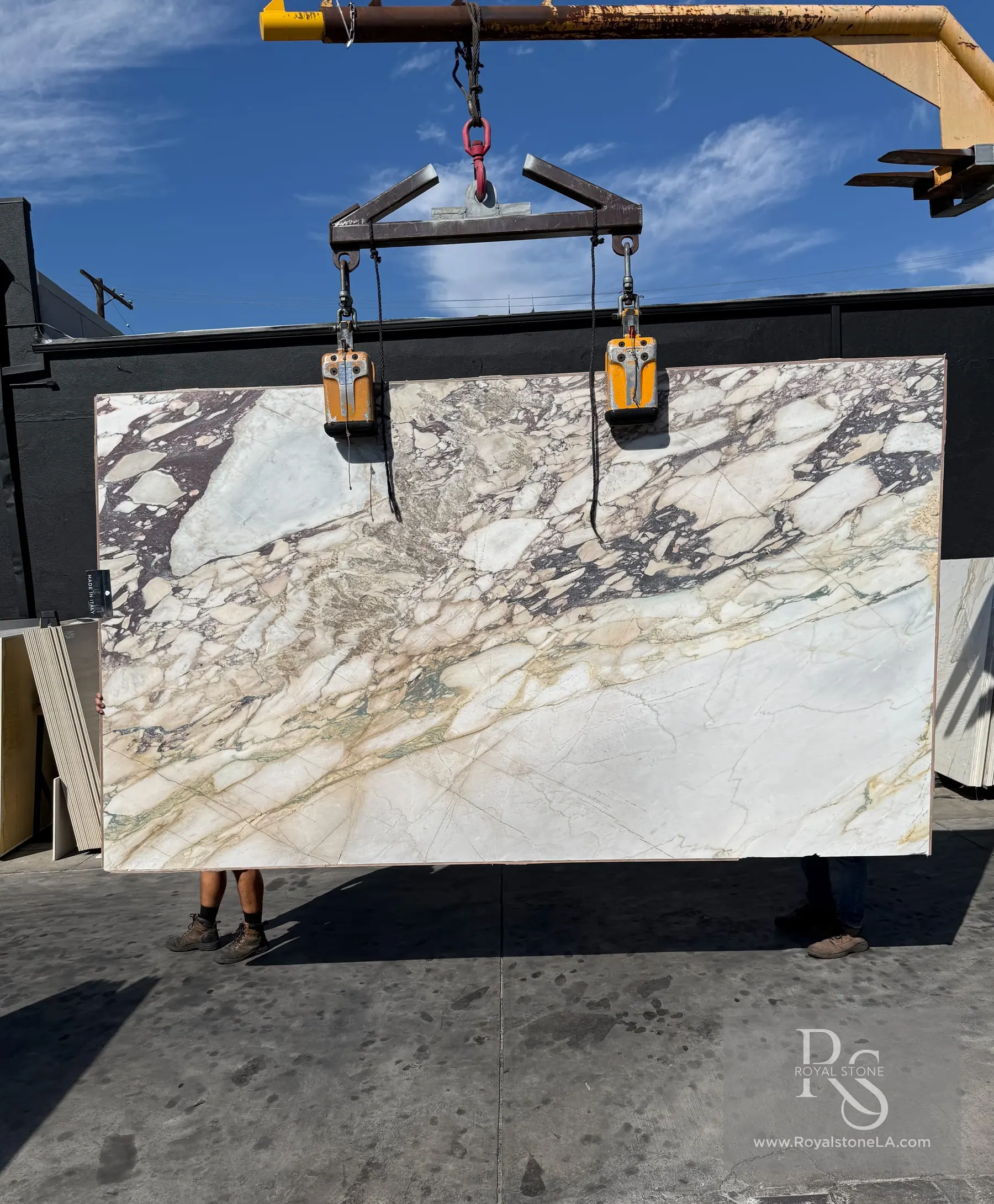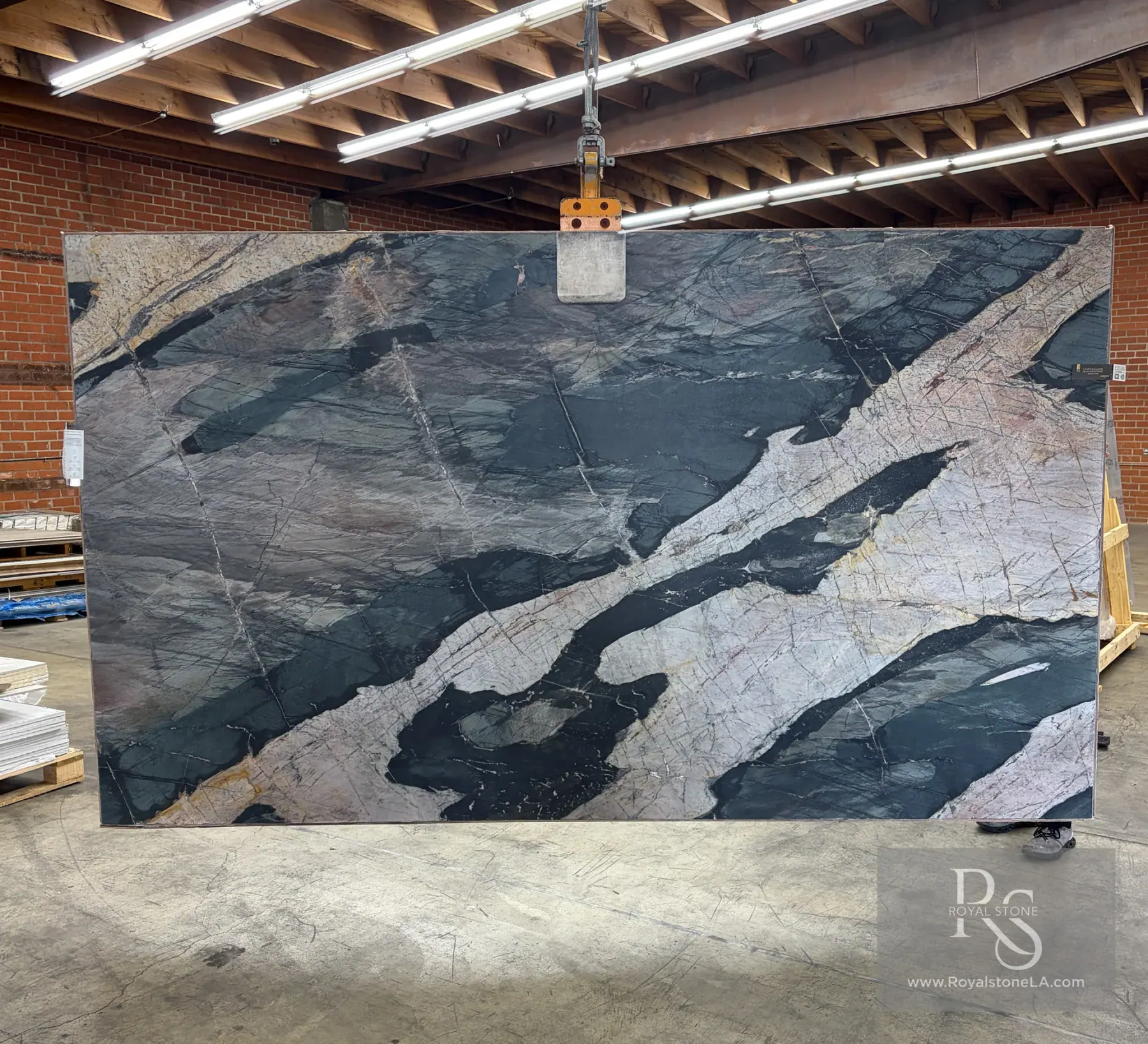
The same slab can read as two completely different stones depending on its finish. A polish closes the surface to a reflective gloss that deepens colour and makes veining pop — a polished Calacatta looks wetter, richer, and more contrasted. A honed finish stops short of that gloss, leaving a smooth matte surface that reads softer, lighter, and more contemporary. Leathered finishes go further still, adding a low sculpted texture you can feel.
Beyond looks, finish changes how a surface lives. On marble, honing is the practical choice for working counters: because there is no gloss to lose, the small etch marks that acids leave are far less visible, so a honed marble ages gracefully where a polished one shows every ring. Polished marble belongs on vertical surfaces and low-use vanities where it can stay pristine. On quartzite, the stone does not etch, so finish is almost purely an aesthetic call — polish for drama and depth, hone for calm and modernity.
“Polished marble belongs on vertical surfaces and low-use vanities where it can stay pristine.”
There is also a perception point worth knowing: honed surfaces can show fingerprints and water spots a little more readily on dark stones, while polished surfaces show dust less but scratches more. Neither is better — they are different trade-offs.
Because a photo never captures the difference, we keep honed and polished examples of many stones in the yard. Come read the same family both ways under our lights before you commit a whole kitchen to one finish.
Tagged