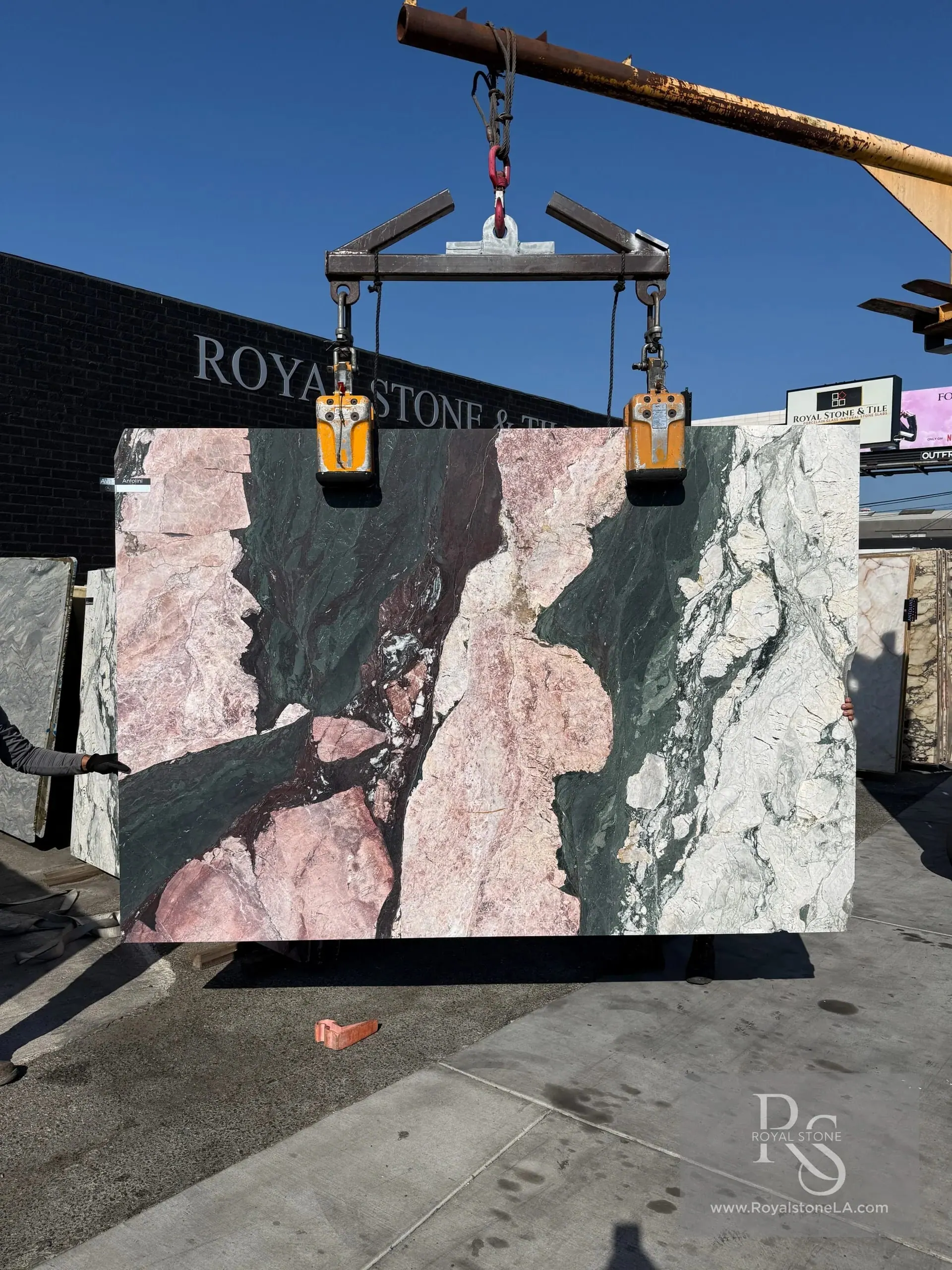
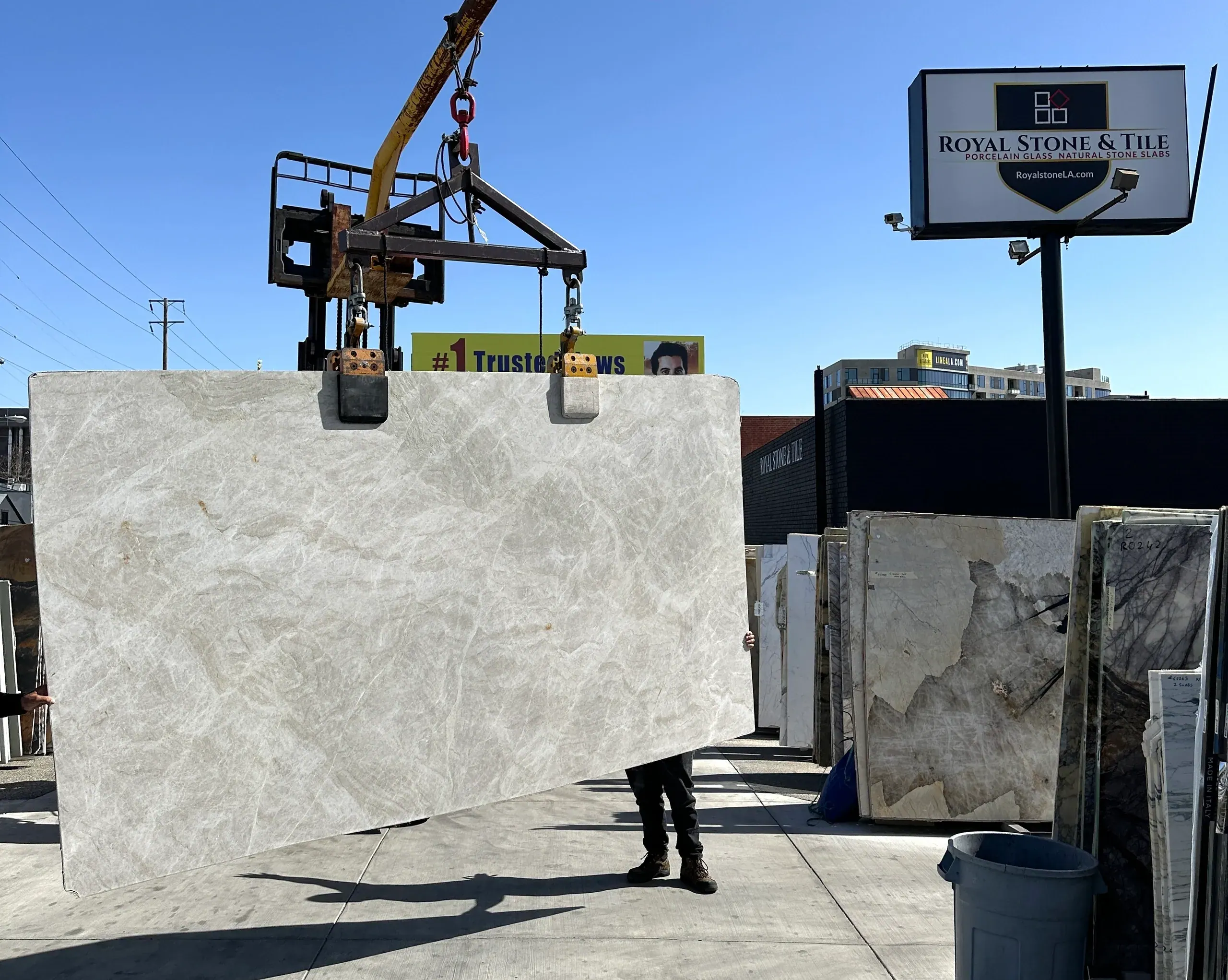
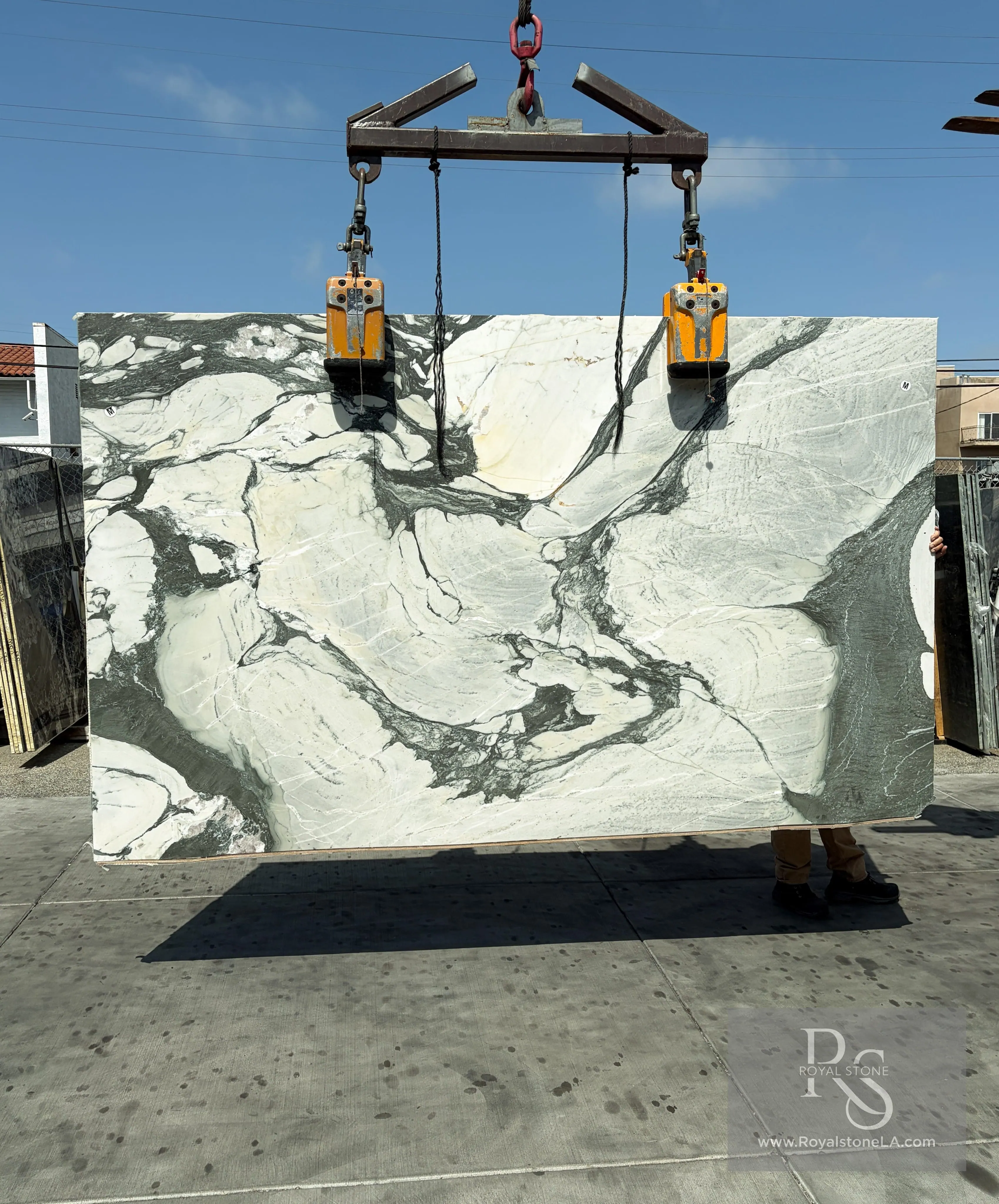
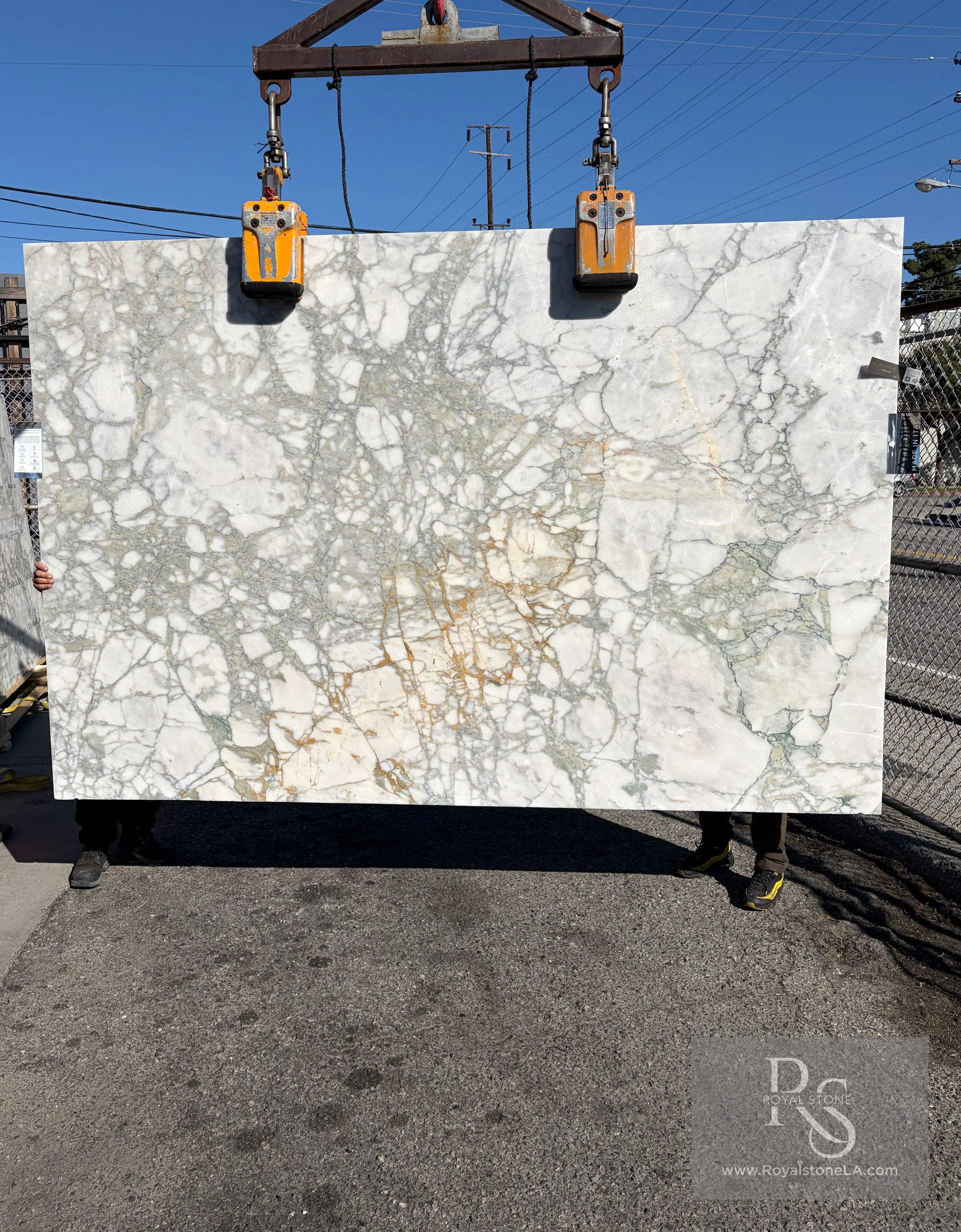
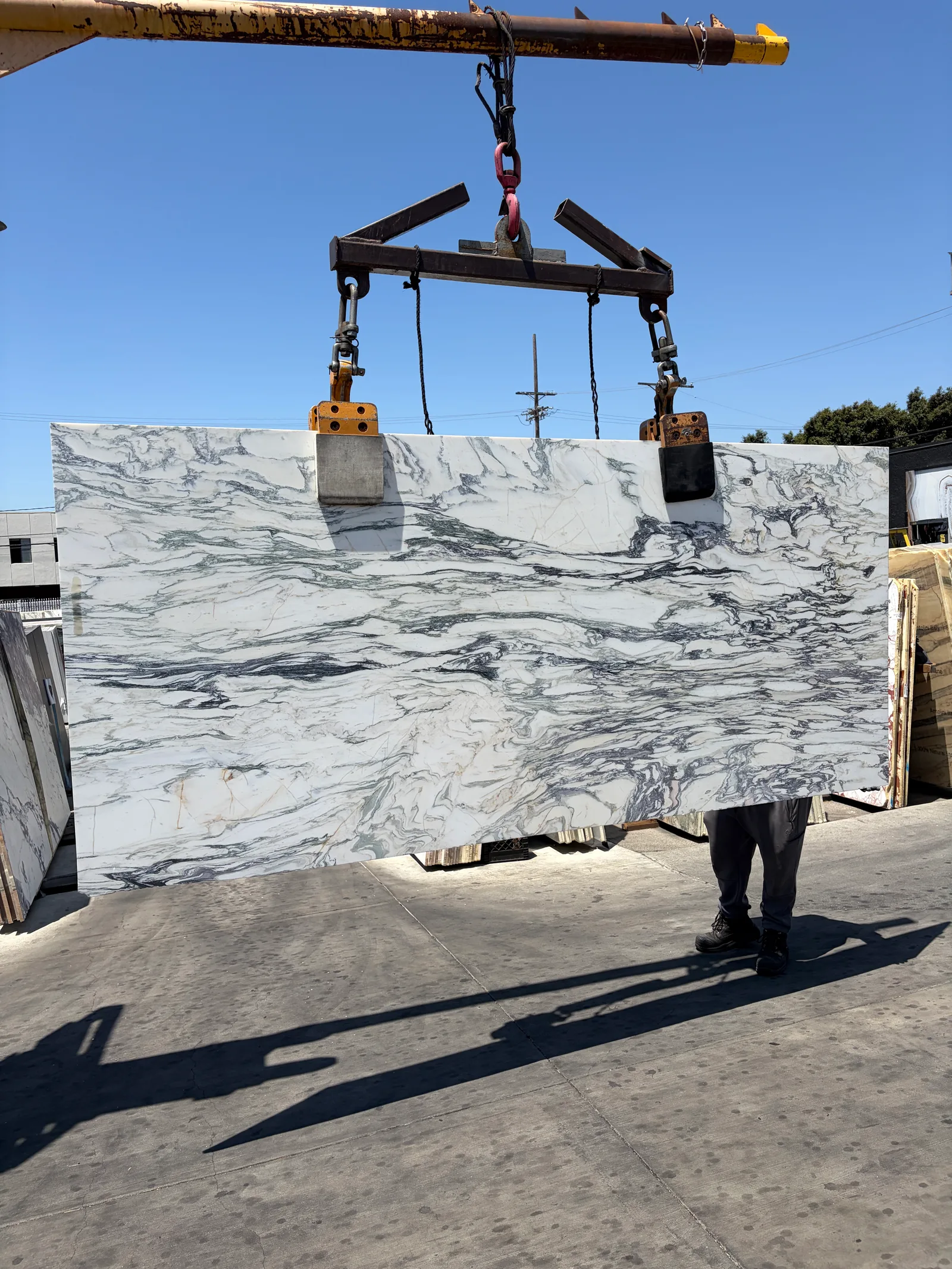
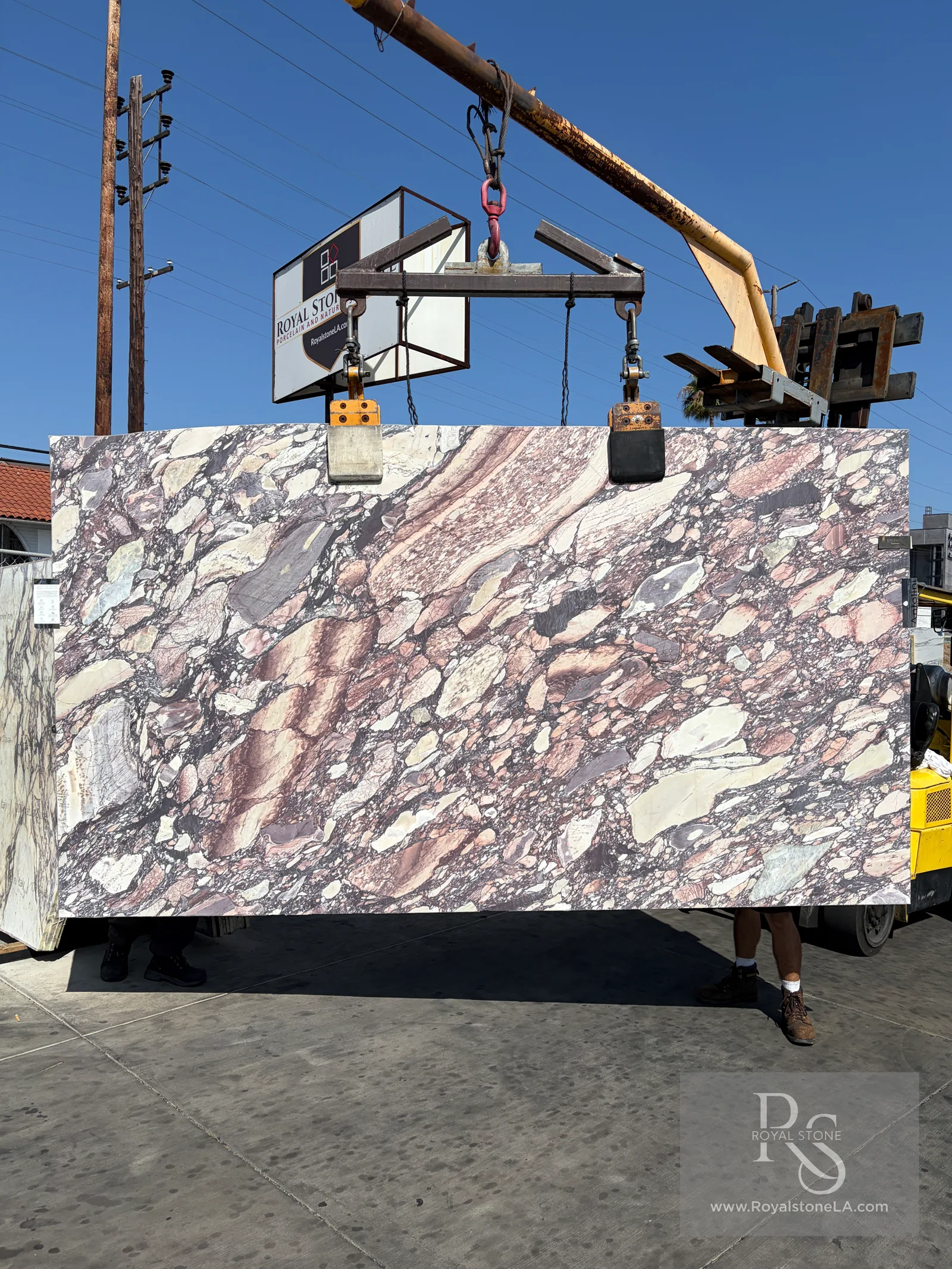
Choosing between quartzite and marble for a kitchen countertop is one of the most consequential calls in a residential spec. Both come from the same geological family — quartzite is the harder cousin, marble the older and softer parent — and the right pick depends less on which is 'better' and more on how the room will actually be lived in.
Quartzite is a metamorphic sandstone. The quartz grains re-crystallize under heat and pressure into a tough, dense stone — harder than granite on the Mohs scale and dramatically more resistant to acid etching than marble. The visual character is usually quieter than marble — softer veining, less pronounced color shifts — but exceptions like Cristallo, Patagonia and Fusion stretch the family into translucent, crystal-and-gold territory. For a working kitchen with wine, lemons and tomatoes in daily reach, quartzite is generally the safer spec.
“The quartz grains re-crystallize under heat and pressure into a tough, dense stone — harder than granite on the Mohs scale and dramatically more resistant to acid etching than marble.”
Marble is a metamorphic limestone. The calcite crystals respond to acid (lemon juice, red wine, vinegar) with a soft etch that sits on the surface — not a stain, but a dulling that most clients read as patina. Marble is also softer than quartzite, so it scratches more easily. The reward is the look: Calacatta and Viola remain the visual benchmark for an Italian kitchen, and few stones age as gracefully under hand use. Honed marble forgives etches better than polished; the patina that develops becomes the surface's signature.
Royal Stone suggests the deciding question is behavioral, not aesthetic. If the kitchen is a showpiece and the client accepts a lived-in surface, marble is the highest-expression choice. If the kitchen is a working room and etch-and-fingerprint discipline is a problem, quartzite returns the closest marble look with granite-class durability. The two stone families can also be split by use — marble on a fireplace surround or bath wall, quartzite on the island and perimeter.
Practical note: a sealed slab of either stone will outperform an unsealed slab of either stone. Seal both annually for marble, every two to three years for dense quartzite; we keep a stock of sealer at the yard and walk every client through the upkeep before delivery.
Tagged