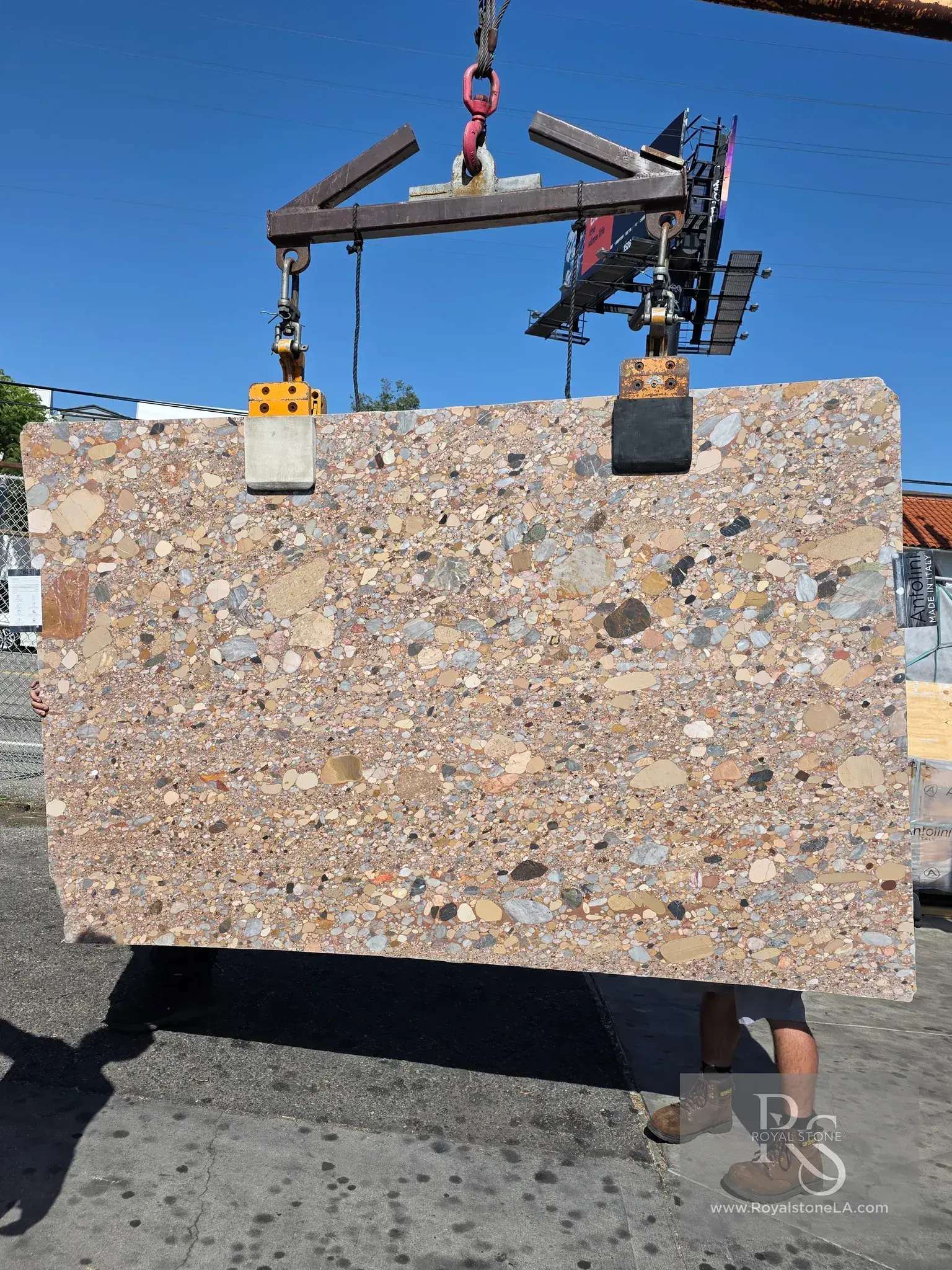
 Rosa di Palladio
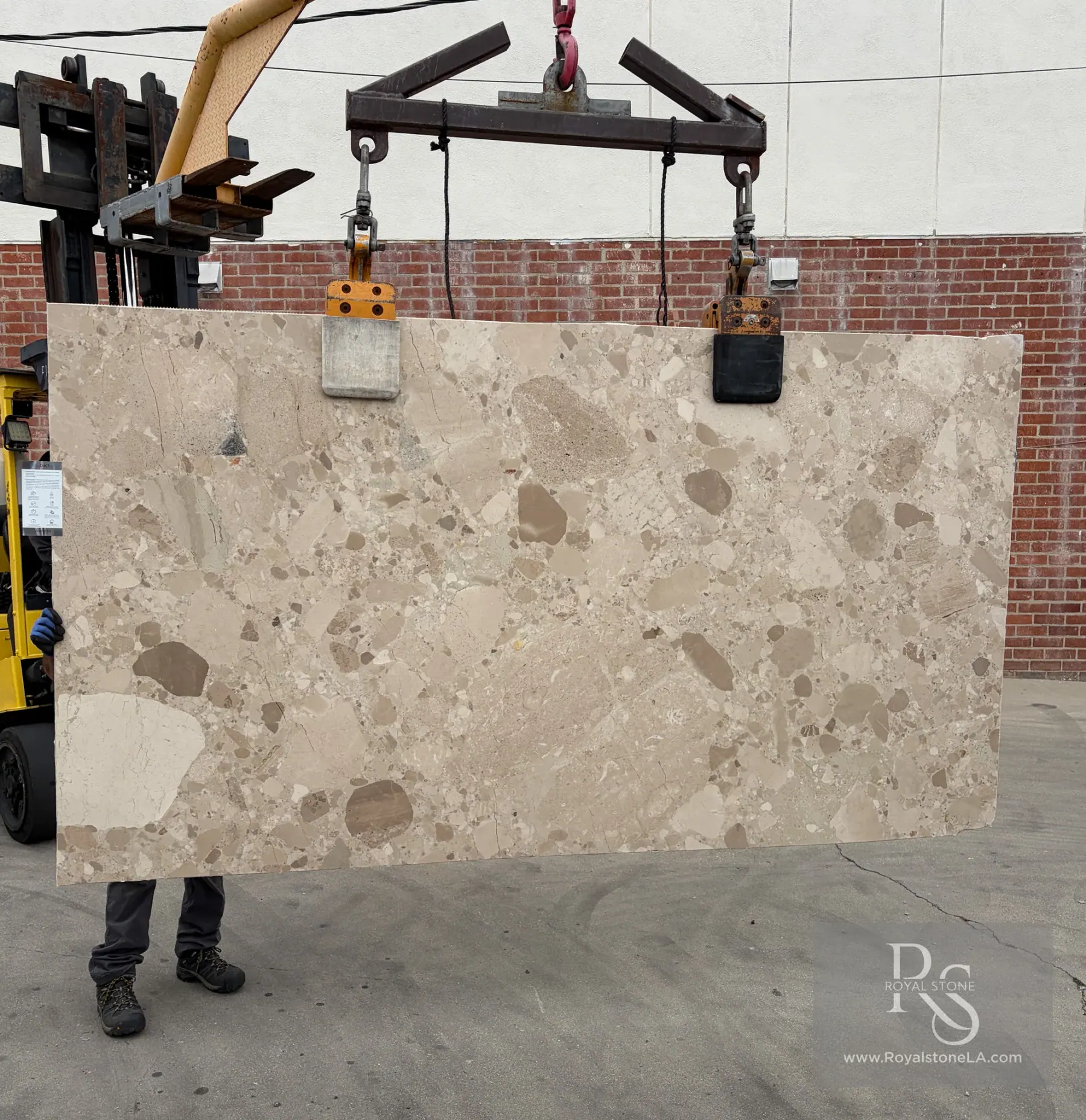 Beige Avorio
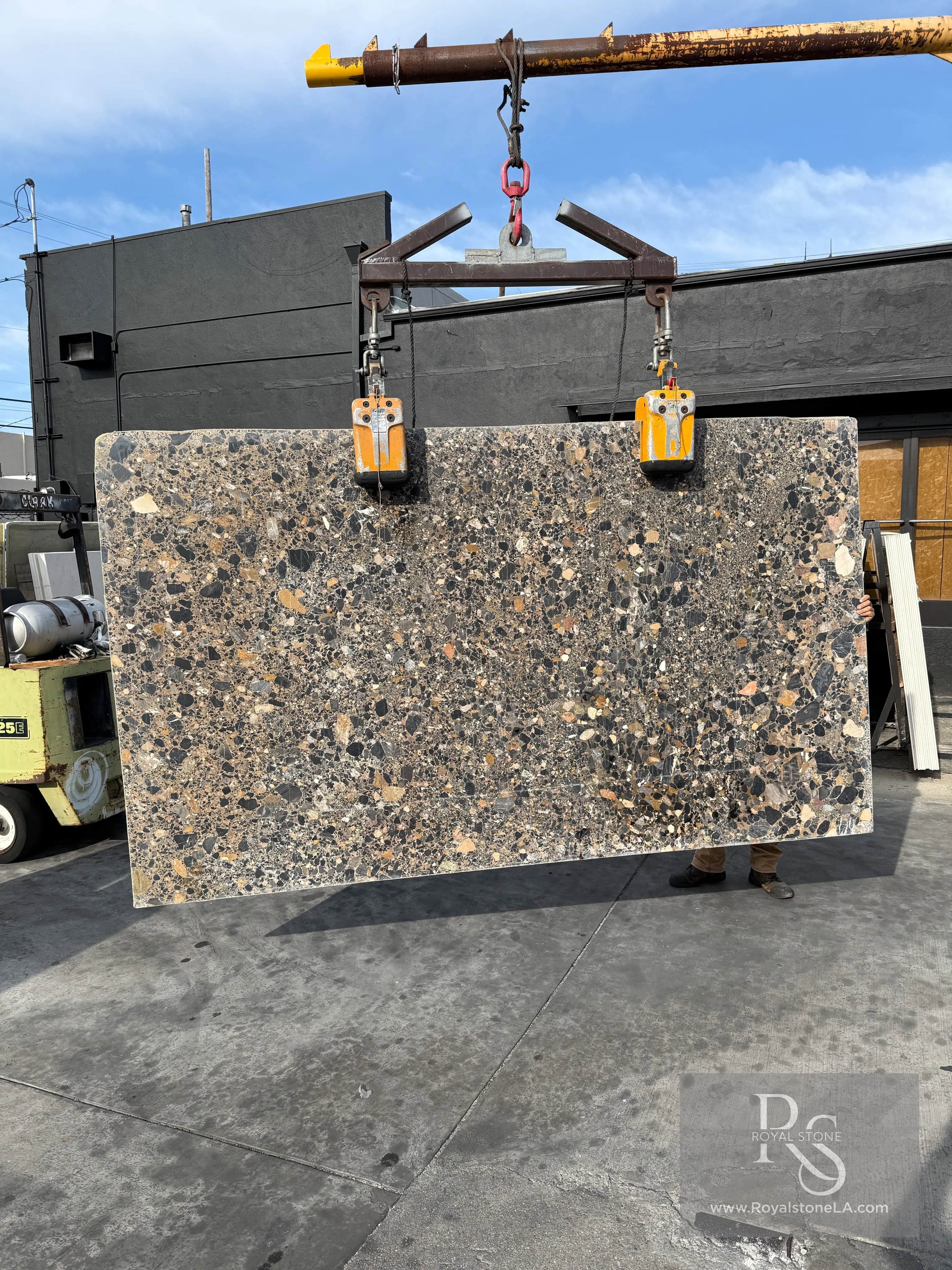 Nero
NeroMarble · Side-by-Side
Ceppo Rosa vs Beige Avorio vs Nero.
One stone family, three temperatures. All three are Ceppo — Italy’s pebbled conglomerate marble, built from cemented riverbed clasts rather than veining. Rosa di Palladio is the warm rose register. Beige Avorio is the quiet ivory workhorse. Nero inverts the family into charcoal. Same geology, same care, three completely different rooms. This is the side-by-side.
A Note on the Comparison
No. 001
The three are the same stone, separated only by the colour of the matrix that holds the pebbles.
All three are Ceppo — conglomerate marbles from the pre-Alpine foothills of northern Italy, where ancient riverbeds compressed clasts, pebbles and fossil fragments into stone. The field reads as stacked riverbed, not as vein. Mineralogically they are siblings: the same cemented geology, the same calcite chemistry, the same Mohs hardness.
What separates them is the binding matrix. Rosa di Palladio cements its clasts in a warm cream-to-rose ground. Beige Avorio holds them in a quiet ivory so close in tone that the fragments nearly disappear. Nero inverts the whole thing — a charcoal matrix that throws its amber and rust pebbles into relief.
Specify them by temperature and by what the room needs to do — carry warmth, disappear into a continuous field, or perform as the dark event.
02 · At a Glance
Side by side, ten axes.
The straight read across origin, field, clast, personality, geology, finish, application, bookmatching, slab format and cost. The fuller editorial comparison continues below.
03 · Where They Meet
Similarities.
Geology. All three are conglomerate marbles from the pre-Alpine foothills of northern Italy — cemented riverbeds of clasts, pebbles and fossil fragments. The pattern is all-over and granular, closer to a natural terrazzo than to a figured marble. Same formation, same age, same crystal structure.
Hardness and care. All three sit at Mohs 3–4. All three will etch with lemon, vinegar, wine and tomato. All three want a penetrating marble sealer once a year, neutral pH cleaning, and an honest conversation with the client about what marble does over time.
All-over pattern. Because the clast field is self-similar and directionless, none of the three forces the seam decisions a veined marble does. All three are forgiving across large runs — long islands, full-height walls, continuous floors.
Slab format. All three stock at 2cm gauge and run large enough for single-slab islands or full-height bath walls in most floor plans.
Tier. All three are premium Italian marbles, specified routinely on projects in Los Angeles, Beverly Hills, Bel Air, Pacific Palisades and Malibu. None is “builder marble.”
04 · Where They Diverge
Differences.
Matrix colour and contrast.
This is the whole comparison. Rosa di Palladio binds its clasts in a warm cream-to-rose ground at medium contrast — the pebbles and fossils read clearly but warmly. Beige Avorio holds its fragments in an ivory so close in tone that the field reads almost as a single quiet surface; you sense texture before you read pattern. Nero inverts the family entirely — a charcoal matrix that throws amber, ochre and rust clasts into high relief, the highest-contrast Ceppo in the yard.
What the room demands.
Rosa wants a warm room — it carries character without demanding the space defer to it, the right Ceppo for a soft bath or a characterful kitchen. Beige wants to disappear into a continuous field — it is the Ceppo you specify when the geology, not the colour, is the point. Nero wants the room built around it — a dark, dramatic surface that performs under light and needs a considered setting to hold it.
Finish behaviour.
Rosa and Beige are honed almost exclusively — a soft matte that keeps the warm field readable and the clast work quiet. Nero is leathered: the textured hand deepens the charcoal, controls reflection on the dark ground, and lets the amber pebbles glow. Leathering also helps the Nero hide the water spotting that a polished dark marble would show. Specify each in the finish the matrix wants.
Seams and runs.
Beige Avorio is the most forgiving stone in the family for continuous work — its low-contrast field hides seams better than almost any marble in the yard, which makes it the practical choice for big floors and long islands. Rosa sequences softly, its rose clasts pairing organically across a run. Nero bookmatches into dramatic dark compositions when you want the seam to perform — the amber clasts mirror against the charcoal for a deliberate feature.
Scarcity and cost.
Beige Avorio moves most consistently and runs largest, which makes it the most accessible Ceppo at scale. Rosa sits mid-family — the rose tone and fossil work command a premium over the ivory. Nero is the rarest of the three: the dark conglomerate blocks are scarce, the leathered finish adds work, and the Nero sits at the top of the Ceppo range. Specify all three from the slab held, not from a catalogue image — the clast field shifts block to block.
05 · Decision Guide
Which one, for what.
A working frame for the specification call.
Specify Rosa di Palladio when —
- — The brief calls for warmth and character without a colour event — a soft, romantic field.
- — Vanities, bath walls, fireplace surrounds, or a warm kitchen that wants personality but stays liveable.
- — The fossil work and rose clasts are meant to reward a close look.
- — Honed finish, to keep the rose warm and the field soft.
Specify Beige Avorio when —
- — The geology is the point, not the colour — a quiet, all-over pebbled field.
- — Long islands, full-height walls, continuous floors where seams need to disappear.
- — A neutral ground that lets cabinetry, hardware or a feature stone carry the room.
- — The specification needs scale and consistency — Beige runs largest and moves most reliably.
Specify Nero when —
- — The slab is the dark event — bar front, powder room, fireplace surround, dramatic feature kitchen.
- — The room is built to hold a dark surface — considered lighting, restraint elsewhere.
- — A leathered hand is wanted for texture, reflection control and the glow of the amber clasts.
- — A bookmatched dark composition where the seam is meant to perform.
Specify across a project when —
- — A full-house specification can run Beige as the continuous field, Rosa for the warm baths, and Nero for the one dark dramatic moment — all reading as one stone family.
06 · Walk All Three
See the slabs in the yard.
The full Ceppo family is stocked at Royal Stone — 2303 South Sepulveda, Los Angeles, 90,000 sq ft of warehouse, slab yard and showroom combined. By appointment. We will pull Rosa di Palladio, Beige Avorio and the leathered Nero, set them side by side under daylight, then move into the showroom to see how each reads under finished fixtures.
Continue
The Ceppo Collection
Every Ceppo lot in the yard — Rosa, Beige, Breccia Olympia, Viola Cosmo and Nero.
Read →The Marble Gallery
Every marble slab in the yard, catalogued.
Read →Antolini Program
The full dealership at Royal Stone — Black Label, Exclusive, Textures+.
Read →Walk the Yard
2303 South Sepulveda, Los Angeles. By appointment. The full Ceppo family, side by side.
Read →