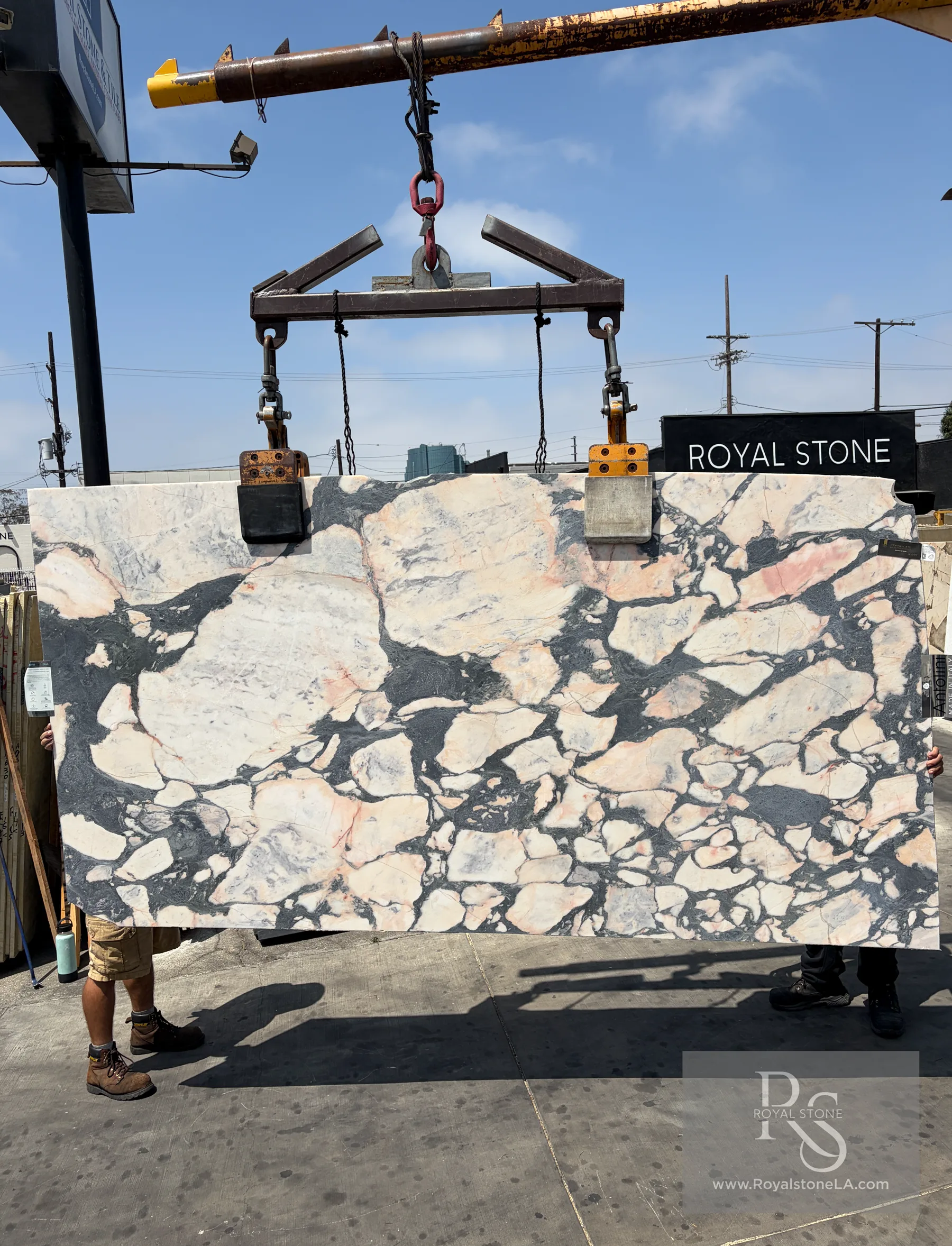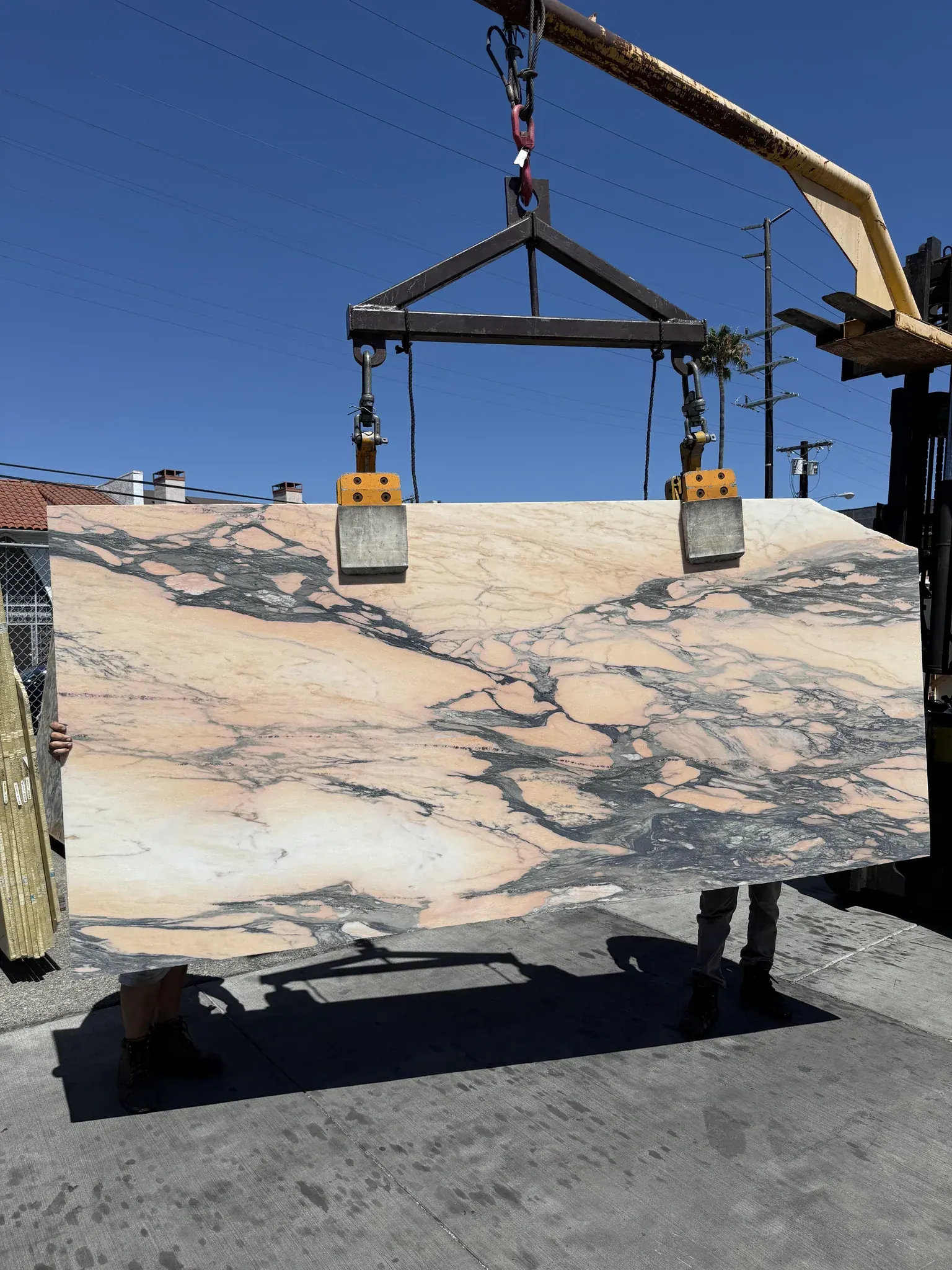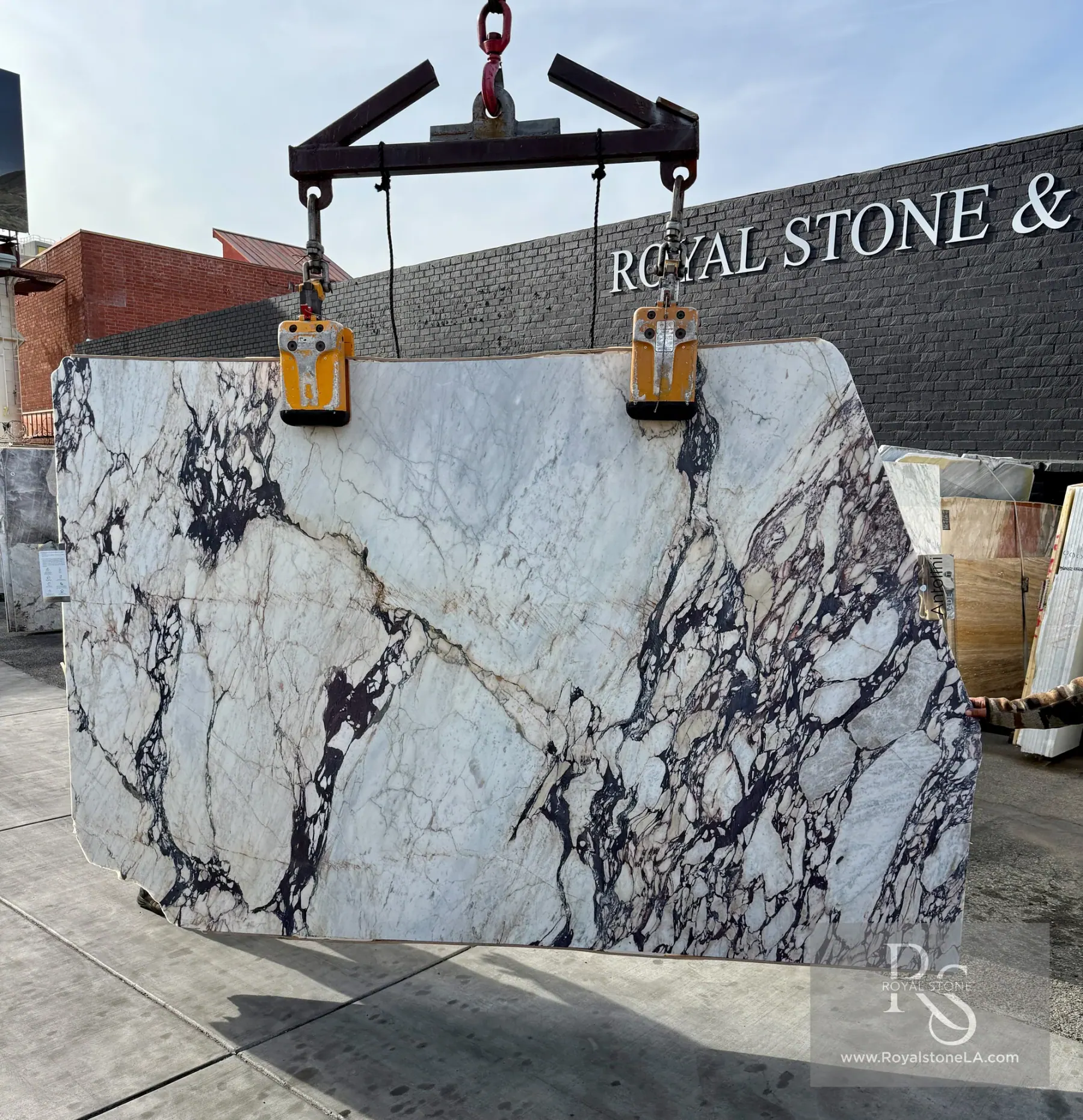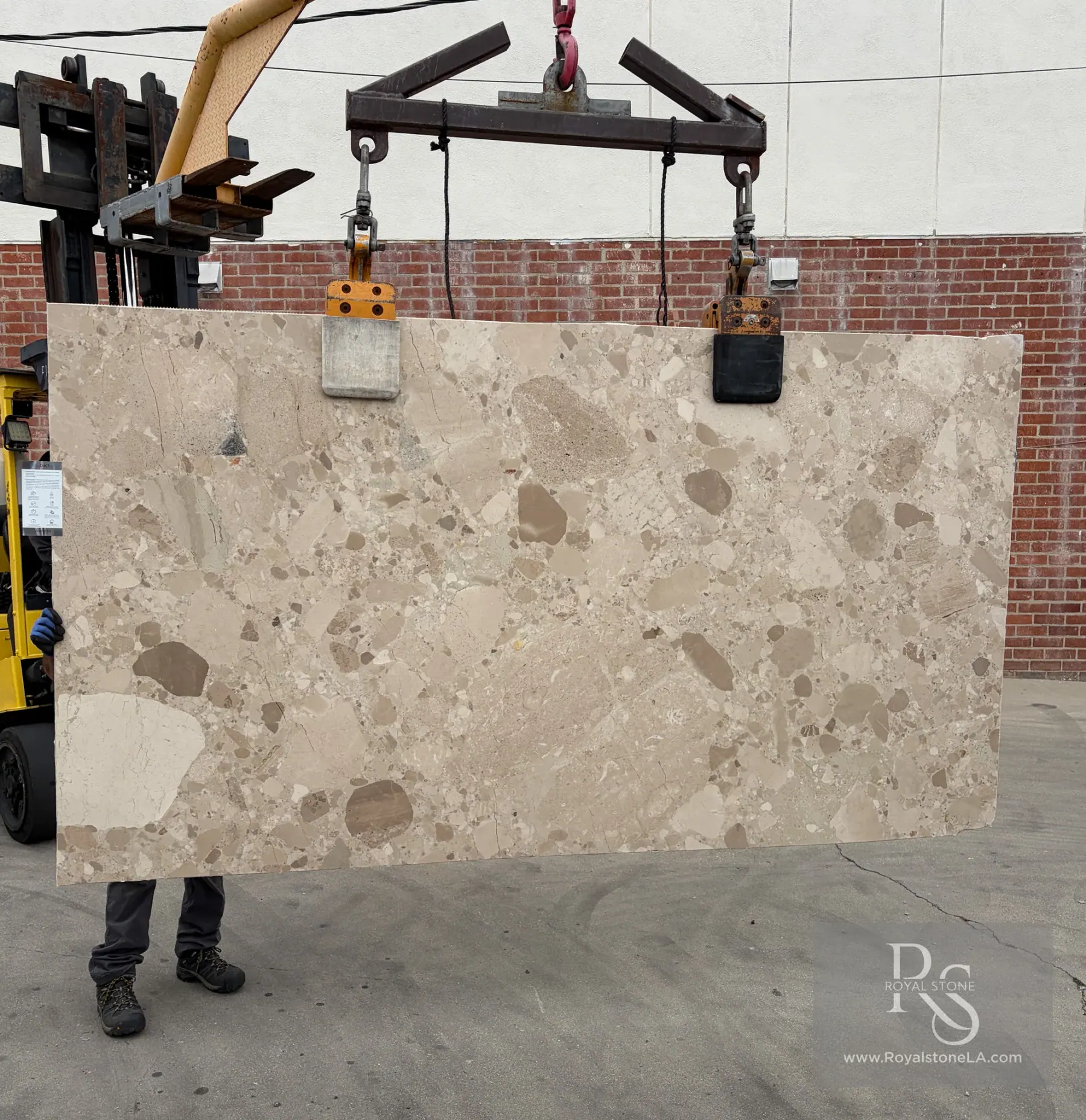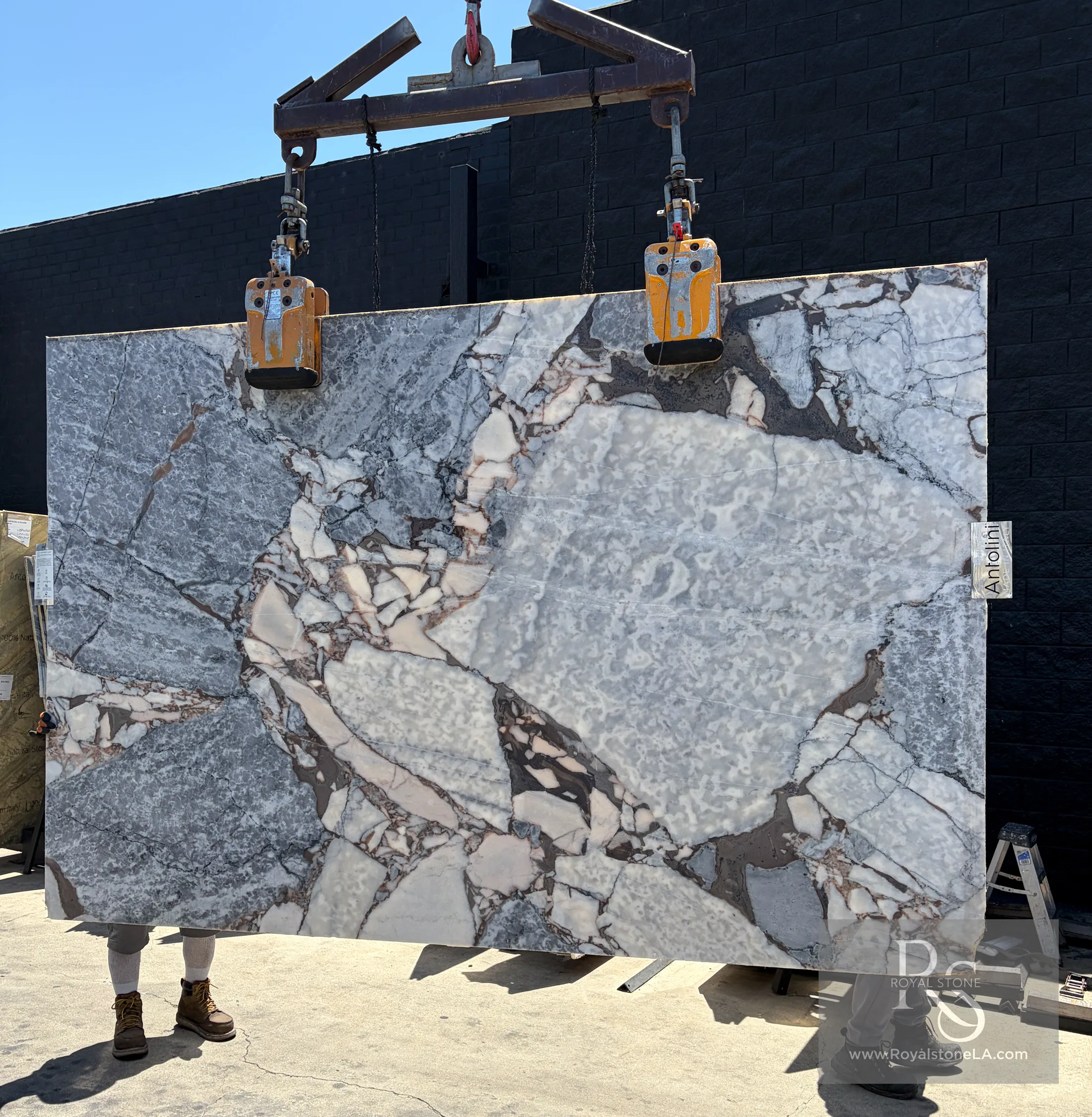
Ocean Storm is the Viola Antolini releases when they read the quarry as weather rather than as vegetable dye. The ground is steely blue-grey — cooler than the chalk-white of a textbook Calacatta Viola, more like the underside of a slate cloud just before rain — and it is shattered across the face by wide white breccia clasts, slivers of rose and amber from the surrounding strata, and one large translucent quartz pocket that reads as a frozen wave at the center of the slab.
The composition is the marble's argument for itself. Most Viola slabs earn their place as a single statement surface on a fireplace wall, a powder bath, a bar back, or a primary vanity face. Ocean Storm earns it twice — the brecciation is broad enough to keep the eye moving, and the central translucent pocket is the kind of geological figure that turns a wall into a portrait.
“Most Viola slabs earn their place as a single statement surface on a fireplace wall, a powder bath, a bar back, or a primary vanity face.”
Honed is the correct finish here. Polishing would crush the steel-blue reading into something closer to graphite; the matte surface keeps the blue cool and the breccia standing forward as relief. Backlit, the central quartz pocket will glow; in standard interior light it reads as a pale celadon depth inside the slab.
Cut at 2cm and sized at 73" × 111", this slab fits a single-piece fireplace surround, a wrapped powder room, or a high-impact entry wall. Pair with brushed bronze, blackened steel, rift white oak, and plaster in greige or bone — the stone wants quiet neighbors.
On the floor at Royal Stone in Los Angeles. Walk it in daylight before reserving — the translucent pocket reads very differently under direct sun than under soft interior wash.
Tagged