Calacatta Viola,
in Los Angeles.
The most dramatic of Italy’s Calacatta marbles. A clean white ground shattered by veins of aubergine, plum and bruised violet — the stone designers fly in to see when a room needs a single, unforgettable sculptural object.
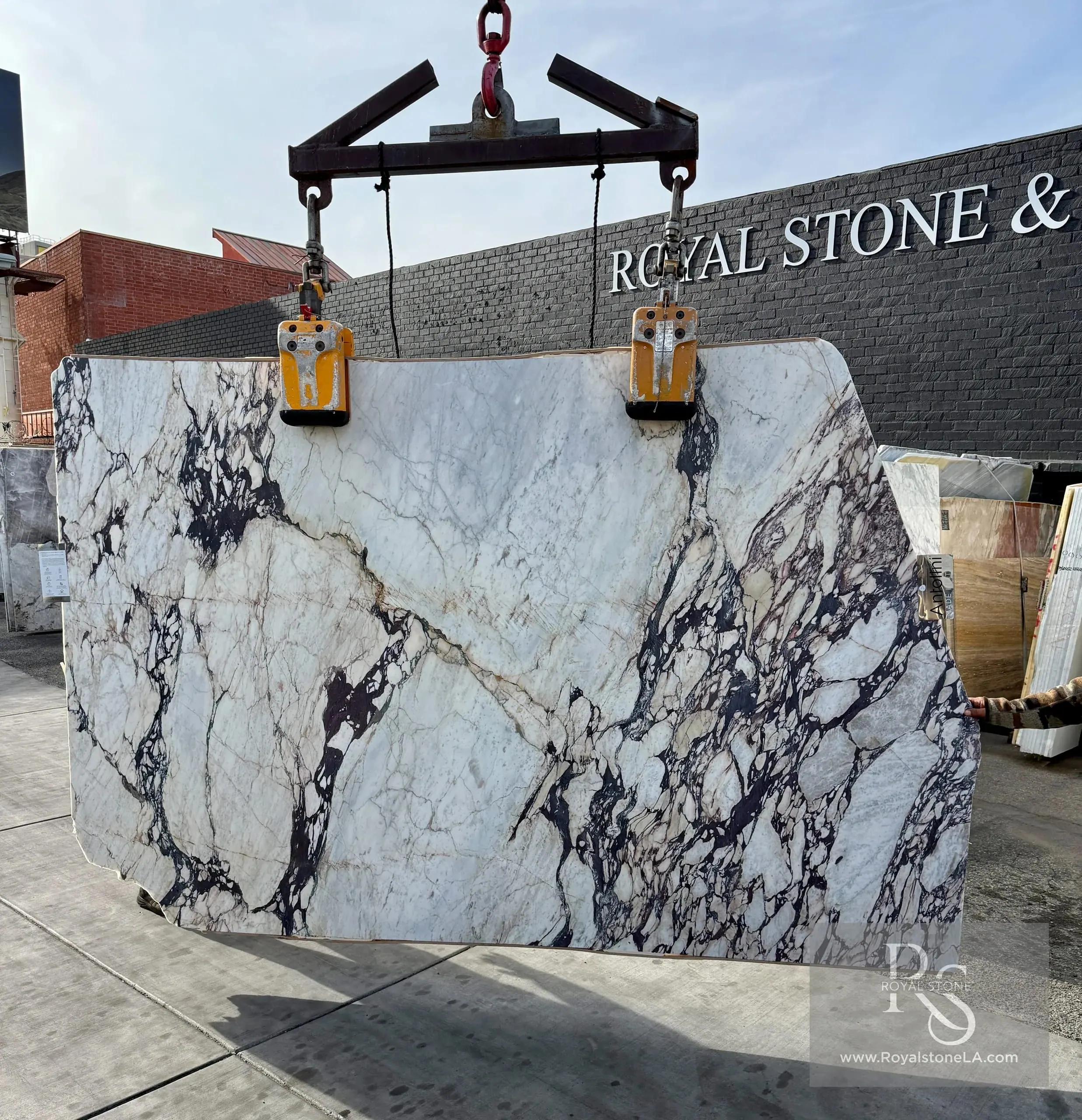
Calacatta Viola — Honed
On Calacatta Viola
No. 01.2a
Quarried in the Apuan Alps of Tuscany. Output is small and irregular — every Calacatta Viola block runs differently, so no two slabs read alike.
Calacatta Viola is rare on purpose. The manganese and iron that give the stone its violet veining appear unpredictably in the block, so a single quarry produces both quiet honey-toned slabs and the saturated, near-magenta pieces that designers travel to see in person. Supply is limited enough that we sometimes hold a single slab for a specific kitchen or bath for months.
Standard gauge is 2cm, with 3cm available for free-standing islands and thicker mitered edges. Because the veining is so directional, Calacatta Viola is almost always bookmatched — two mirrored slabs opening like a butterfly across a feature wall, fireplace surround, or vanity, so the violet veins meet at the seam.
Honed reads soft and matte and keeps the violet calm; polished pushes the veining toward true purple and lifts the contrast against the white field. As a true marble, Calacatta Viola etches with acid and is best specified for the room’s sculptural moment — a powder bath, bar back, fireplace, or primary suite vanity — rather than a hardworking prep kitchen. We’ll pull the slab for you to walk in daylight before you commit.
Rare
Supply
2cm
Standard Gauge
1 of 1
Every Slab
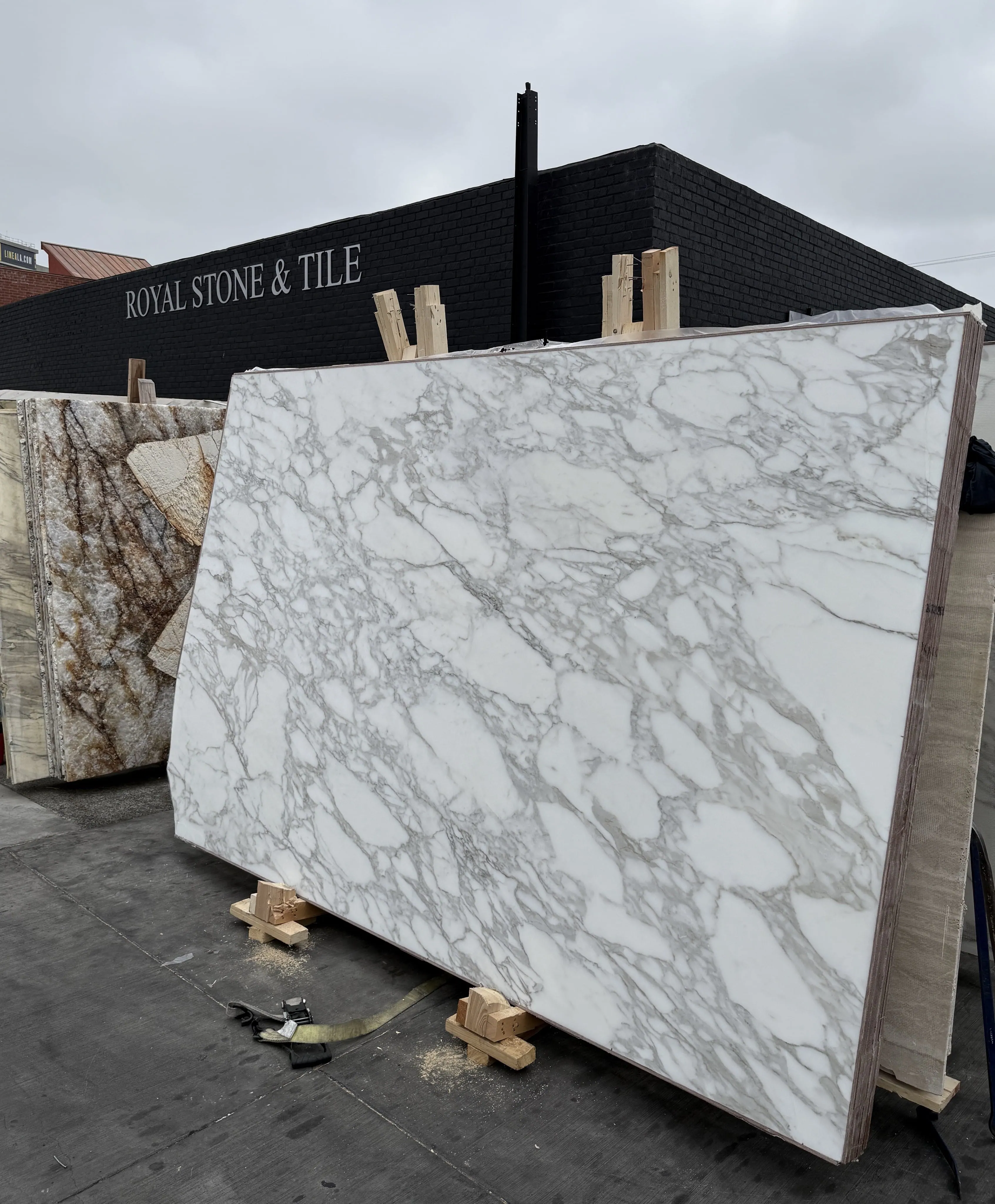
Side by Side
Viola, Borghini or Monet?
A spec-call decision.
A head-to-head with the other Calacatta lots in the yard — origin, field, vein, finish, application and cost, with a decision guide for kitchens, baths and feature walls.
Read the comparisonCalacatta Viola · In the Yard
Calacatta Viola,
currently on the floor.
Violet-veined Calacatta Viola lots in stock now. Tap any slab for the full study.
18 slabs
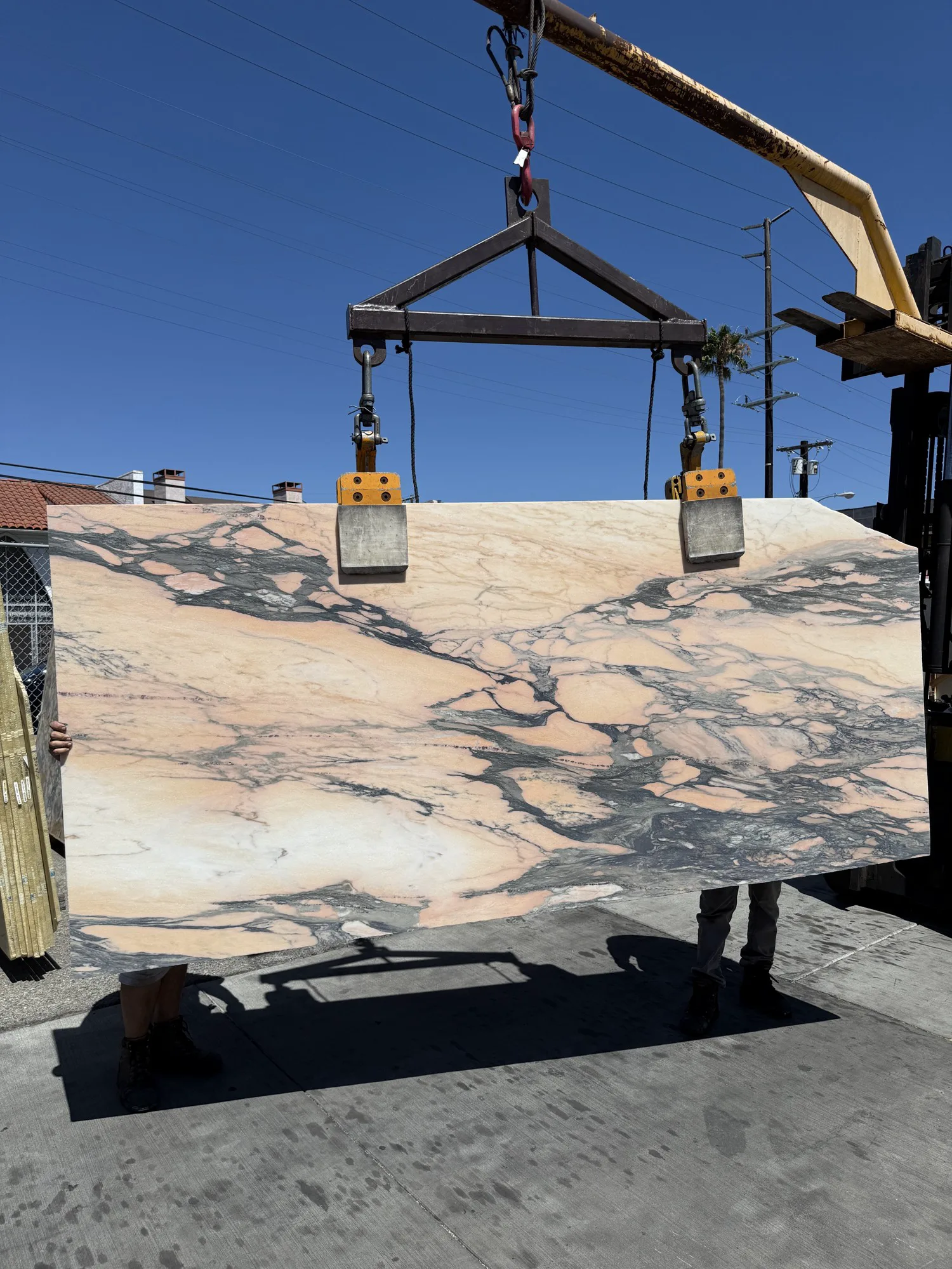
Slab Arrival
2cm Antolini Calacatta Viola Rosenoir DX488 Paonazzo Honed 54″ × 115″
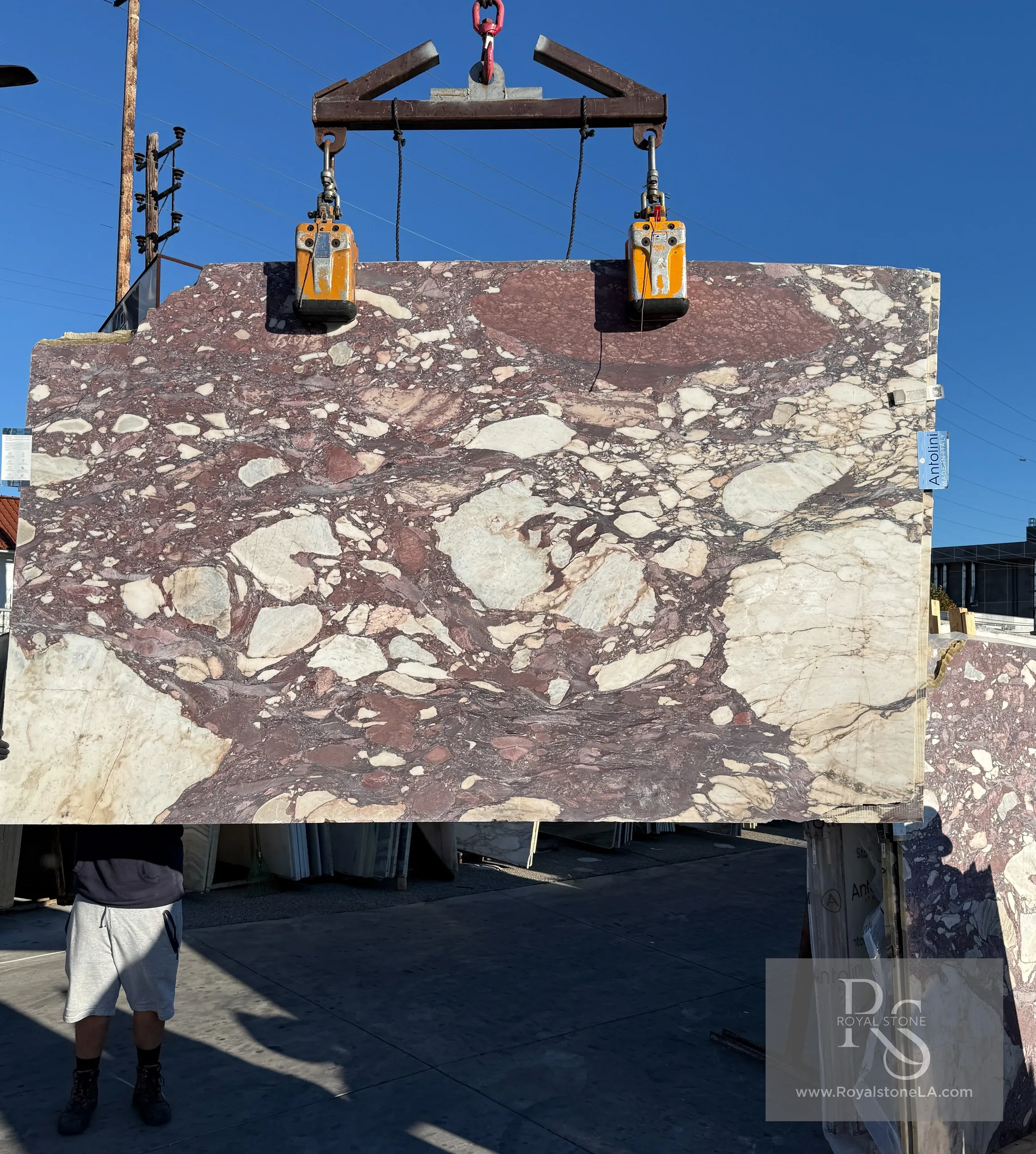
Slab Arrival
Antolini Calacatta Viola Brecciato WOW Honed
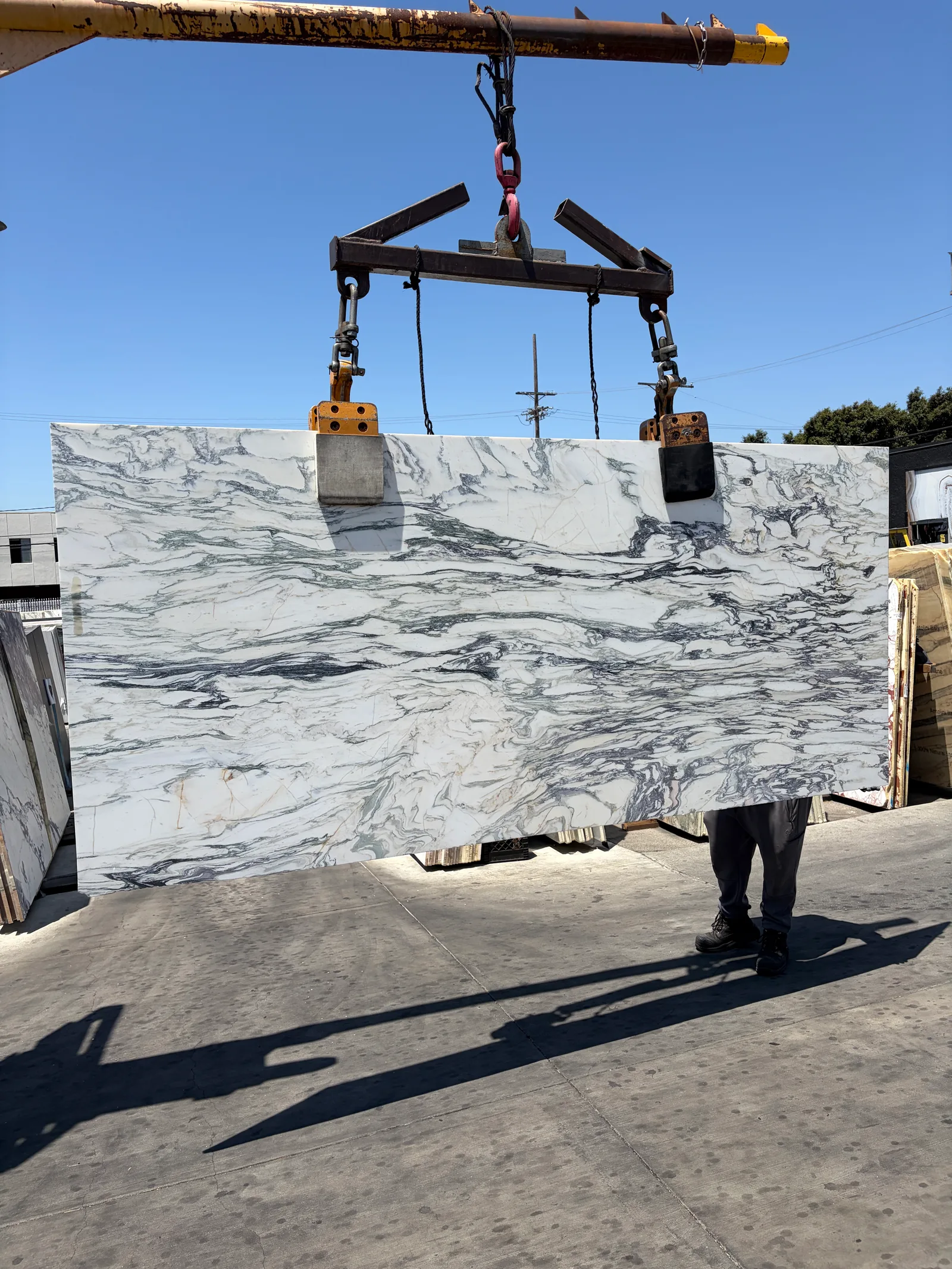
Slab Arrival
Antolini Calacatta Viola Classic DS431 Honed Marble
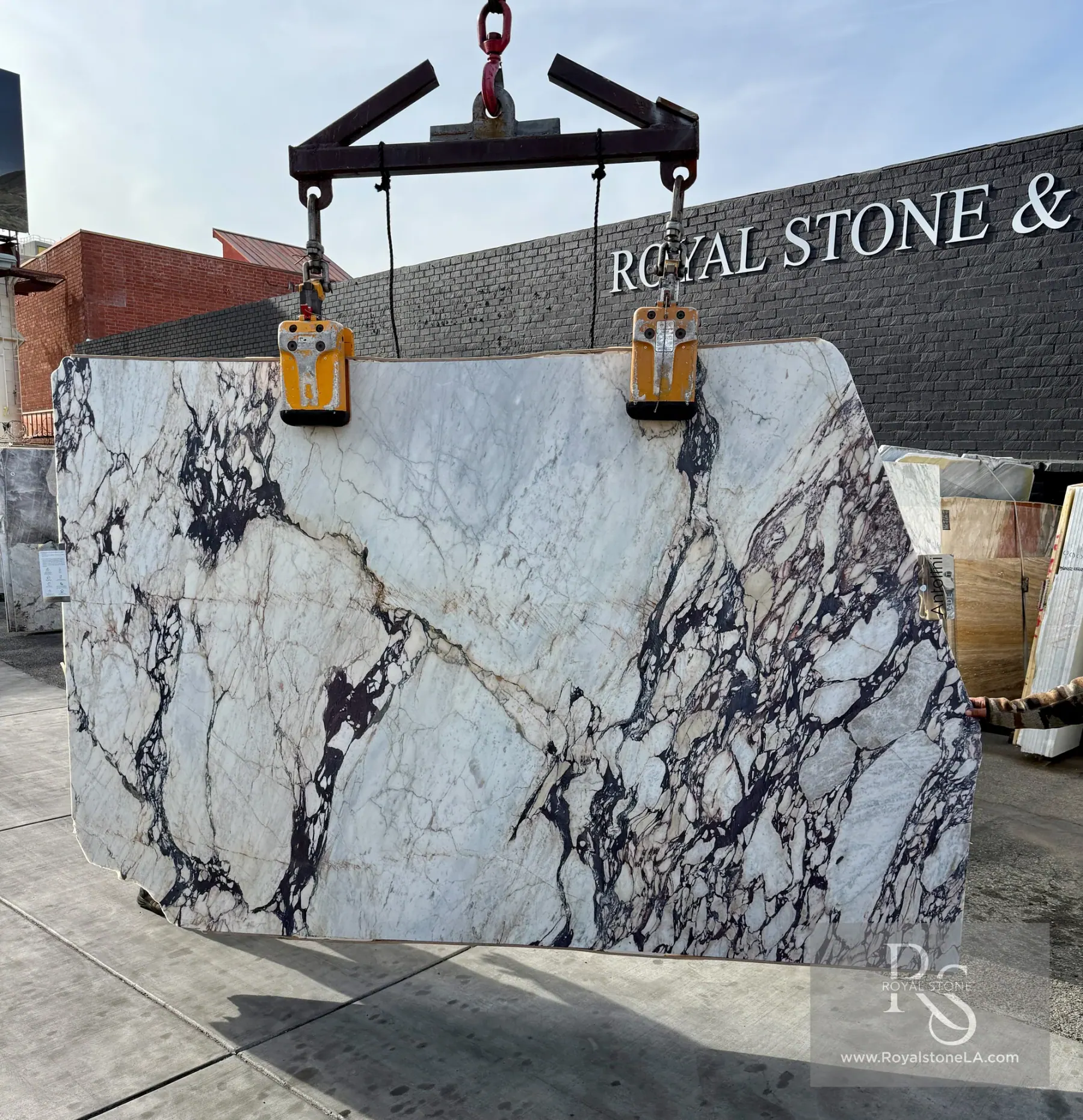
Slab Arrival
Antolini Calacatta Viola Marble YG580 Honed 74" × 112"
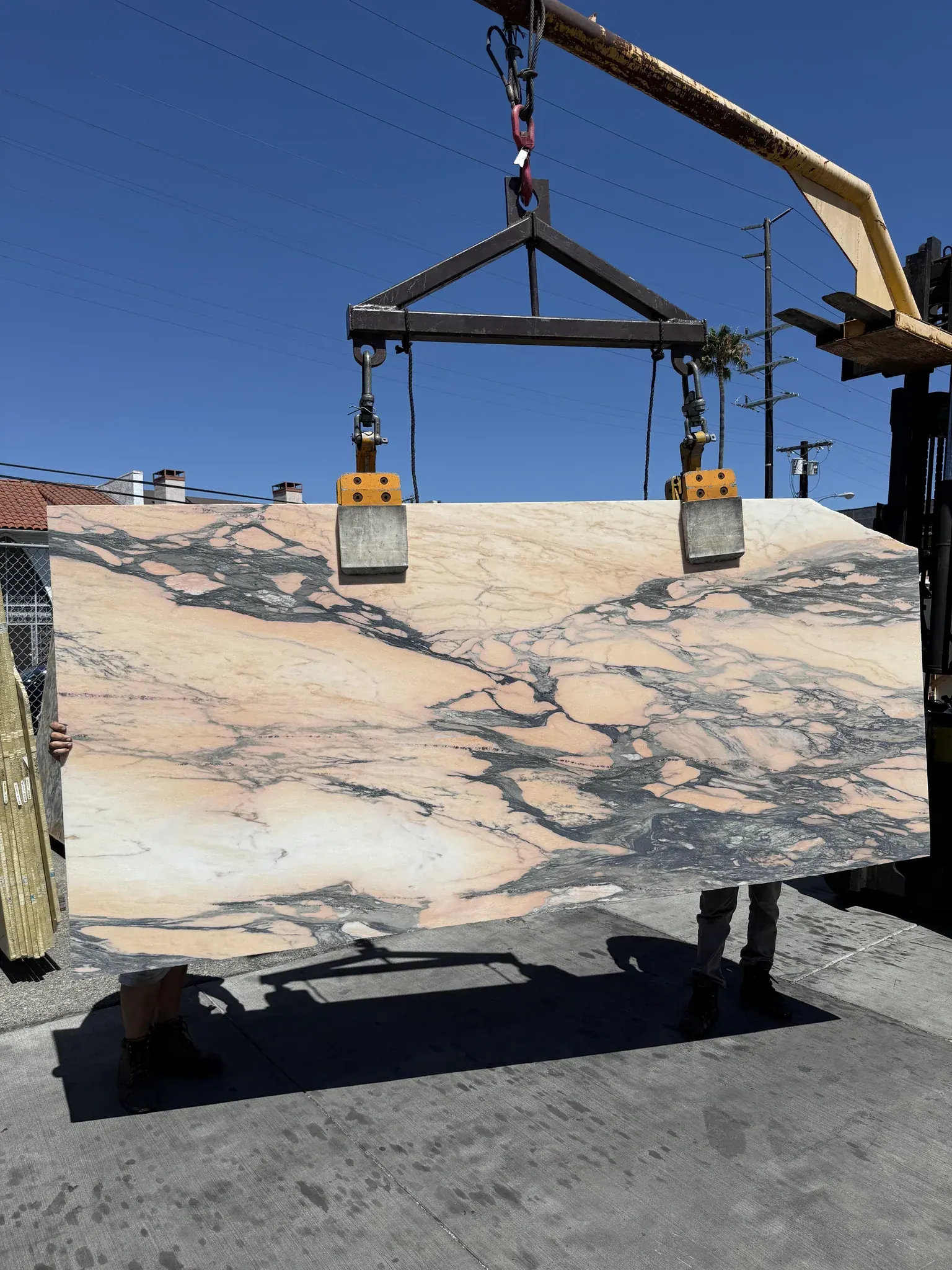
Slab Arrival
Antolini Calacatta Viola Rosenoir Paonazzo Marble DX488 Honed 54" × 115"
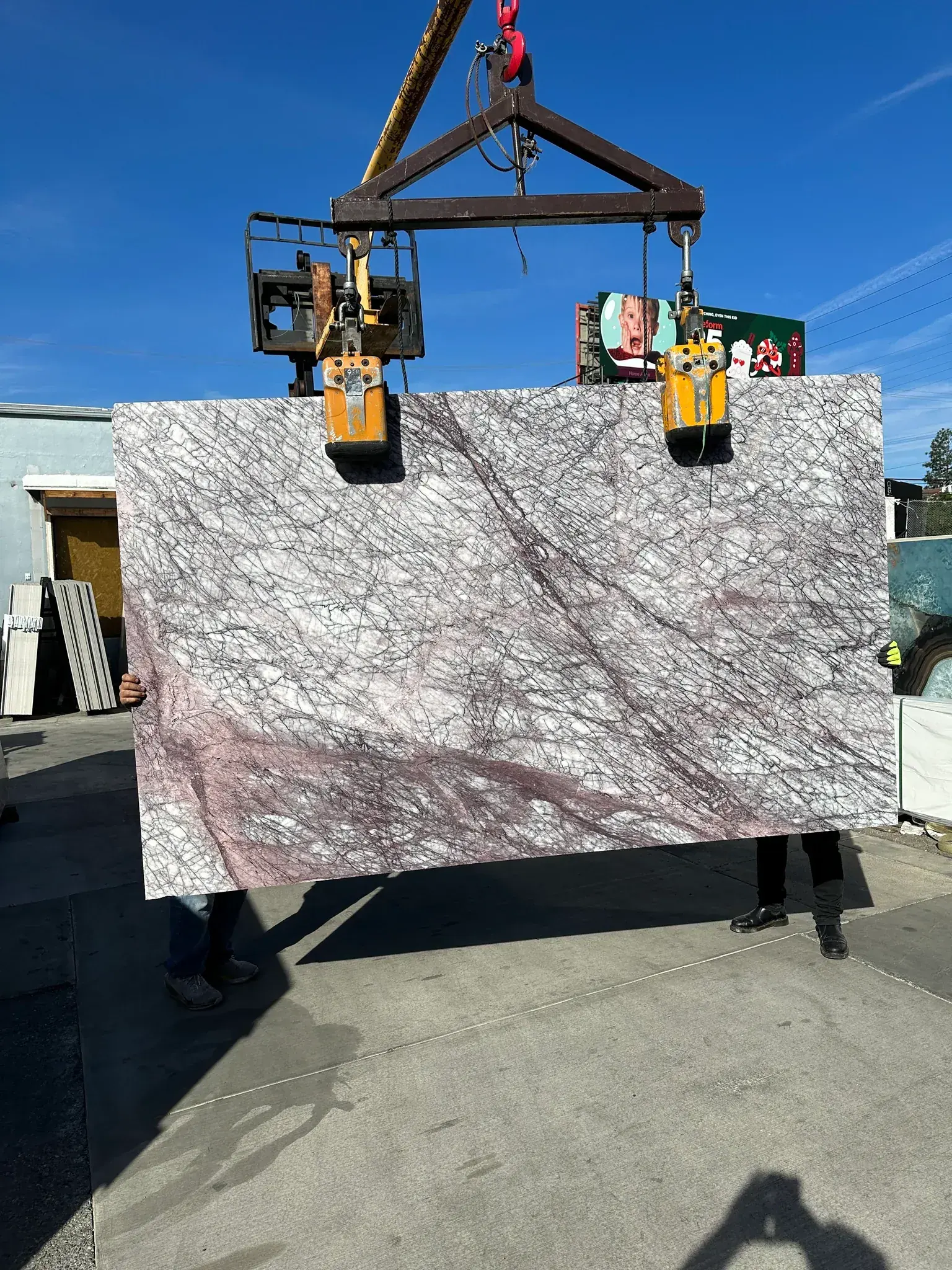
Slab Arrival
Antolini Lilac Viola Premium Extra Select Polished 103" × 63"
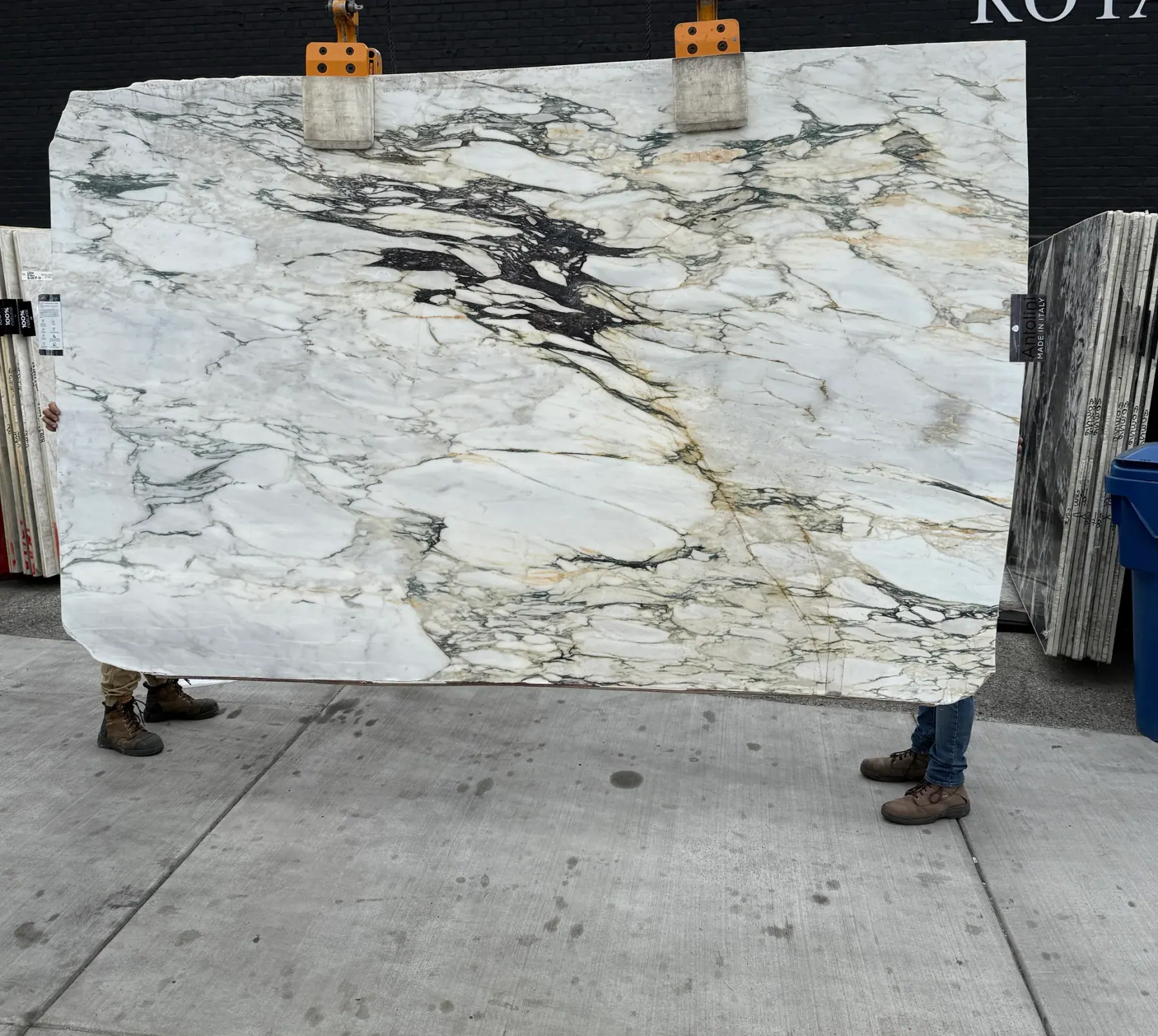
Slab Arrival
Antolini Monet Viola Classic Marble YG373 Polished 76" × 119"
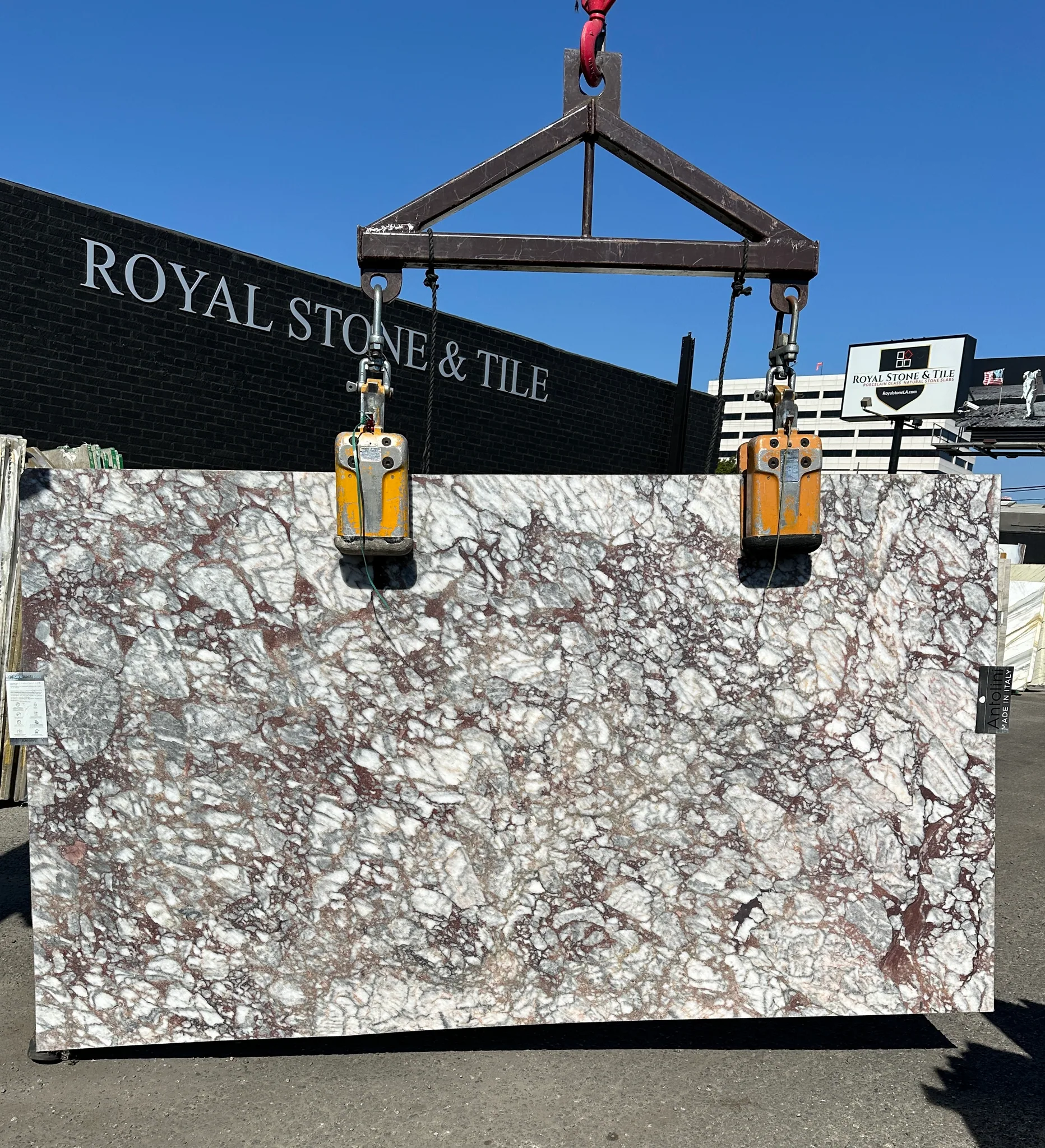
Slab Arrival
Antolini Viola GranViola Marble Semi-Polished

Slab Arrival
Antolini Viola Orobico Marble Slab Polished 72" × 126"
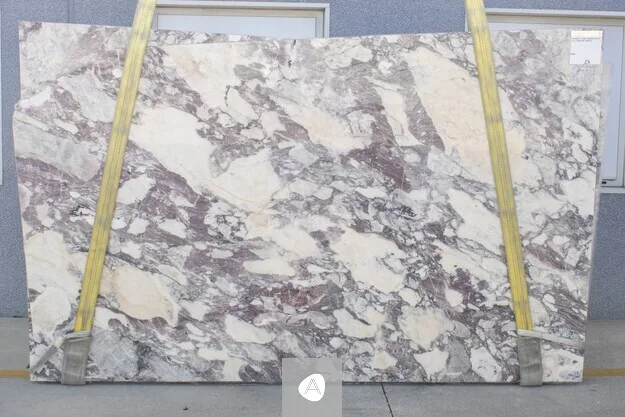
Slab Arrival
Calacatta Viola Antico Extra Marble — Polished, Lot EI088
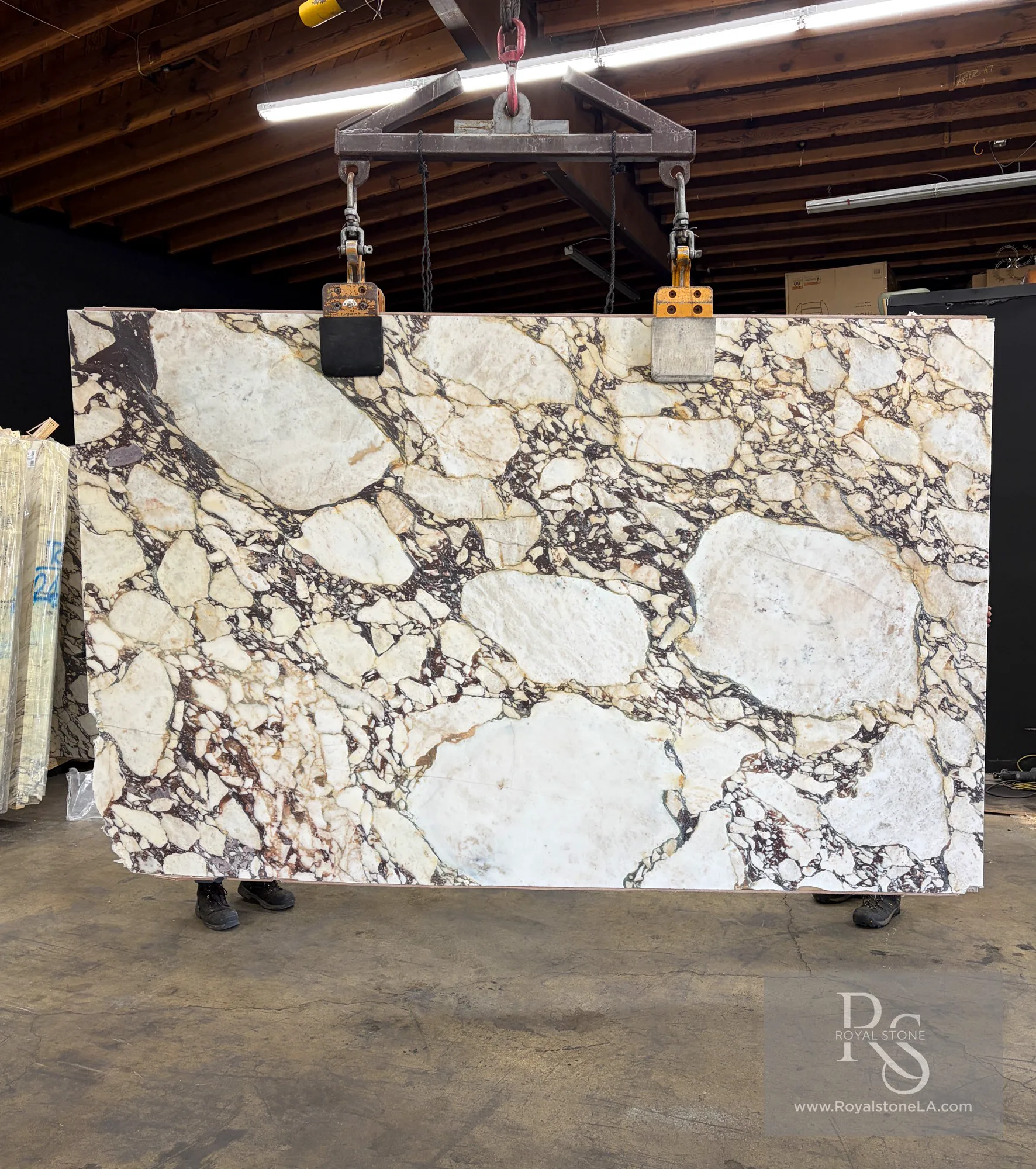
Slab Arrival
Calacatta Viola Extra MAN4860
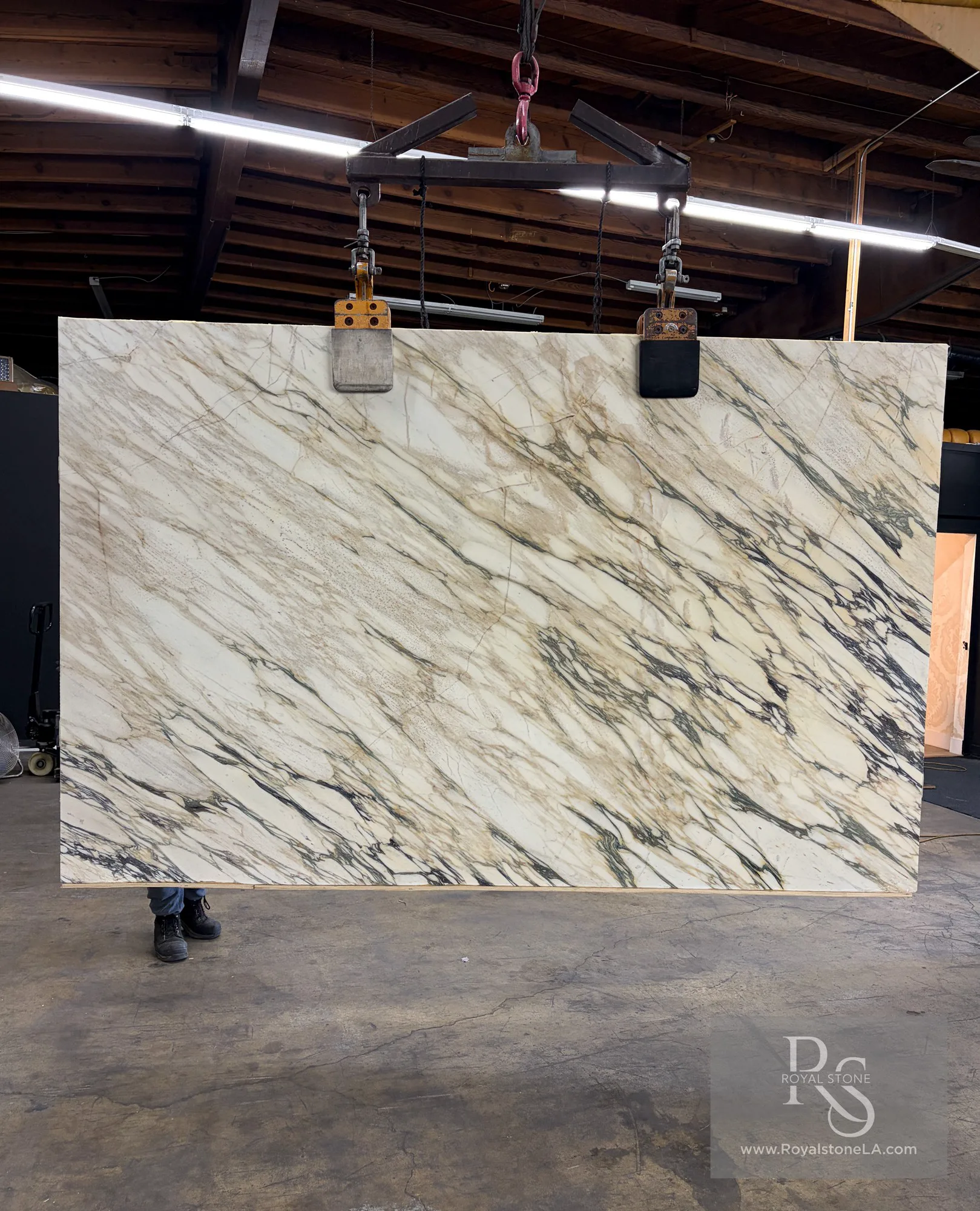
Slab Arrival
Calacatta Viola Monet MAN4410
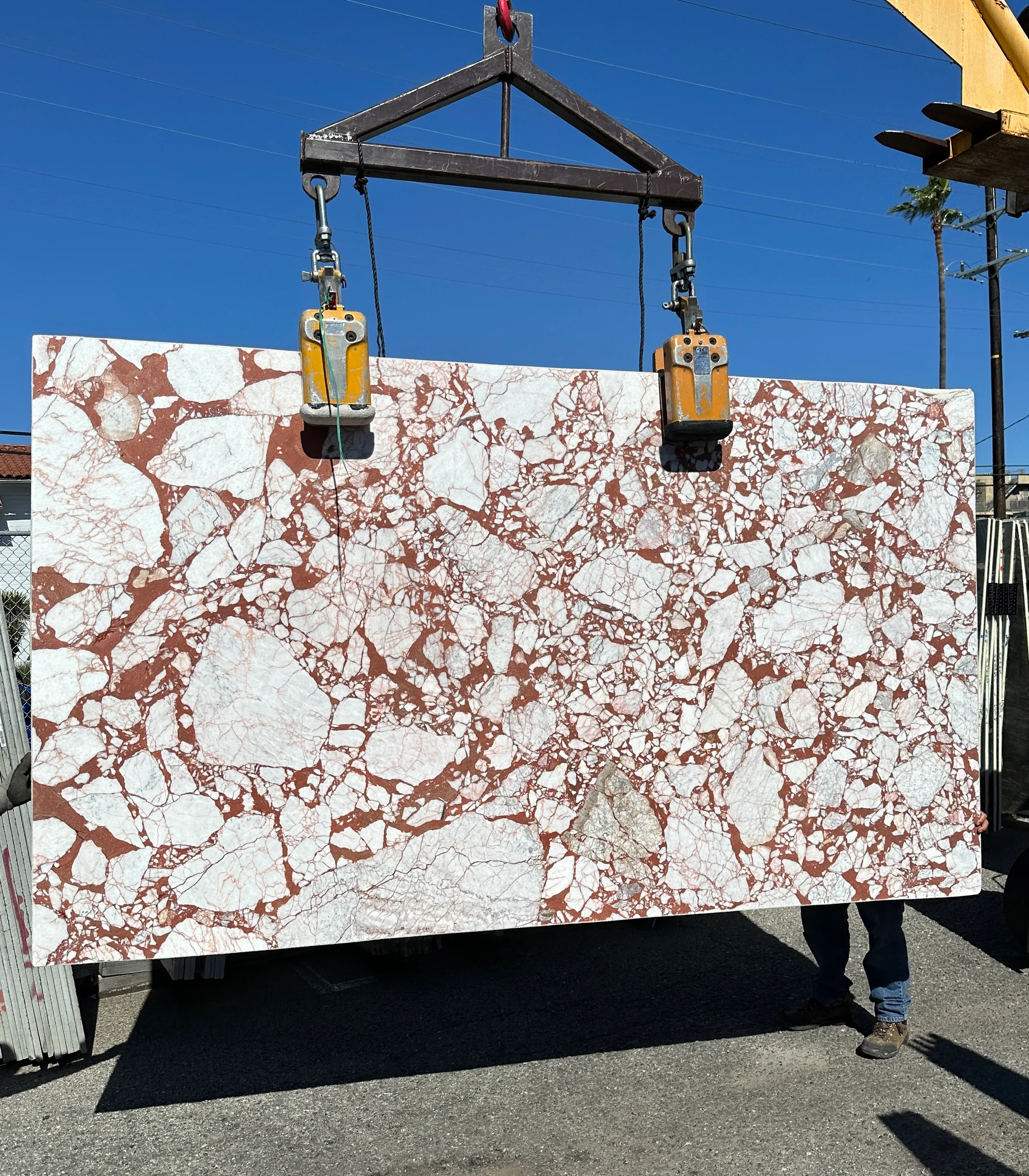
Slab Arrival
Calacatta Viola Rosso Extra, Leathered — 68" × 116"
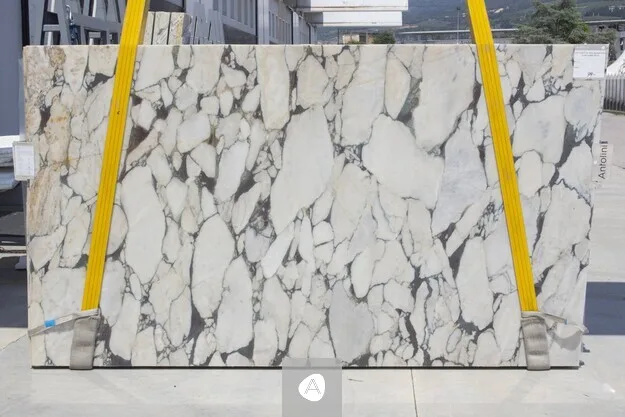
Slab Arrival
Calacatta Viola Super Extra Marble — Polished, Lot ED423
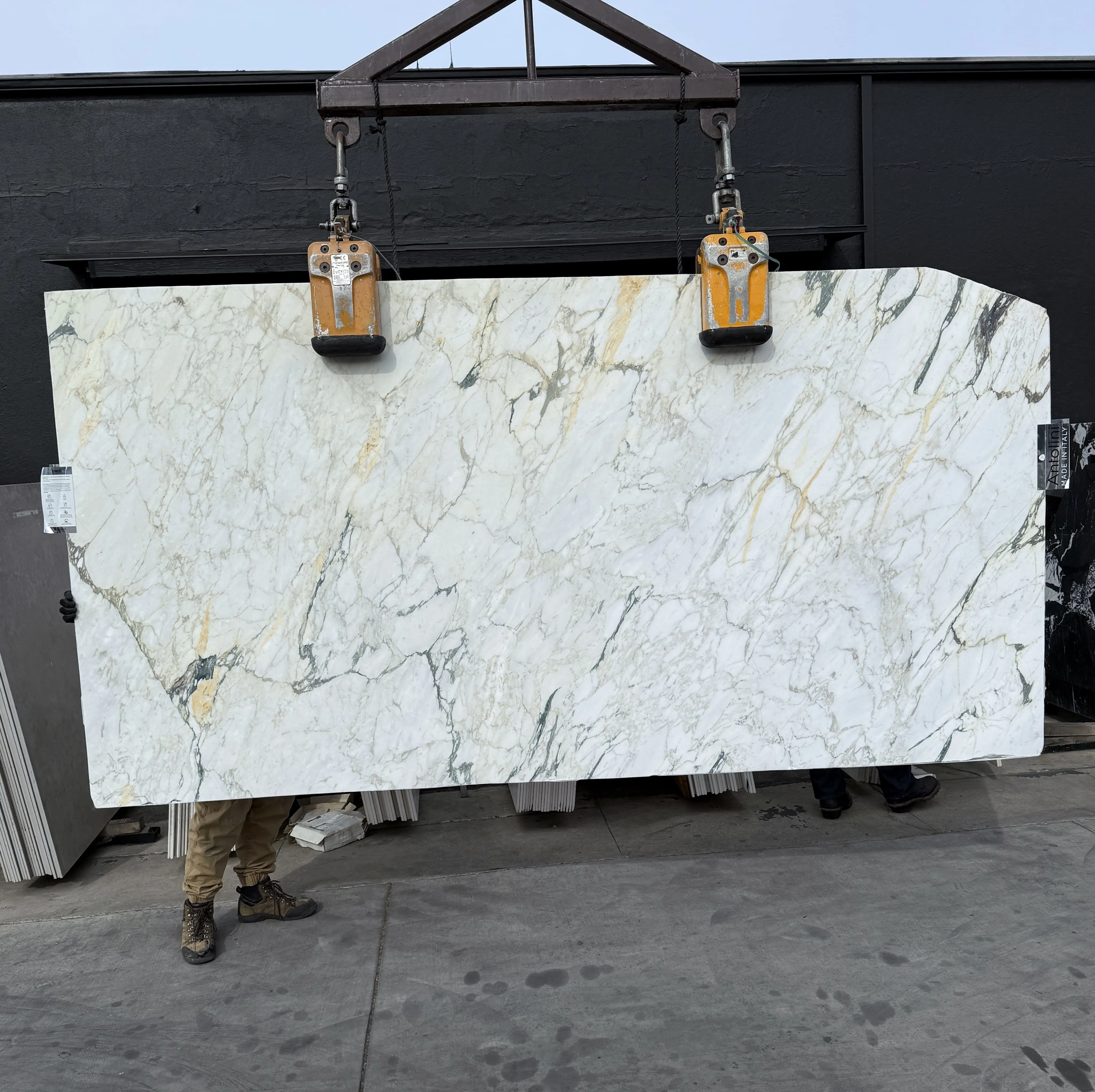
Slab Arrival
Calacatta Viola Verde Monet WOW
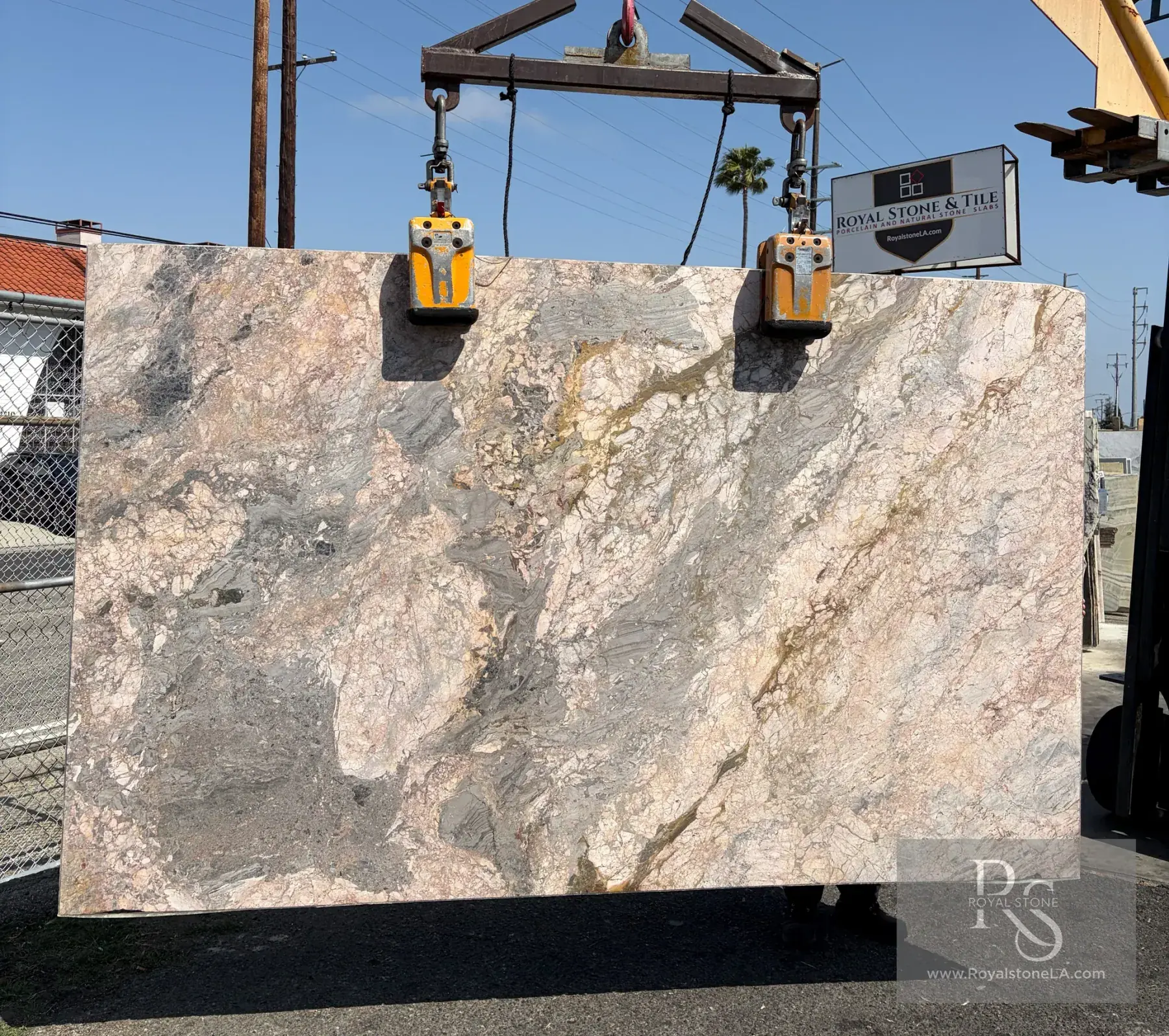
Slab Arrival
Ceppo Viola Cosmo Marble Honed 74" × 122"
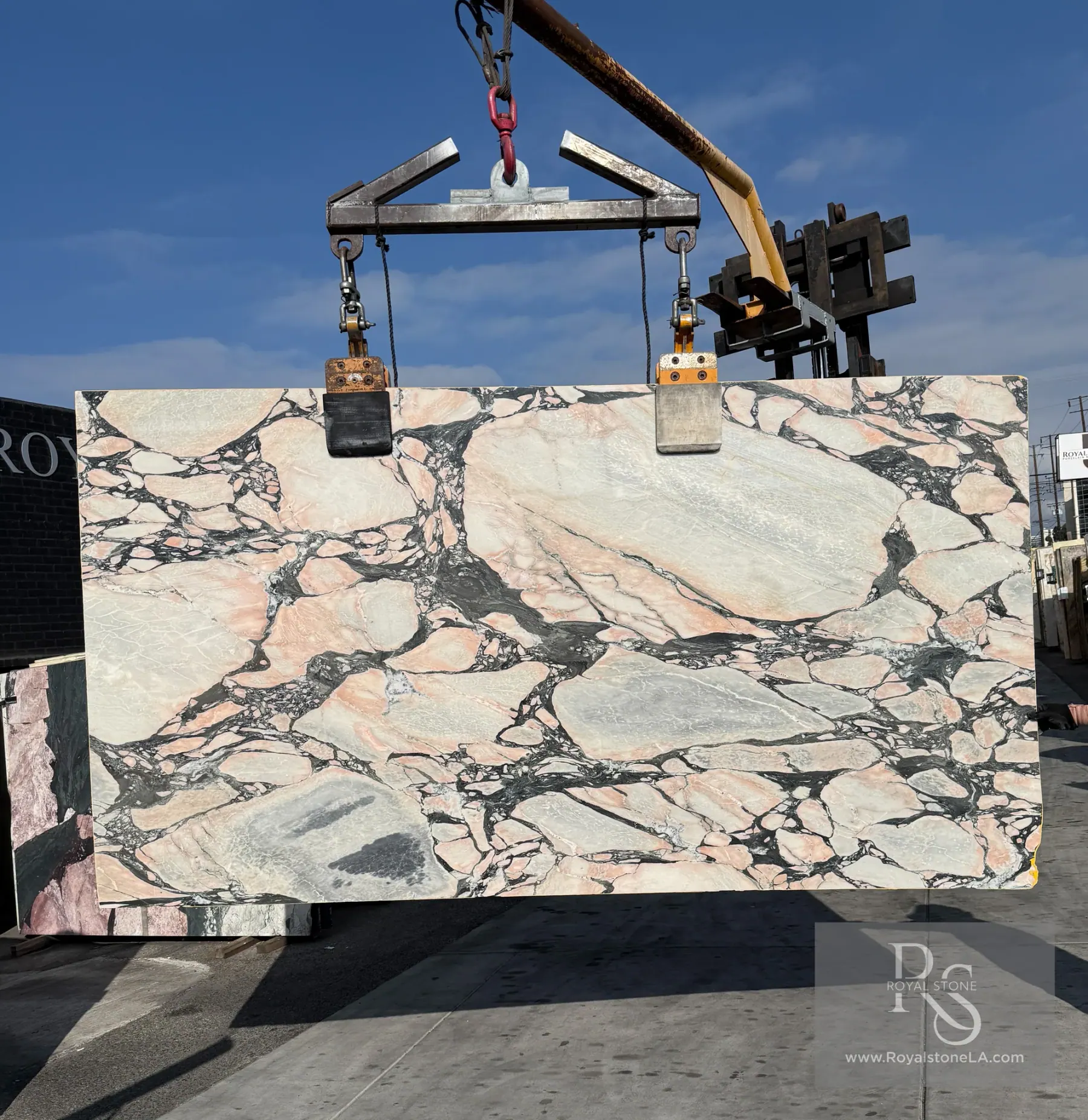
Slab Arrival
Viola Antico Paonazzo — Noir Rose Polished

Slab Arrival
Viola Arabescato Orobico Rosso Marble Slab Honed 75" × 130"
Common Questions
Calacatta Viola
questions, answered.
- What is Calacatta Viola marble?
- Calacatta Viola is a rare Italian marble quarried in the Apuan Alps of Tuscany. It pairs a clean white Calacatta ground with bold veins of violet, aubergine, and plum — colored by manganese and iron in the block — making it one of the most dramatic natural stones available.
- Where does Calacatta Viola come from?
- It is quarried in the Apuan Alps of Tuscany, Italy, the same mountains that produce Calacatta and Statuario. Royal Stone hand-selects Calacatta Viola blocks in Verona and stocks the slabs at our Los Angeles yard.
- Is Calacatta Viola good for kitchen countertops?
- Calacatta Viola is a true marble, so it etches with acids like lemon and vinegar and scratches more easily than quartzite. It is best specified for the room’s sculptural moment — a powder bath, fireplace, bar, or vanity — rather than a hardworking prep kitchen. Clients who want the look in a working kitchen often pair it with a quartzite elsewhere.
- How much does Calacatta Viola cost in Los Angeles?
- Calacatta Viola is among the rarer, more expensive marbles, and price varies by slab size, finish, and the intensity of the violet veining. Call Royal Stone at (310) 477-3223 or book a yard visit for current per-slab pricing.
- Should Calacatta Viola be bookmatched?
- Almost always. The veining is highly directional, so Calacatta Viola is typically installed as bookmatched pairs — two mirrored slabs opening like a butterfly so the violet veins meet at the seam across a feature wall, fireplace, or vanity.
Visit the Yard
Walk a Calacatta Viola slab
in natural light.
Slabs are one-of-one. We’d rather pull the piece for you to see than describe it from a photograph. Designers and private clients are welcome by appointment.