Roman Italian
Travertine.
2cm
Gauge
63×123
Inches
1 Slab
On the Floor
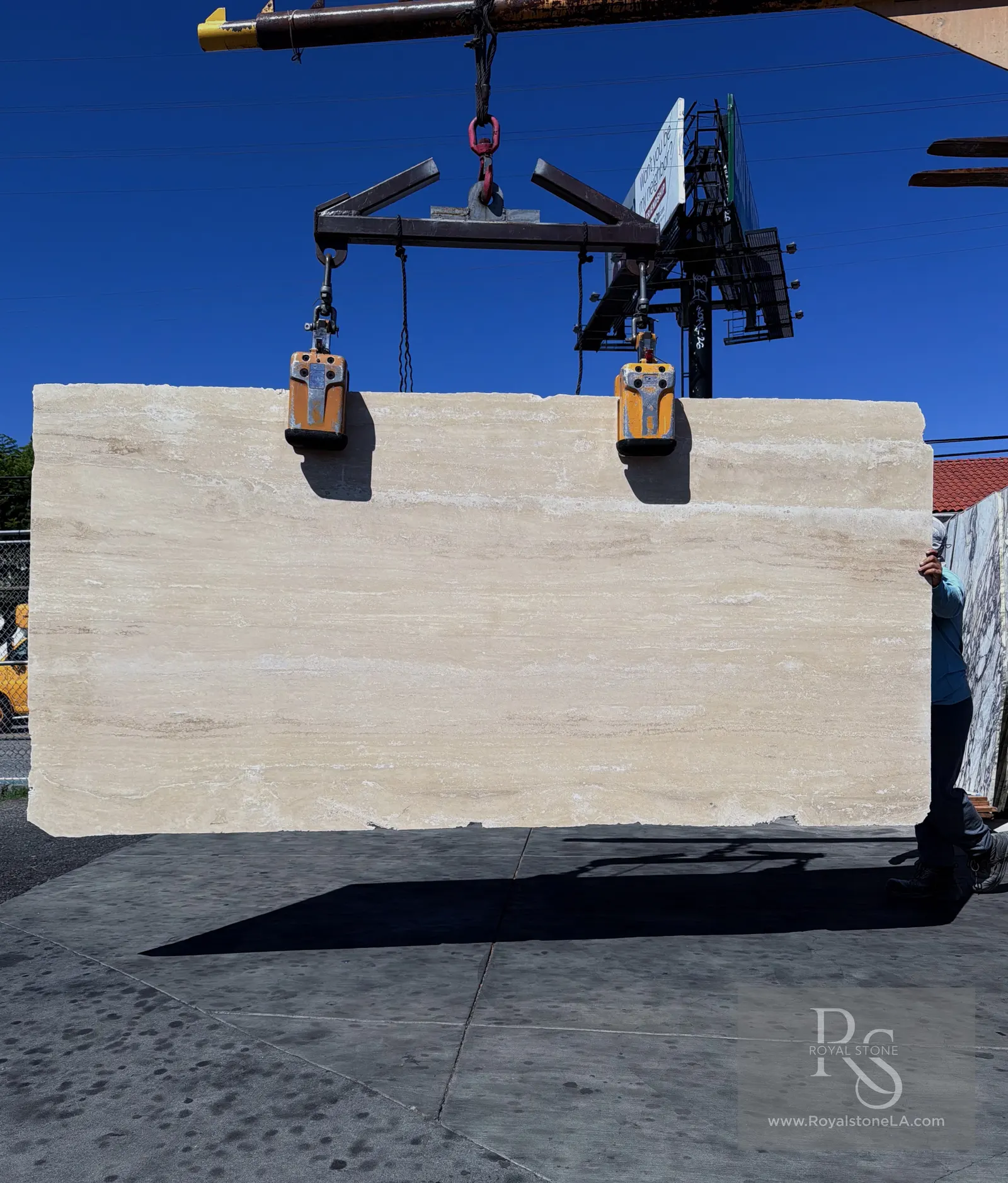
Roman Italian Travertine — Vein Cut Filled & Honed, in Los Angeles
Roman · Vein Cut Filled & Honed
The classical register.
Quarried in Tivoli, Italy, dressing classical Roman cream vein-cut travertine.
Roman Italian Travertine pulls the classical cream register of the Tivoli family — the stone that has clad Roman basilicas, Italian entry halls, and American primary baths for two thousand years. Vein-cut presents the bedding lines parallel to the surface, drawn as warm layered cream; filled closes the natural voids with color-matched resin; honed brings the field to a clean contemporary matte.
At 63″ × 123″, the slab sizes for working kitchen spans, primary bath composition, fireplace surrounds, full-height cladding, and feature walls. The fill closes the voids so the surface reads as contemporary material rather than as the natural vugged register.
The right Roman Italian Travertine when the brief is classical with contemporary discipline. Pair with plaster, oak millwork, terracotta, a darker stone elsewhere as counterpoint.
One Finish · Vein Cut Filled & Honed
Filled & Honed,
to keep the classical contemporary.
Filled closes the voids; honed brings the surface to a clean matte. The classical cream register reads as contemporary material without losing the warmth of the Tivoli stone.
The right finish for working kitchens, primary baths, fireplace surrounds, full-height cladding, and any application where classical cream reads correctly.
2cm · 63″ × 123″ · Vein Cut Filled & Honed
Classical cream, vein-cut, contemporary
Filling closes the voids; honing brings the surface to a clean matte. The slab sits calmly against plaster, oak, and terracotta — and any patina that develops reads as part of the bedding lines rather than wear.
Spec Sheet
Roman Italian Travertine.
In detail.
- Quarry
- Tivoli, Italy
- Stone
- Italian Travertine · Roman classical cream · vein-cut
- Gauge
- 2cm (3cm by special order)
- Cut
- Vein-cut across the bedding plane
- Fill
- Filled · color-matched resin
- Finish
- Honed (filled-and-polished and filled-leathered by special order)
- Application
- Working kitchens, primary bath composition, fireplace surrounds, full-height cladding
- In stock
- Royal Stone · South Sepulveda Boulevard · Los Angeles
Travertine · In the Yard
Other Italian
Travertine on the floor.
Related Roman Italian and other Tivoli travertine slabs currently in the Royal Stone yard — Roman vein cut, Silver, Classico Light, and other classical registers.
19 slabs
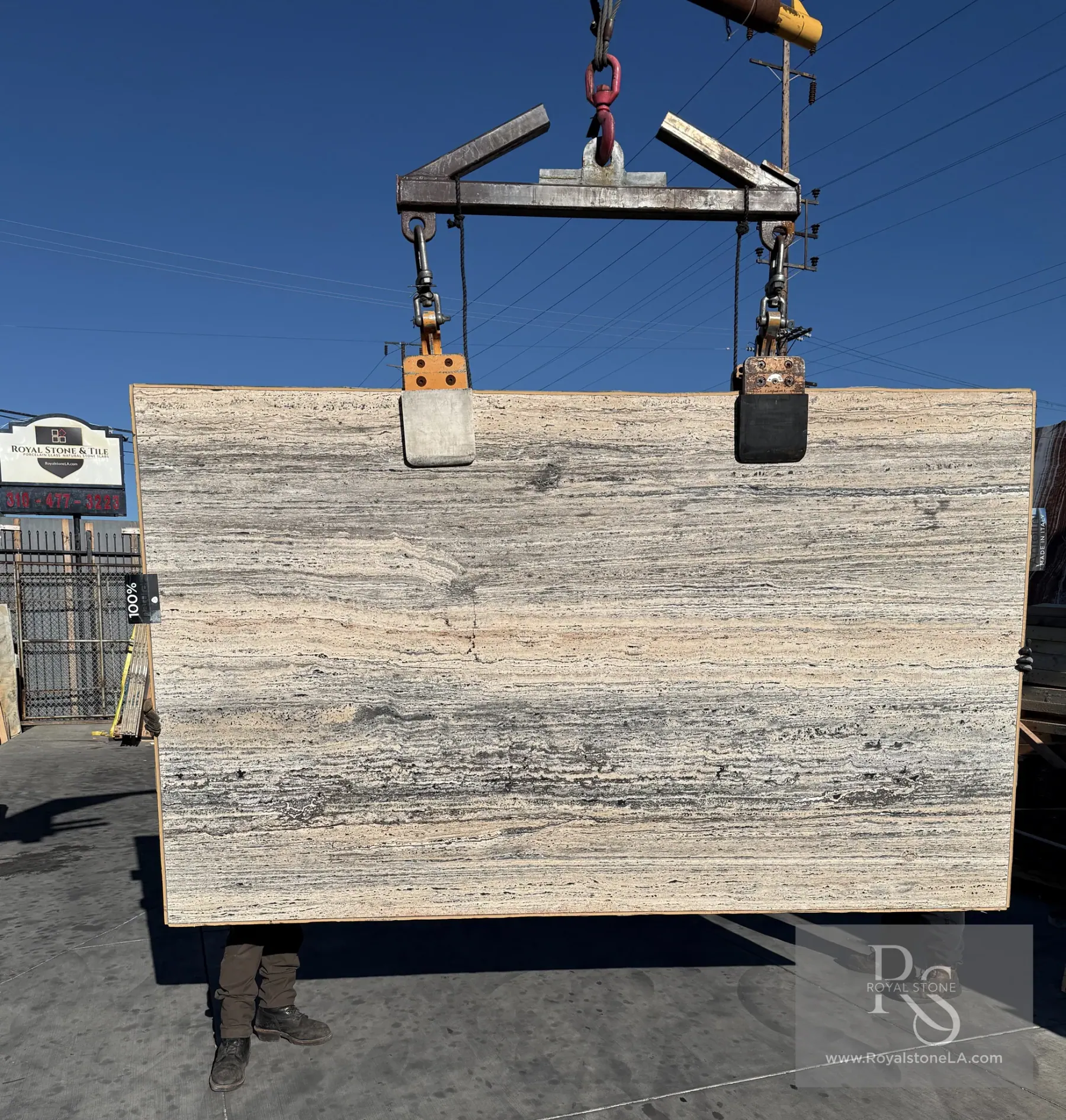
Slab Arrival
2cm Antolini Black Label Platinum Travertine Vein Cut Leathered 66" × 110"
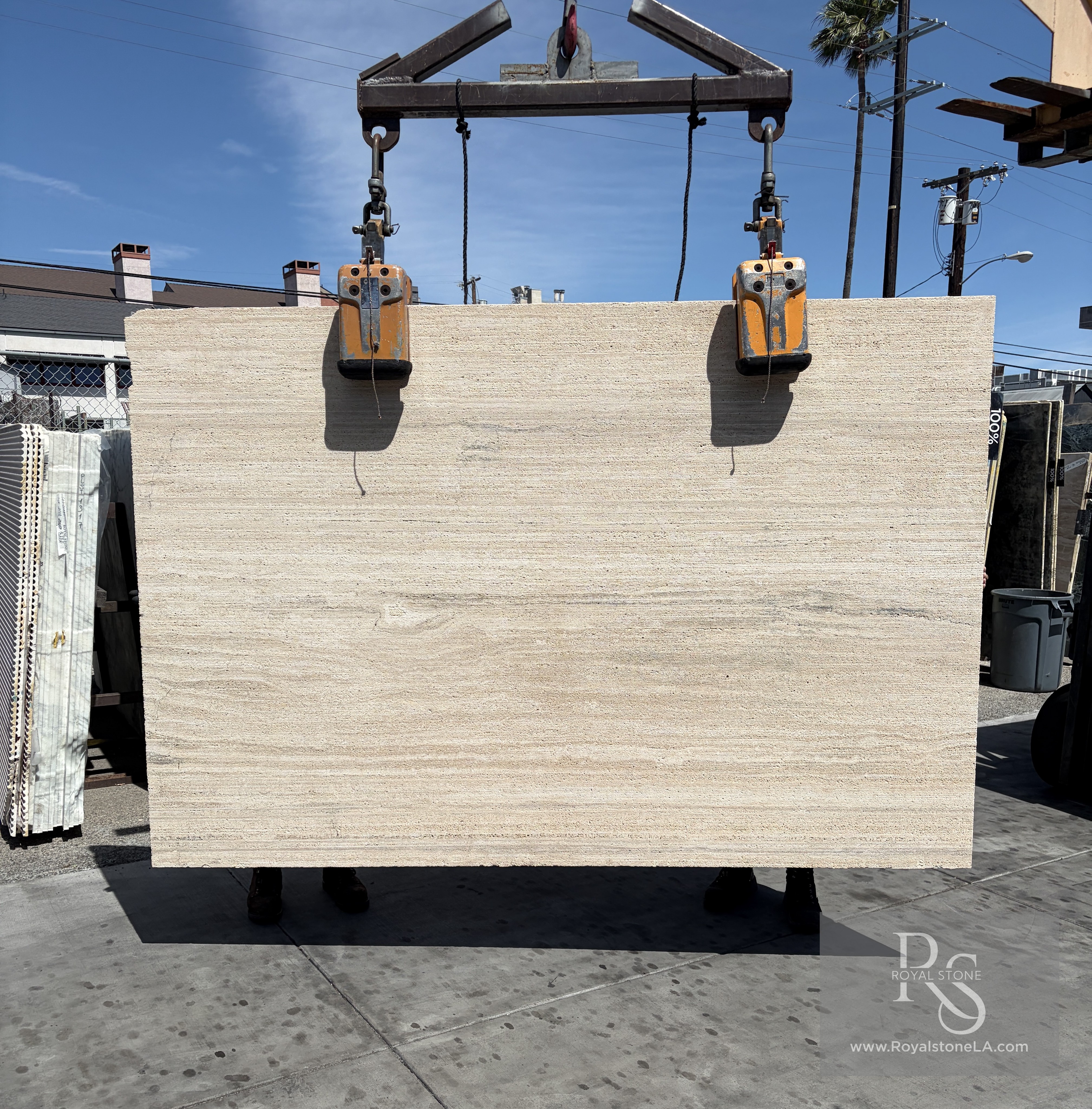
Slab Arrival
2cm Antolini Travertino Classico Light EE352 Stratos 67" × 101"
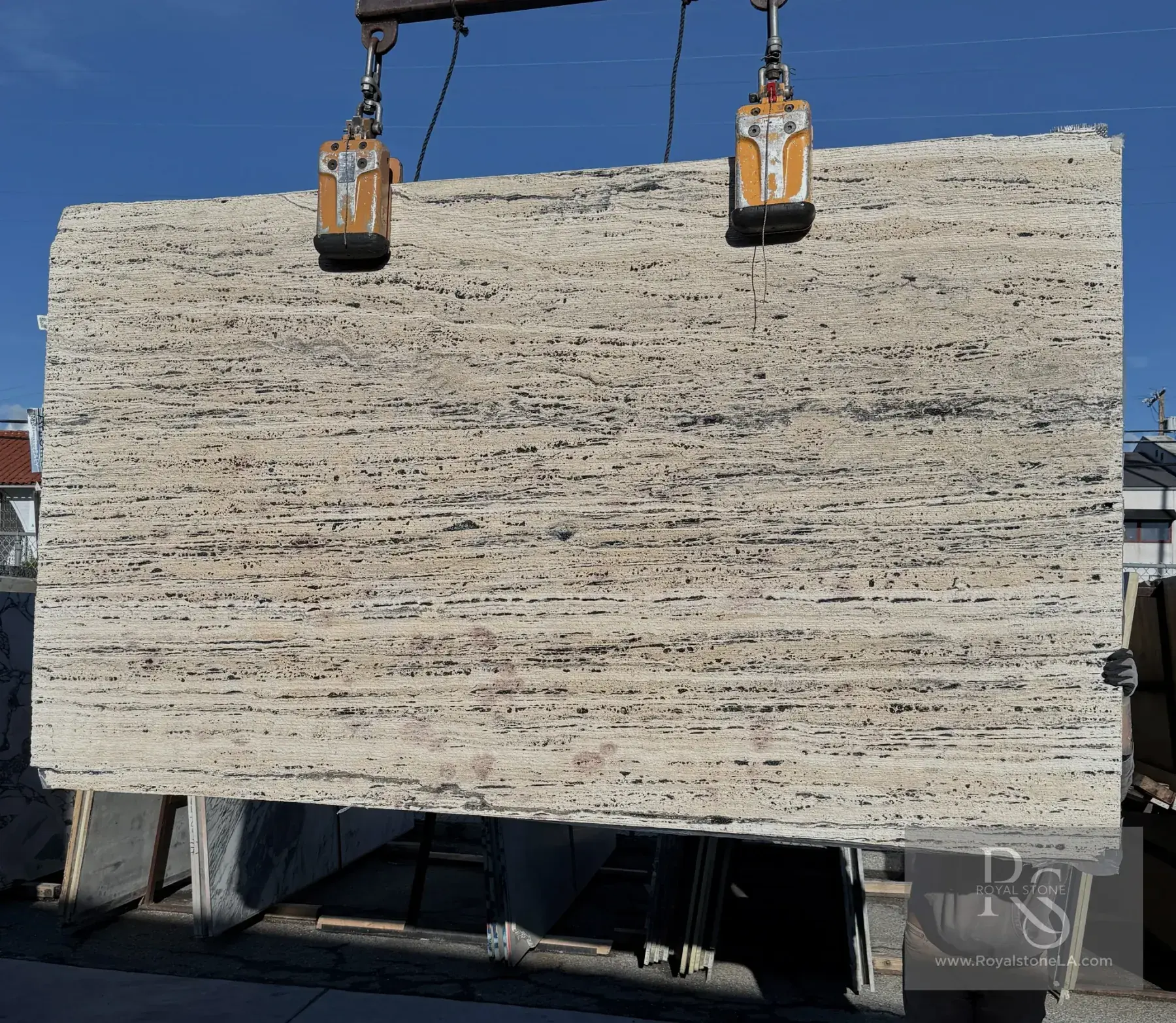
Slab Arrival
2cm Antolini Travertino Platinum Black Label Stratos 69" × 119"
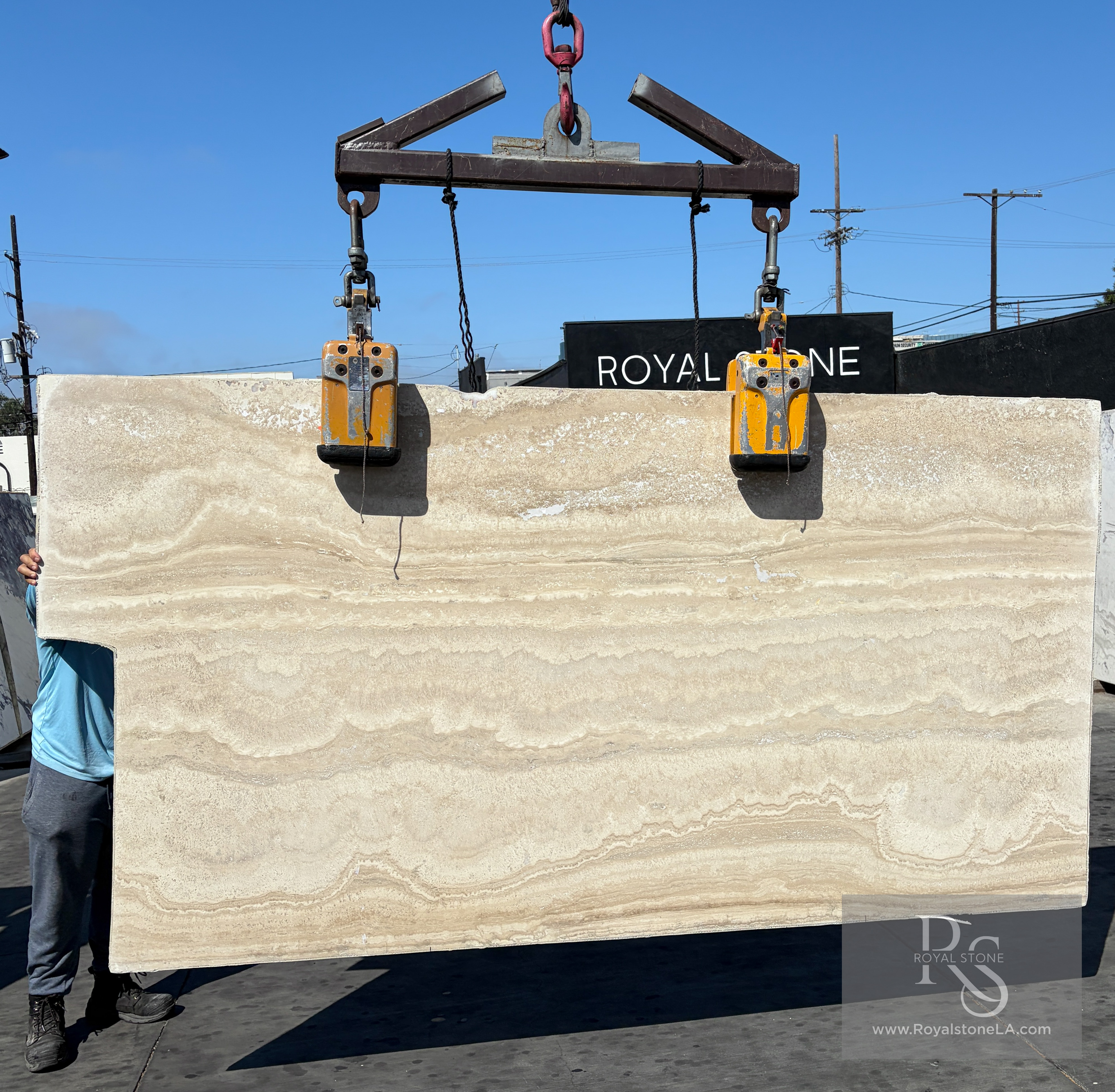
Slab Arrival
2cm Italian Ivory Travertine Vein Cut Filled & Honed 57" × 106"
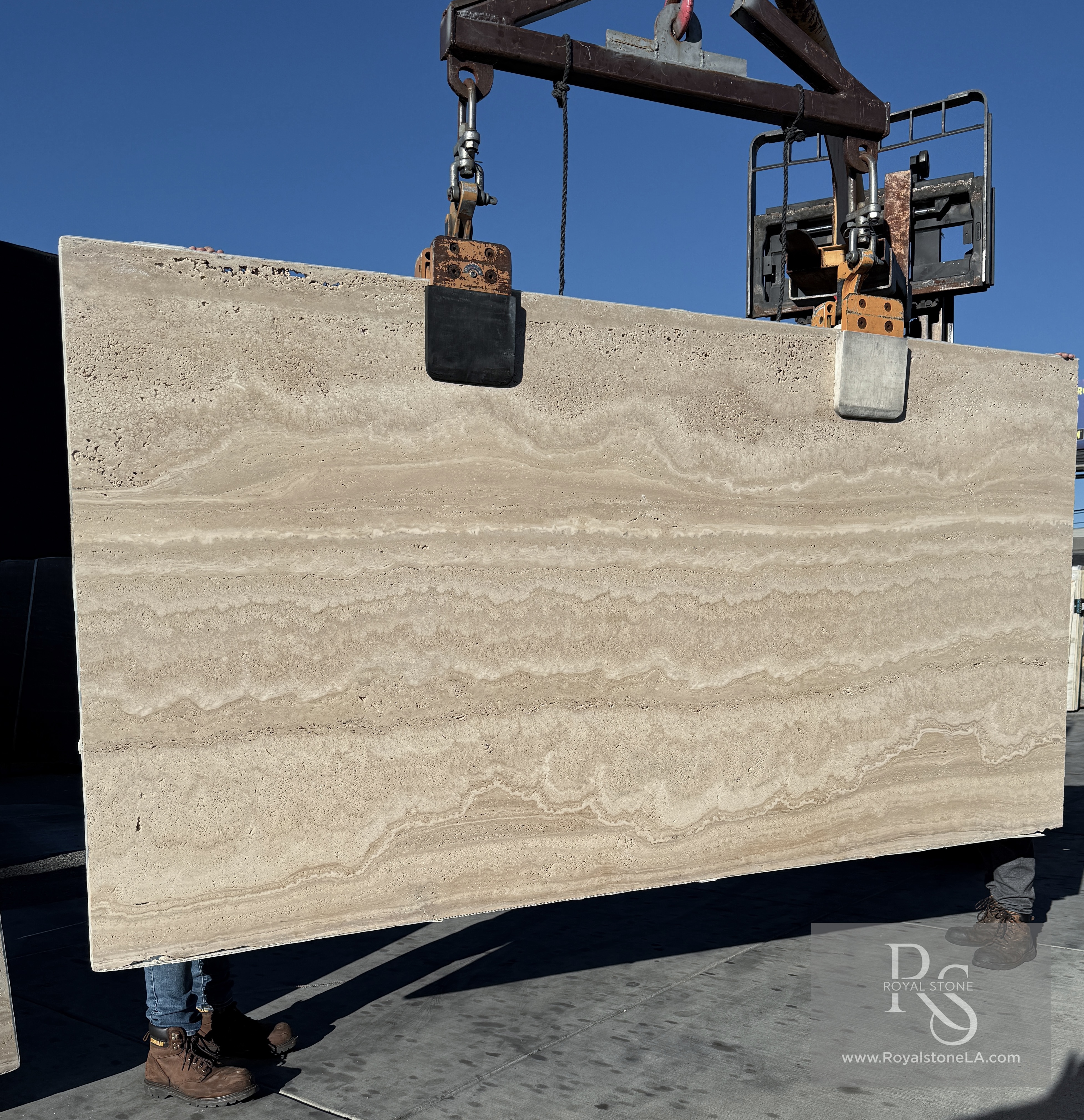
Slab Arrival
2cm Italian Ivory Travertine Vein Cut Unfilled 59" × 109"
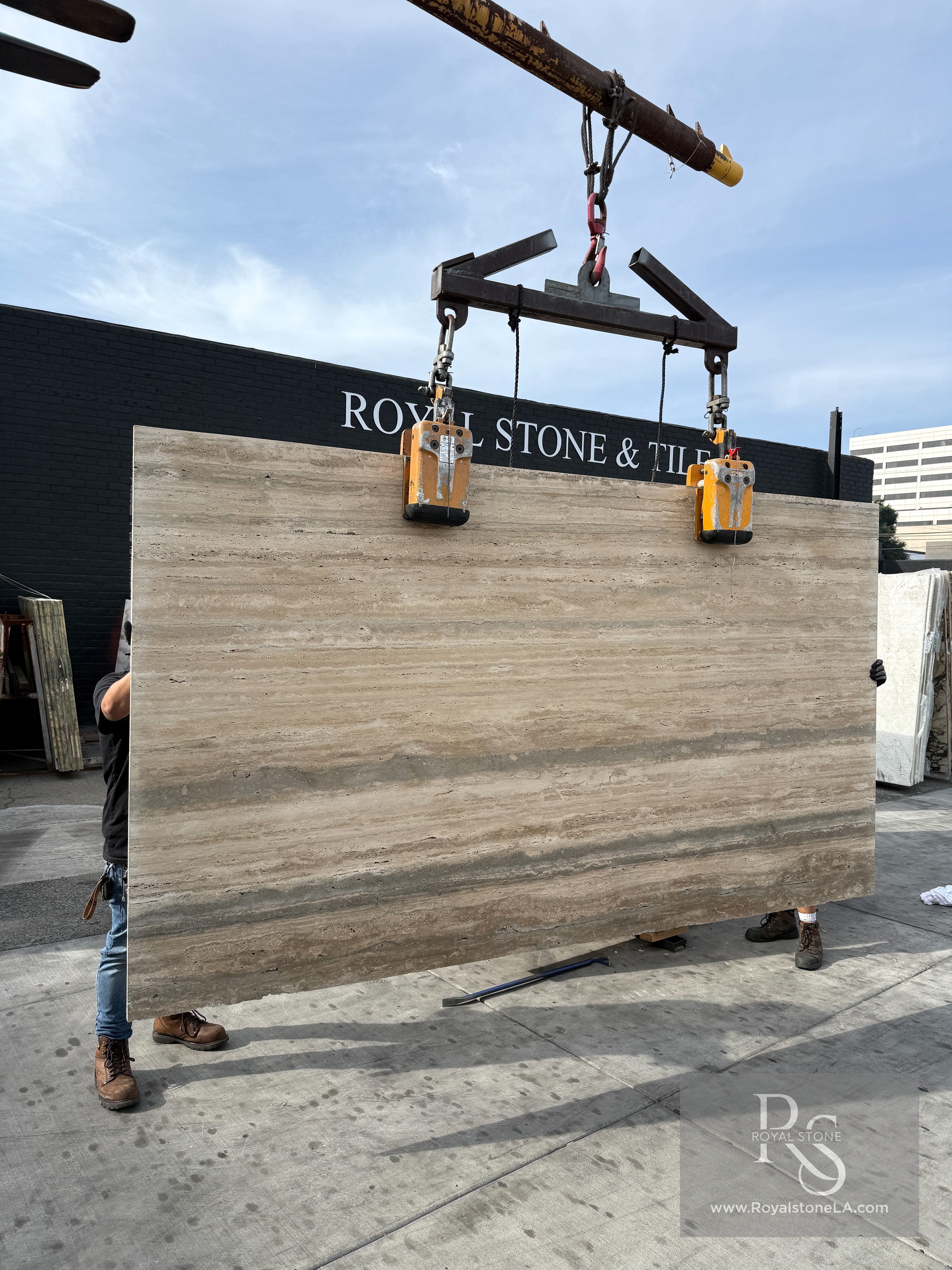
Slab Arrival
2cm Italian Silver Travertine Unfilled Vein Cut Honed 69" × 118"

Slab Arrival
2cm Italian Travertine Cross Cut Filled and Honed 72" × 110"
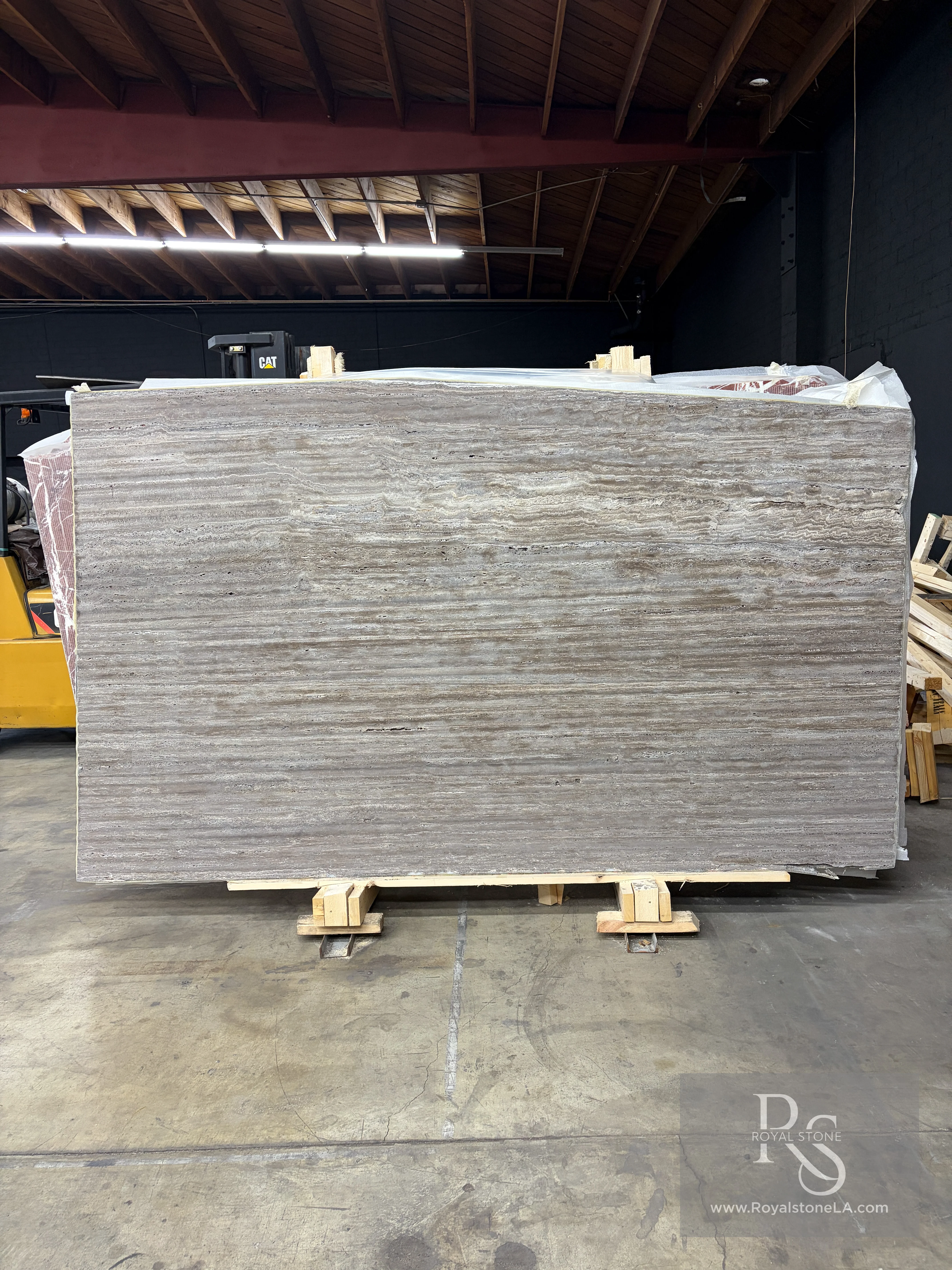
Slab Arrival
2cm Titanium Brown Travertine — Vein Cut, TEND 3D Finish, Unfilled

Slab Arrival
2cm Travertino Sandblasted Cemento Vein Cut Ivory 63" × 116"
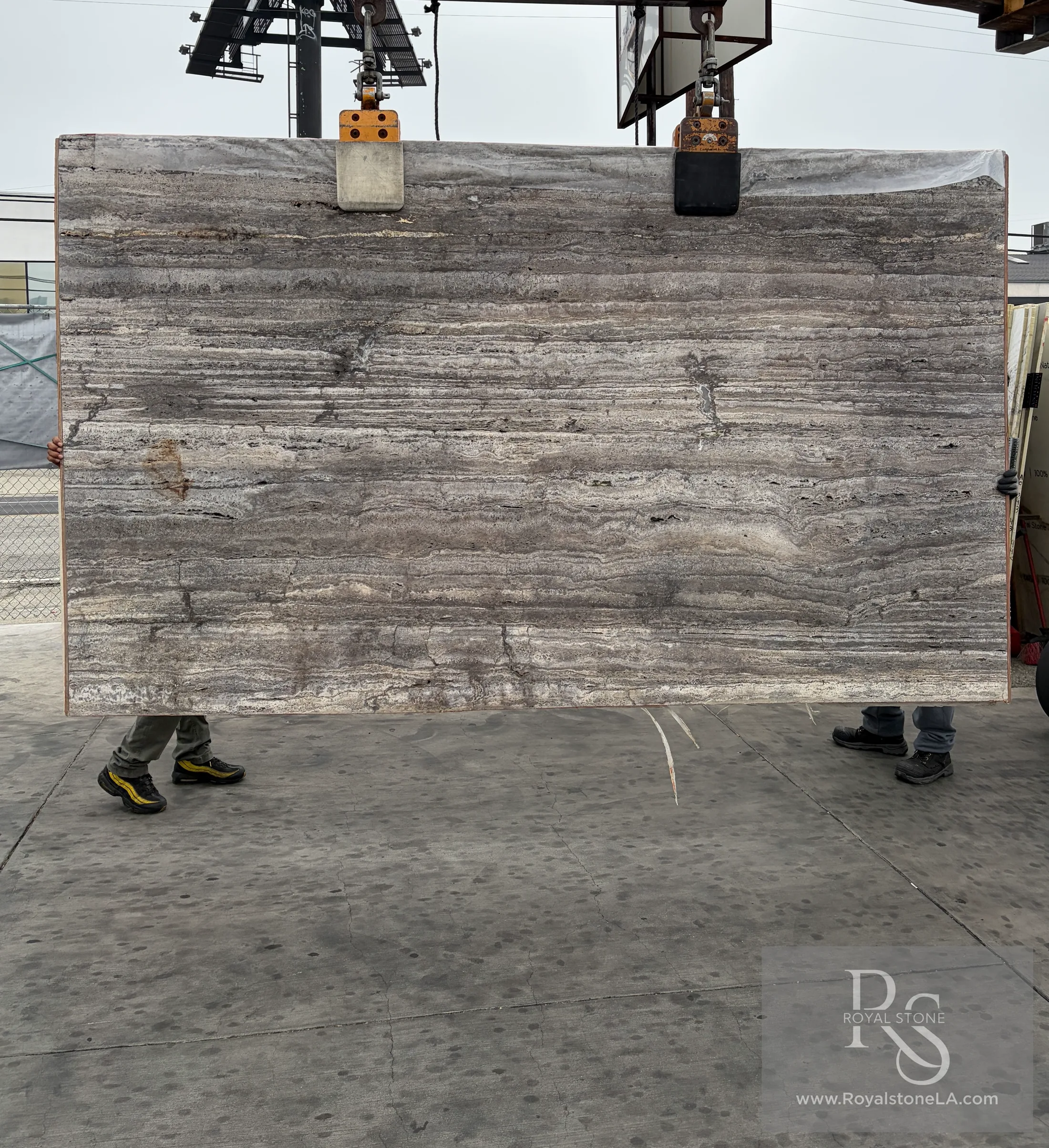
Slab Arrival
30 Slabs Now on the Floor · 2cm Travertino Titanium Charcoal Honed and Unfilled 73" × 122"
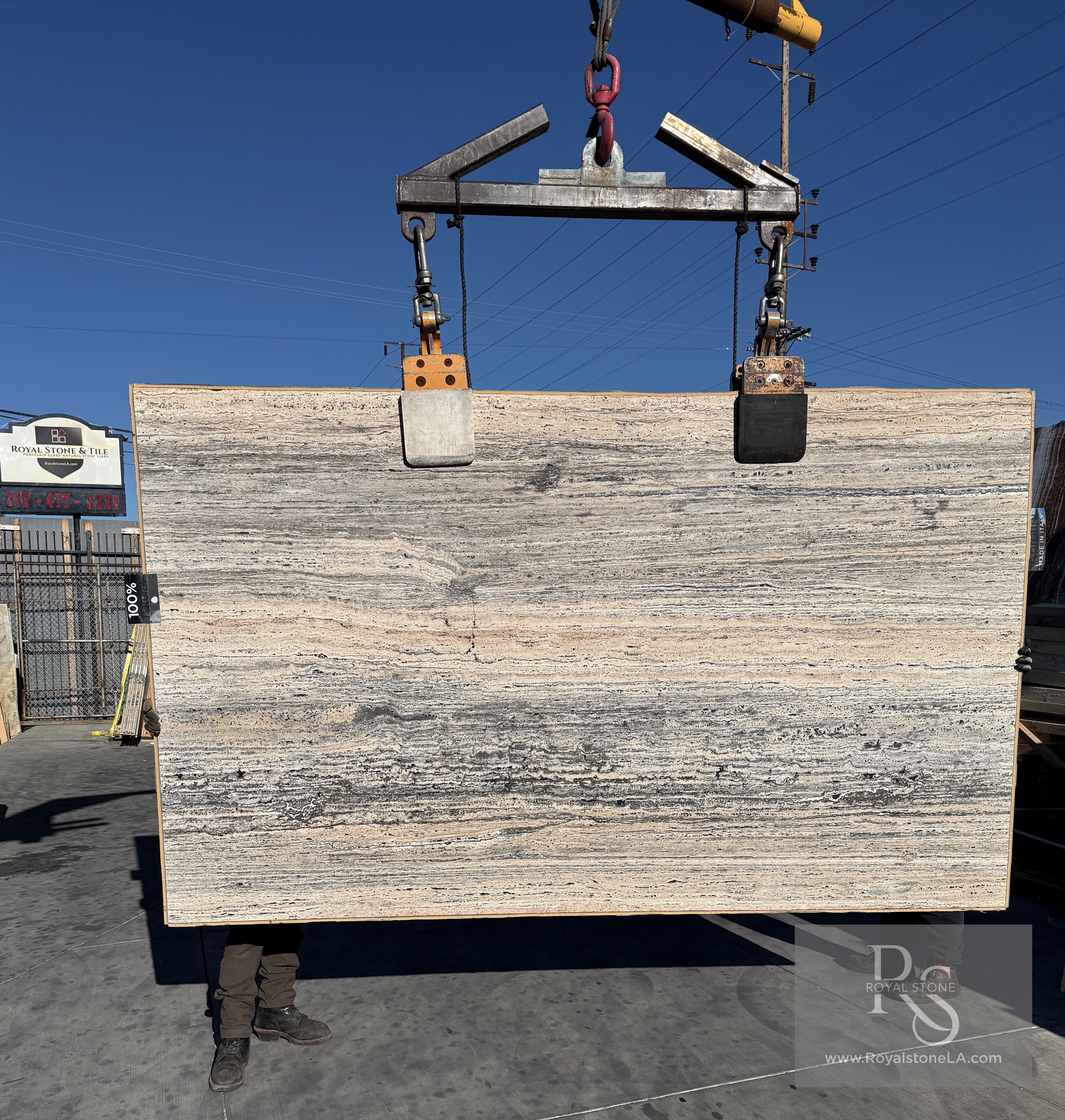
Slab Arrival
Antolini Black Fill Travertine
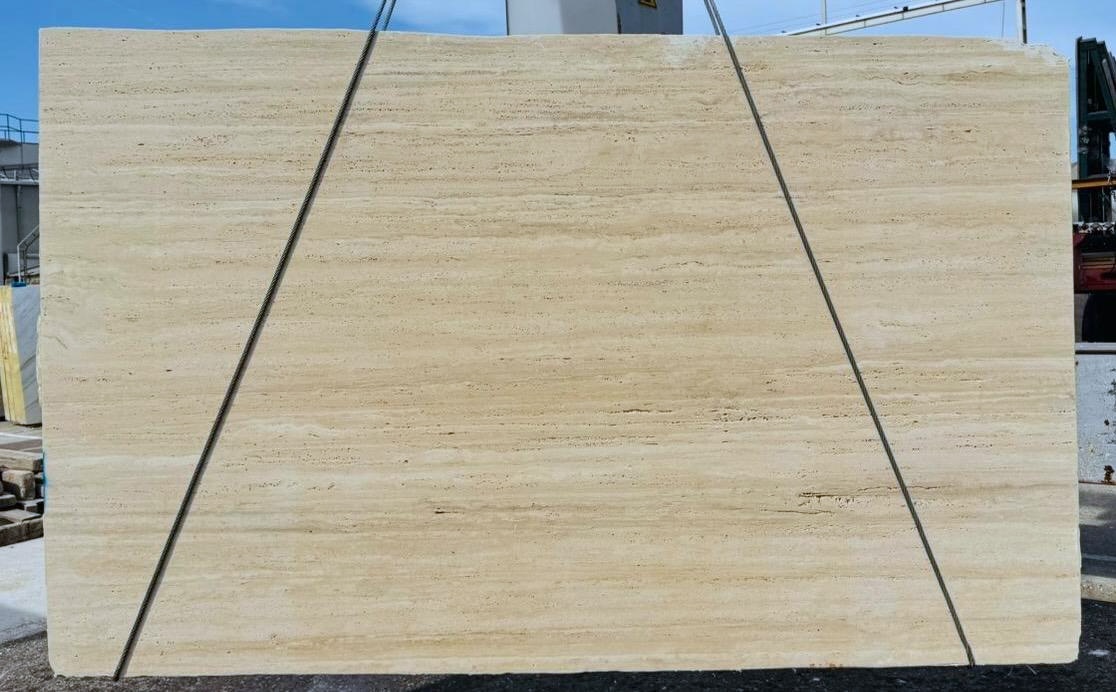
Slab Arrival
Antolini Ivory Petris Travertine — Vein Cut, Unfilled, Lot 15728

Slab Arrival
Antolini Travertine Premium Fluted 65″ × 114″
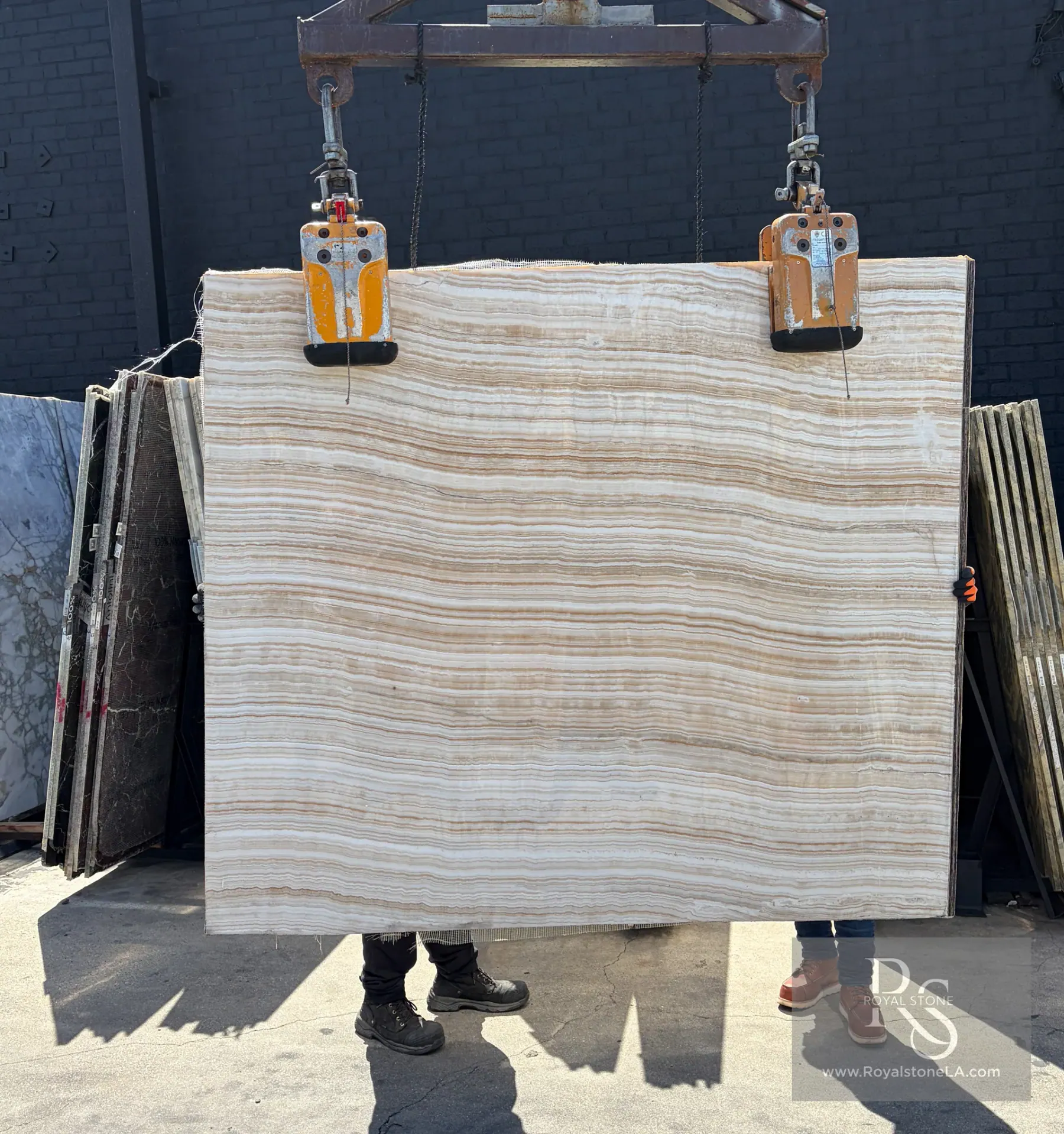
Slab Arrival
Bianco Ivory Linear White Onyx Polished 72" × 66"
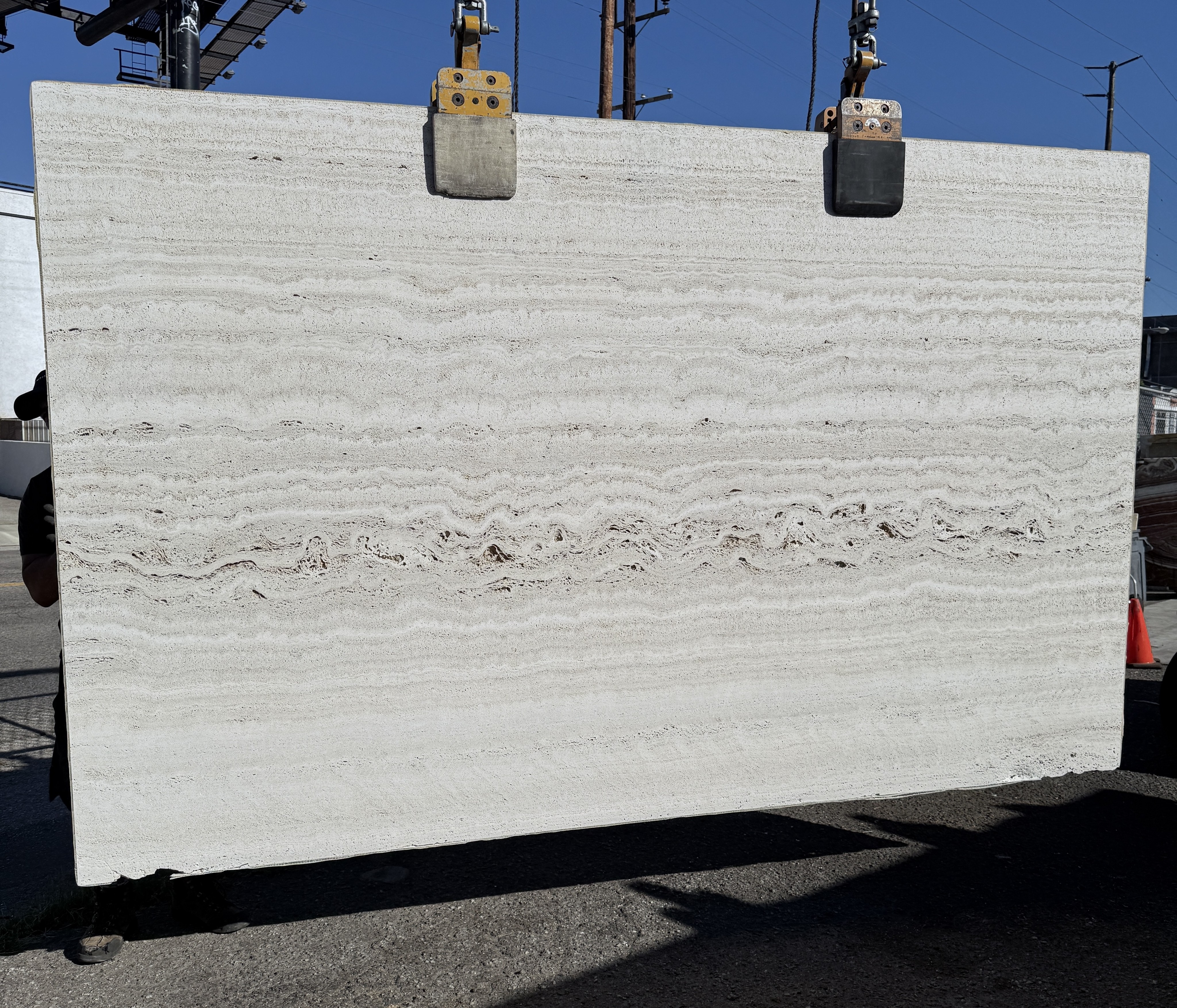
Slab Arrival
Henraux Italian Travertine Unfilled Sandblasted 76" × 123"
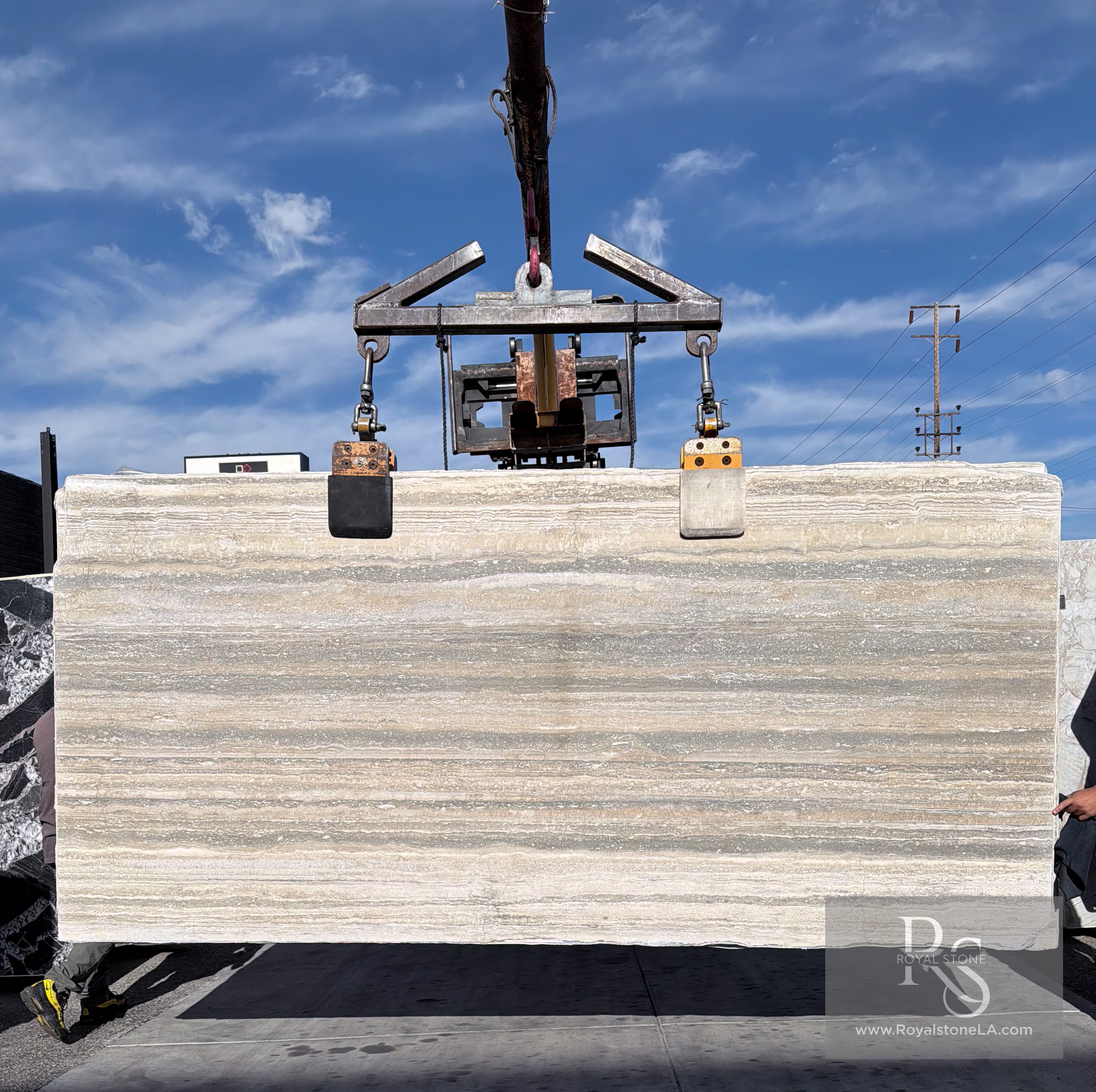
Slab Arrival
Silver Travertine Ocean Blue Filled Trav Henraux

Slab Arrival
Taupe Limestone Linear Leather 58" × 116"
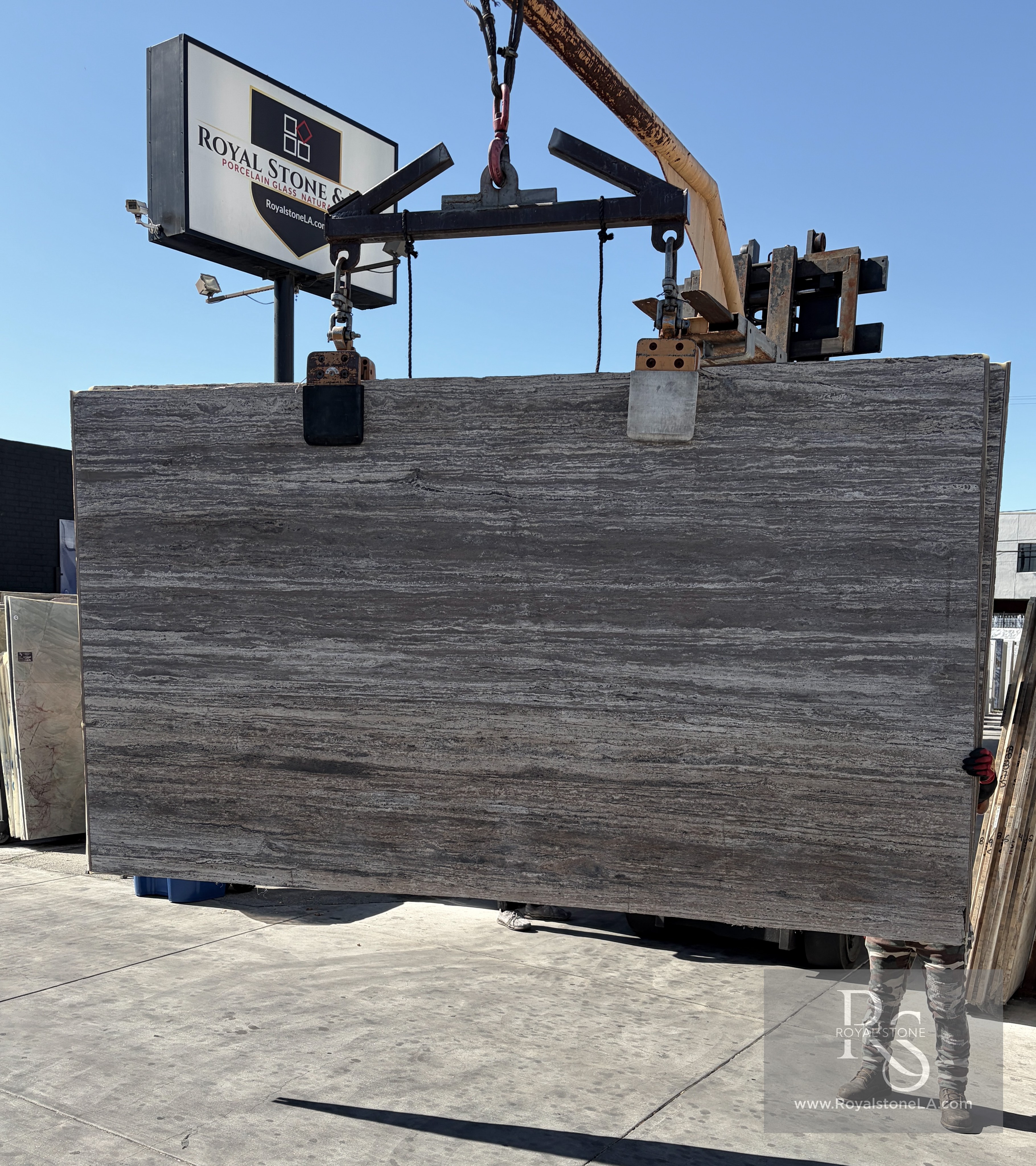
Slab Arrival
Travertino Titanium Honed and Filled

Slab Arrival
Vanilla Sage Vein Cut Onyx Polished 62" × 114"
Common Questions
Questions,answered.
- What is Roman Italian Travertine?
- Roman Italian Travertine pulls the classical cream register of the Tivoli family — the stone that has clad Roman basilicas, Italian entry halls, and American primary baths for two thousand years. Vein-cut presents the bedding lines parallel to the surface; filled closes the voids; honed brings the field to a clean contemporary matte.
- Where does Roman Italian Travertine work best?
- In the room where the brief is classical with contemporary discipline. A working kitchen span, a primary bath composed entirely of stone, a fireplace surround, a full-height feature wall. Pair with plaster, oak millwork, terracotta, a darker stone elsewhere as counterpoint.
- Is Roman Italian Travertine good for a working kitchen?
- Yes — filled-and-honed is the right finish for working kitchens. The slab forgives everyday etching better than marble does, and the honey cream register hides the small darkening that travertine sometimes picks up at the cut edges over years.
- How is Roman Vein Cut different from Classico Light?
- Both are Italian travertine slabs, but different cuts. Roman Vein Cut runs the bedding lines parallel to the surface — drawn as warm layered cream. Classico Light (cross-cut) runs the bedding lines perpendicular to the surface — drawn as cream cloud. Two different reads of Tivoli cream.
- How is Roman Vein Cut different from Antolini Platinum?
- Same family, different registers. Roman Vein Cut is the classical cream — the standard, the form of Tivoli cream you find on every classical wall. Antolini Platinum is the most committed register — warm cream and silver lines drawn across with contemporary discipline. Pick the register that fits the brief.
- How do I see Roman Italian Travertine in person?
- Royal Stone is at 2303 South Sepulveda Boulevard, West Los Angeles. Designers and private clients are welcome by appointment Monday through Friday. Call (310) 477-3223 and we will pull the slab for you.
Visit the Yard
Walk Roman Italian,
in daylight.
The classical cream register reads warmer and more contemporary in person than in any photograph — the slab is meant to live as classical material with contemporary discipline.