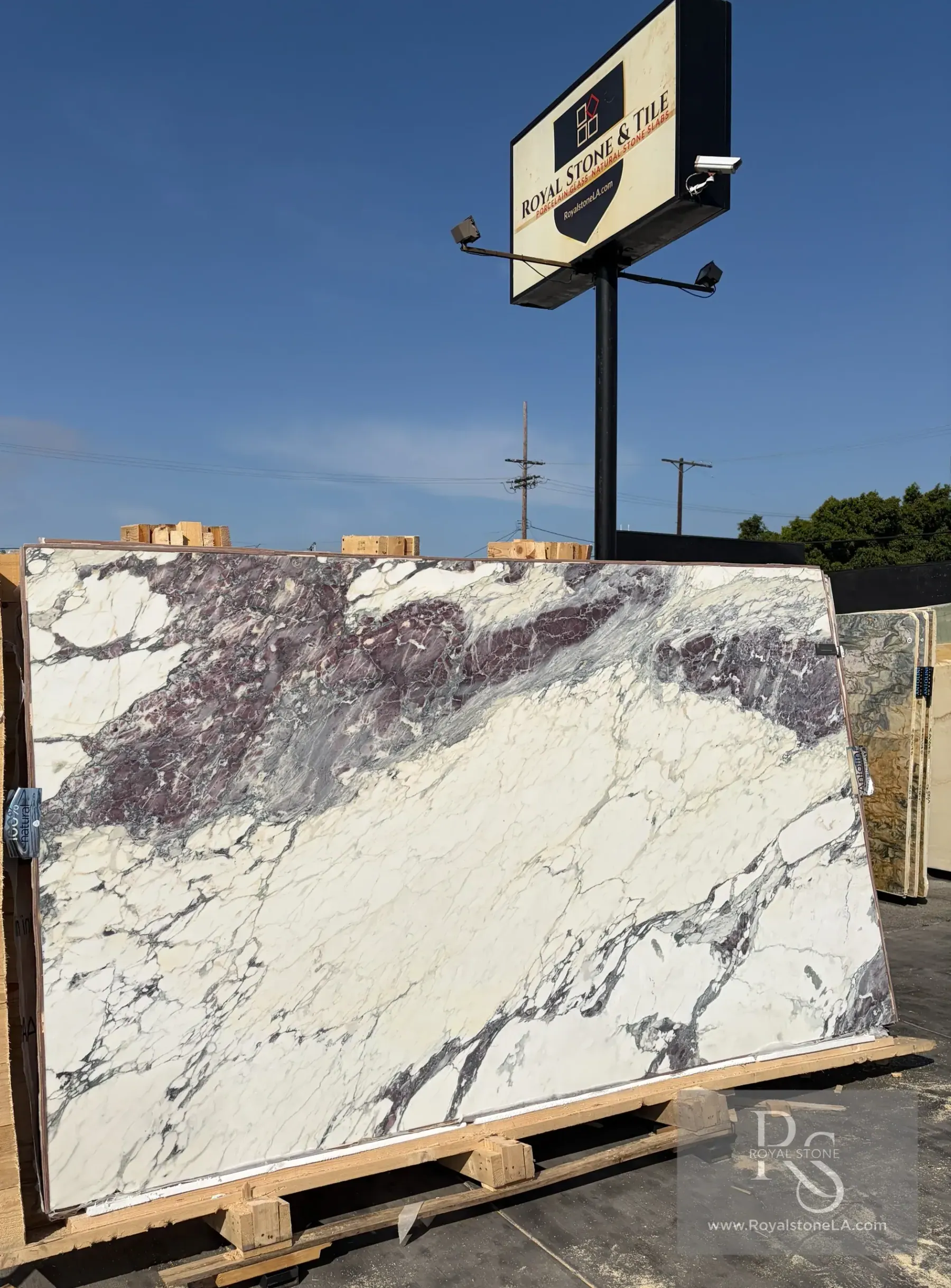
 Breccia Capraia
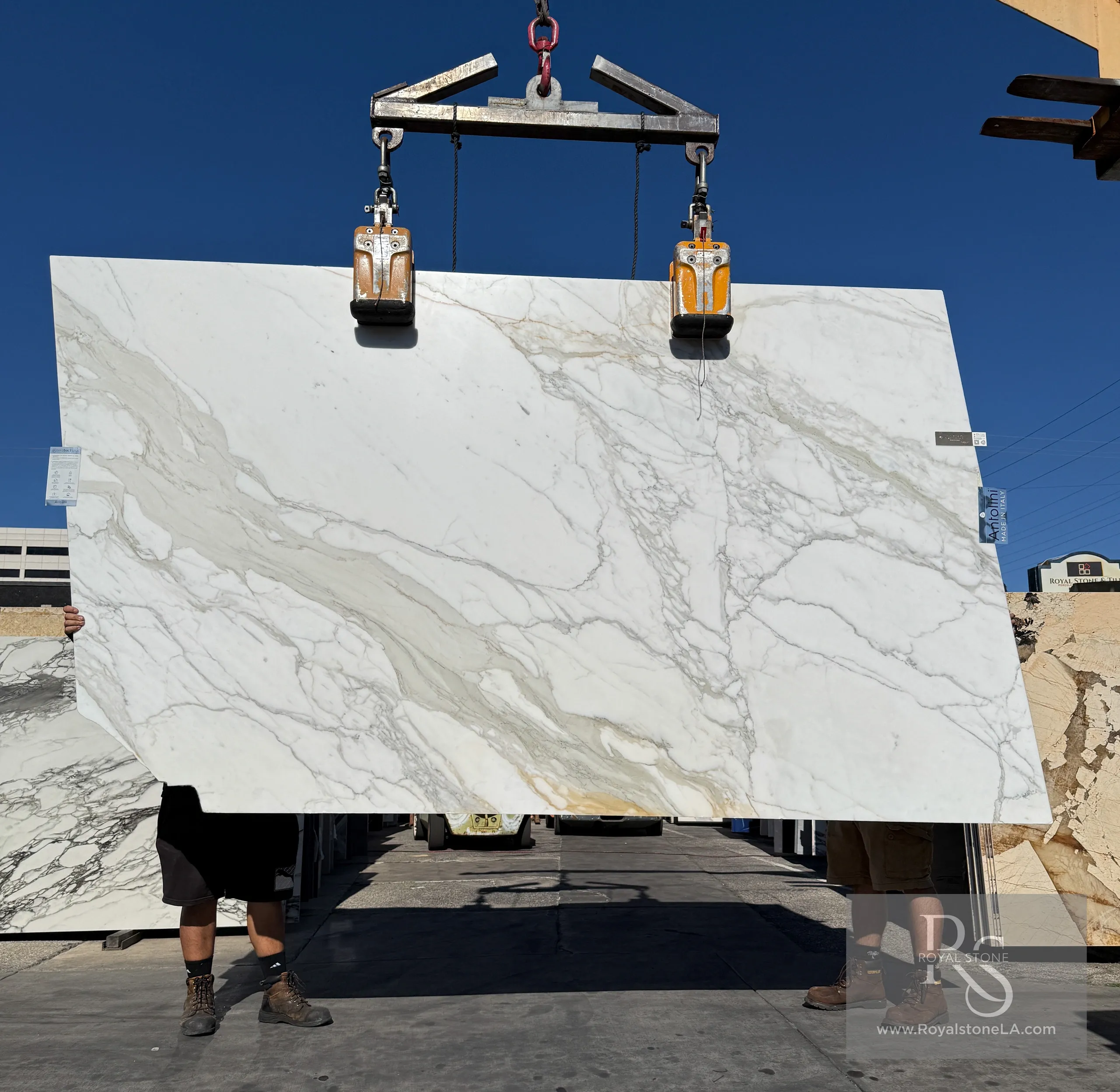 Calacatta
Marble · Side by Side
Breccia Capraia vs Calacatta.
Two Italian marble directions, and two very different ways for a slab to carry a room. Breccia Capraia is fragment and composition; Calacatta is field and vein. The useful decision is not which one is more dramatic. It is what the stone needs to do once it is cut into the architecture.
A Note on the Comparison
No. 001
Breccia is geology broken open. Calacatta is geology drawn out.
Breccia Capraia is defined by fragments: angular pieces of older stone broken and cemented back together under pressure. Calacatta is defined by the relationship between a bright field and the veins that cross it. Both are natural one-of-one materials, but the eye reads one as composition and the other as line.
That difference changes the specification. Capraia wants a clean architectural frame around it — restrained cabinetry, quiet plaster, a single dark counterpoint. Calacatta can settle into a larger material language, from a working kitchen in Borghini to a painterly bath or feature wall in Viola or Monet.
Read the actual slabs before choosing. A name describes the family; the block, lot, finish and sequence decide what the room will receive.
At a Glance
Choose the movement
the room can hold.
- Structure
- Breccia CapraiaFragment marble. Older pieces of stone were broken and cemented by finer mineral, so the field reads as angular clasts held in a matrix.
- CalacattaCalcite marble with a cleaner continuous field crossed by mineral veining. The pattern reads as line, wash or branch rather than fragment.
- Field
- Breccia CapraiaIvory, rust, burgundy, violet and deep green vary by block. The color relationship is the composition.
- CalacattaWhite to ivory, with the field changing from cool Borghini to warmer Gold, Viola and Monet registers.
- Movement
- Breccia CapraiaAngular and architectural. Capraia can run diagonally across a slab like a finished painting.
- CalacattaLinear to painterly. Borghini draws a classical vein; Monet softens it to a wash; Viola adds saturated violet and brecciated passages.
- Finish
- Breccia CapraiaHoned keeps the fragments matte and monumental. Polished pushes the clasts toward spectacle.
- CalacattaHoned quiets the field for daily interiors; polished saturates the veining; selected Antolini programs add fluted and leathered surfaces.
- Best read
- Breccia CapraiaA single sculptural moment: feature wall, fireplace, bookmatched bath, statement island or bar front.
- CalacattaA broader range of rooms: kitchen, bath, fireplace, full-height wall, vanity or a quieter whole-home material language.
- Scale & sequence
- Breccia CapraiaThe lot matters. A 73″ × 130″ Ultimate slab can read as one composition; matched pairs must be planned from the actual block.
- CalacattaLarge formats are common, and linear or painterly lots can be sequenced or bookmatched once the actual slabs are selected.
- Care
- Breccia CapraiaA true marble. It can etch and scratch, so the finish, edge detail and maintenance routine should be reviewed before fabrication.
- CalacattaAlso a true marble with the same calcite maintenance profile. Honing is the quieter working finish; the selected slab should guide the application.
- Decision
- Breccia CapraiaChoose Capraia when the stone is meant to carry the room and the fragment pattern is the architecture.
- CalacattaChoose Calacatta when the room needs a white marble ground with a more controlled line, wash or classical vein.
Common Questions
The practical
read.
- Is Breccia Capraia a Calacatta marble?
- No. Both are Italian marbles, but Breccia Capraia is a fragment marble with angular clasts held in a mineral matrix, while Calacatta is a calcite marble with a more continuous white-to-ivory field and mineral veining.
- Which is better for a kitchen, Breccia Capraia or Calacatta?
- The decision is about the room as much as the material. Calacatta offers a broader range of quieter white-marble readings; Breccia Capraia is the stronger statement when the island or wall is meant to carry the composition. Both are true marbles and can etch with use.
- Can both stones be bookmatched?
- Yes, when the block and sequence support it. Breccia Capraia is especially dependent on the actual lot because the fragments need to be composed across the seam; Calacatta bookmatches according to the vein or painterly wash.
- How do I compare Breccia Capraia and Calacatta in person?
- Royal Stone is at 2303 South Sepulveda Boulevard, West Los Angeles. Call (310) 477-3223 to arrange a visit and we will pull current Capraia and Calacatta lots so you can read the fields at full scale.
Visit the Yard
Read the actual stone,
at full scale.
Walk Breccia Capraia and Calacatta side by side in daylight. Bring the elevations, cabinetry samples or finish board and we’ll help you select the lot, sequence and finish that belongs to the room.