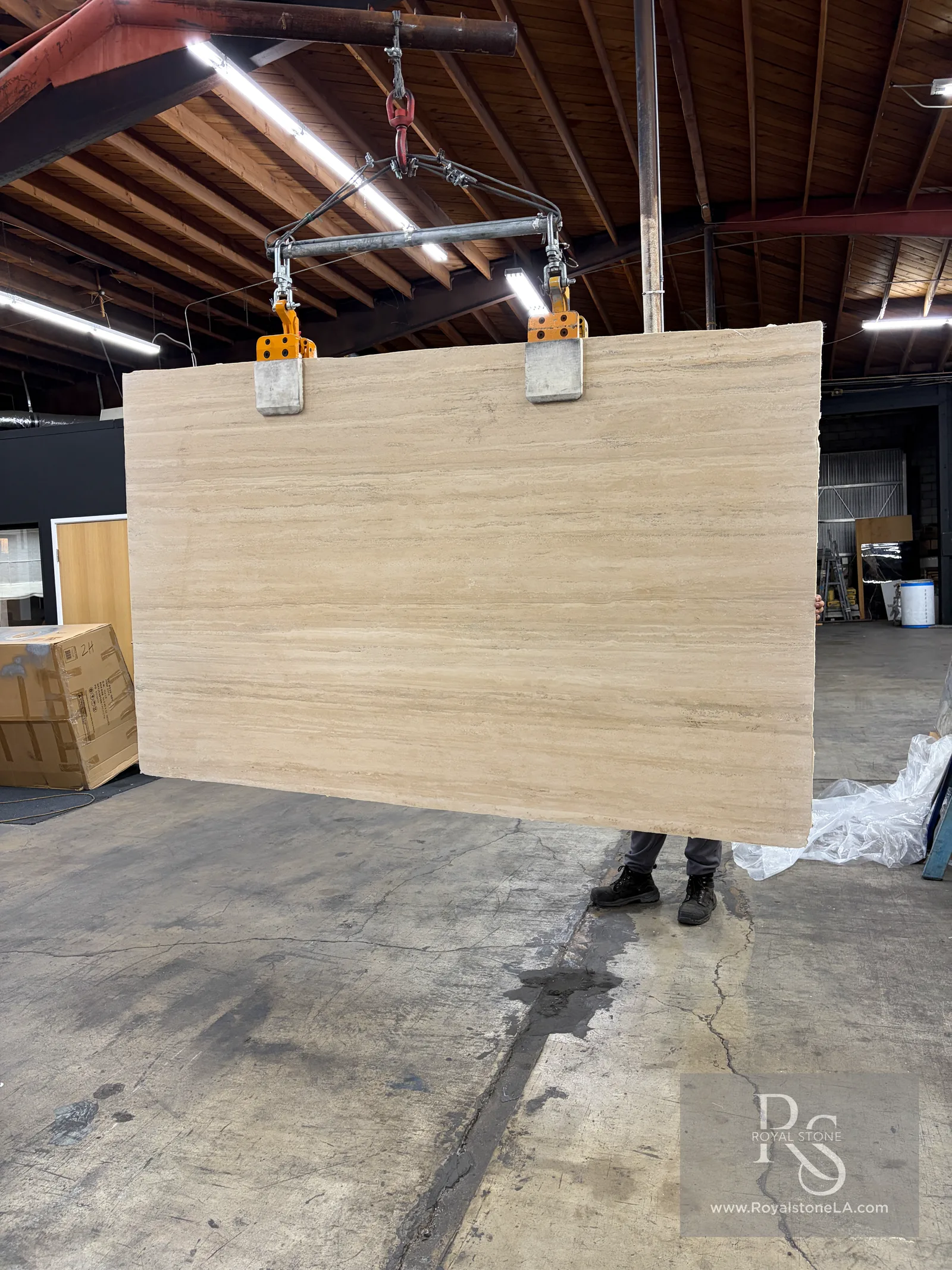
 Vein Cut
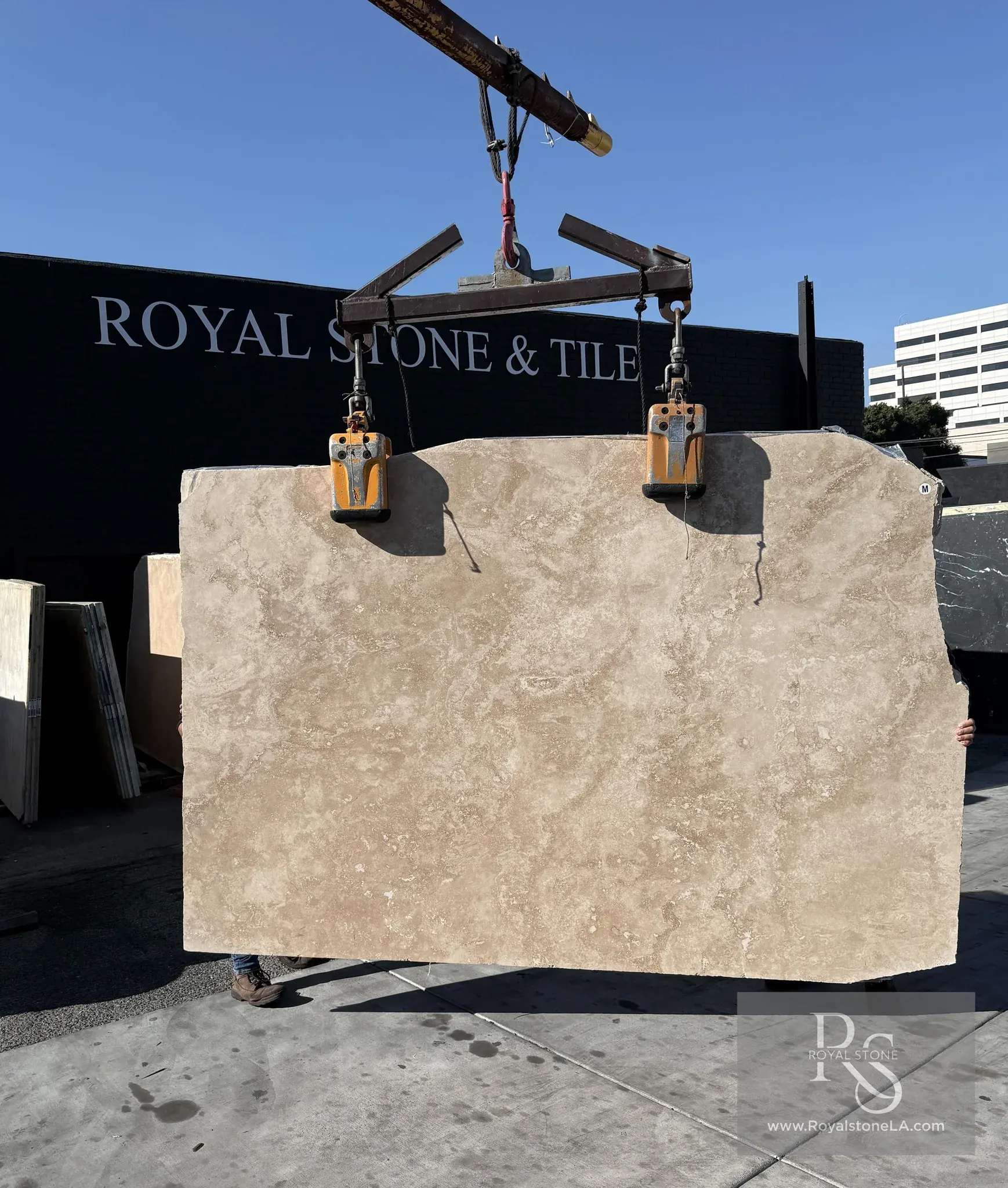 Cross Cut
Travertine · Side by Side
Vein cut vs cross cut.
The same Tivoli family can make two completely different rooms. Vein cut presents the bedding as long architectural lines. Cross cut opens the stone into a softer field of cream, sand and mineral cloud. Start with the room, then choose the cut.
A Note on the Comparison
No. 001
Cut is not a finish. It is the direction of the stone’s memory.
Travertine is built in layers. Vein cutting reads those layers in the same direction they were deposited, turning the bedding into a continuous line. Cross cutting turns across the layers and lets the surface resolve into the small clouds, pockets and mineral shifts that sit inside the deposit.
Neither is the universal choice. A vein-cut wall can extend a narrow room and make a fireplace feel architectural. A cross-cut kitchen can settle beside oak and plaster without adding another strong line. Fill and finish then decide how natural or composed the final face will feel.
The honest read is at full scale. Bring the elevations and light samples; the yard makes the distinction legible before fabrication.
At a Glance
Choose the direction
the room can hold.
- Cut
- Vein cutThe block is opened along the bedding plane, so the sedimentary lines run parallel to the slab face.
- Cross cutThe block is opened perpendicular to the bedding plane, so the layers resolve into a softer field of cloud-like passages.
- Pattern
- Vein cutLong, directional bands of cream, ivory, sand, silver or taupe. The line becomes part of the architecture.
- Cross cutCalm, dispersed movement with rounded mineral pockets and cloud-like shifts. Less directional, more atmospheric.
- Fill
- Vein cutCan be filled for a continuous interior face or left unfilled when the natural voids are part of the brief.
- Cross cutUsually filled and honed for working interiors; unfilled variants keep the open, vugged character of the stone.
- Finish
- Vein cutHoned, leathered, Stratos and sandblasted each change how strongly the line catches light and hand.
- Cross cutHoned softens the cloud pattern and lets the warm field sit quietly beside plaster, oak and brass.
- Best applications
- Vein cutFireplace surrounds, full-height walls, long vanities, kitchen islands, wainscot and exterior cladding where direction matters.
- Cross cutQuiet kitchens, spa baths, floors, fireplace surrounds and rooms that need a textural ground rather than a graphic stripe.
- Light
- Vein cutRaking light emphasizes the bedding lines and makes the wall read longer and more architectural.
- Cross cutEven or warm light lets the surface read as a soft mineral field; the pattern changes less dramatically with direction.
- Decision
- Vein cutChoose vein cut when the room wants line, continuity and a clear relationship between adjacent slabs.
- Cross cutChoose cross cut when travertine should feel calm, generous and less directional across the room.
Common Questions
The practical
read.
- What is the difference between vein-cut and cross-cut travertine?
- Vein cut opens the block along its bedding plane, presenting the sedimentary layers as long lines across the slab. Cross cut opens the block perpendicular to those layers, revealing softer cloud-like passages and mineral pockets.
- Which travertine cut is better for a fireplace wall?
- Both can work. Vein cut gives a fireplace wall strong architectural direction and can run the lines across the room. Cross cut gives a quieter, more atmospheric field. The decision usually follows the scale of the wall and the other lines in the architecture.
- Is vein-cut travertine more expensive than cross-cut?
- Pricing varies by quarry, grade, finish, slab size and current lot. The cut alone does not establish a price; compare the actual slabs and the finish required for the application.
- Should travertine be filled and honed?
- Filled-and-honed is the practical register for many interior working surfaces because filling closes the natural cavities and honing keeps the face matte. Unfilled and sandblasted are useful when the natural voids and tactility are part of the design, especially on cladding and exterior work.
- How do I compare the two cuts in person?
- Royal Stone is at 2303 South Sepulveda Boulevard, West Los Angeles. Call (310) 477-3223 to arrange a visit and we will pull current vein-cut and cross-cut travertine so you can read the difference in daylight.
Visit the Yard
See the difference
before fabrication.
Walk current vein-cut and cross-cut slabs in daylight, then review fill, finish and sequence against the elevations with the Royal Stone team.