Italian Ivory Travertine
The warmest cream register of the Tivoli family. Vein-cut bedding runs as a long horizontal current, while the unfilled face keeps the natural voids open — a travertine that reads as warm material rather than polished stone.
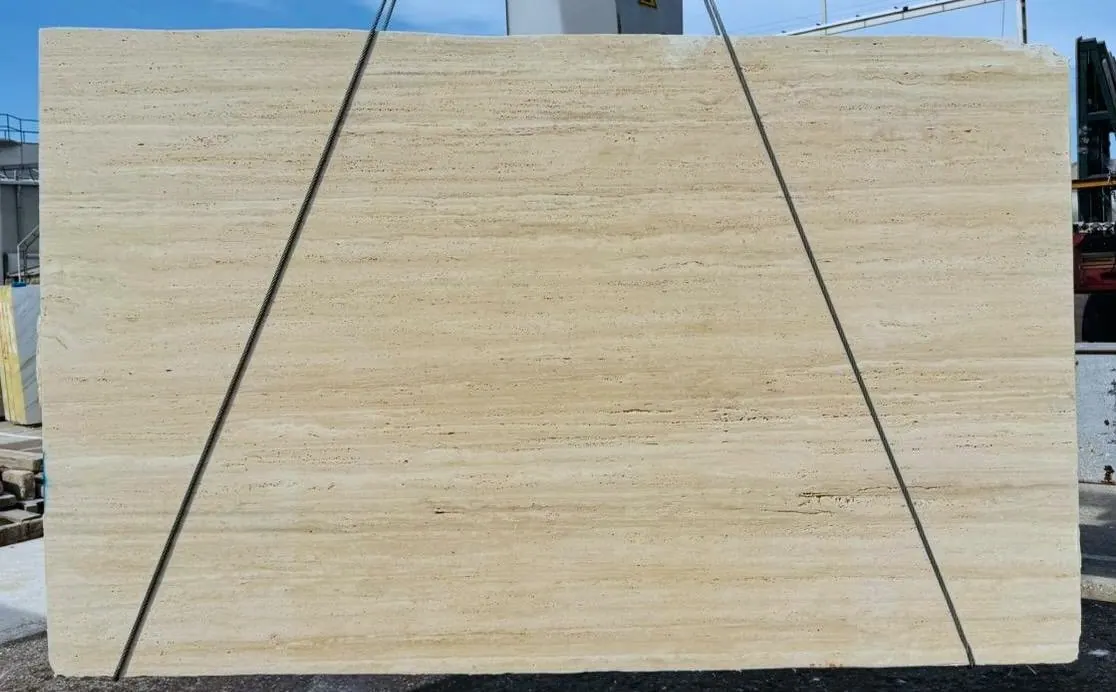
Antolini Ivory Petris · Vein Cut · Unfilled
On Italian Ivory
No. 04.2
Quarried in Tivoli, Italy. The register ranges from warm cream and oat to softer ivory; fill and finish decide how natural or composed the face becomes.
Italian Ivory is the warm end of the Roman travertine vocabulary — cream, oat and the faint blush that Tivoli stone has carried through classical architecture. Vein cutting presents the bedding lines as layered horizontal movement; leaving the face unfilled preserves the natural open pores and the stone’s tactile depth.
Filled-and-honed Ivory brings the same warmth into a cleaner working plane, while unfilled Petris and related lots keep the vugged register visible. The family belongs beside lime plaster, terracotta, oak and warm metal, where the small changes in tone can read as material rather than decoration.
Use it for a full-height bath composition, library or fireplace wall, powder room, warm exterior cladding or a quieter floor-to-wall gesture. We’ll pull the selected lot into daylight and show the difference between filled, unfilled, honed and sandblasted before you specify it.
Tivoli
Quarry
2cm
Standard Gauge
Warm
Cream Register
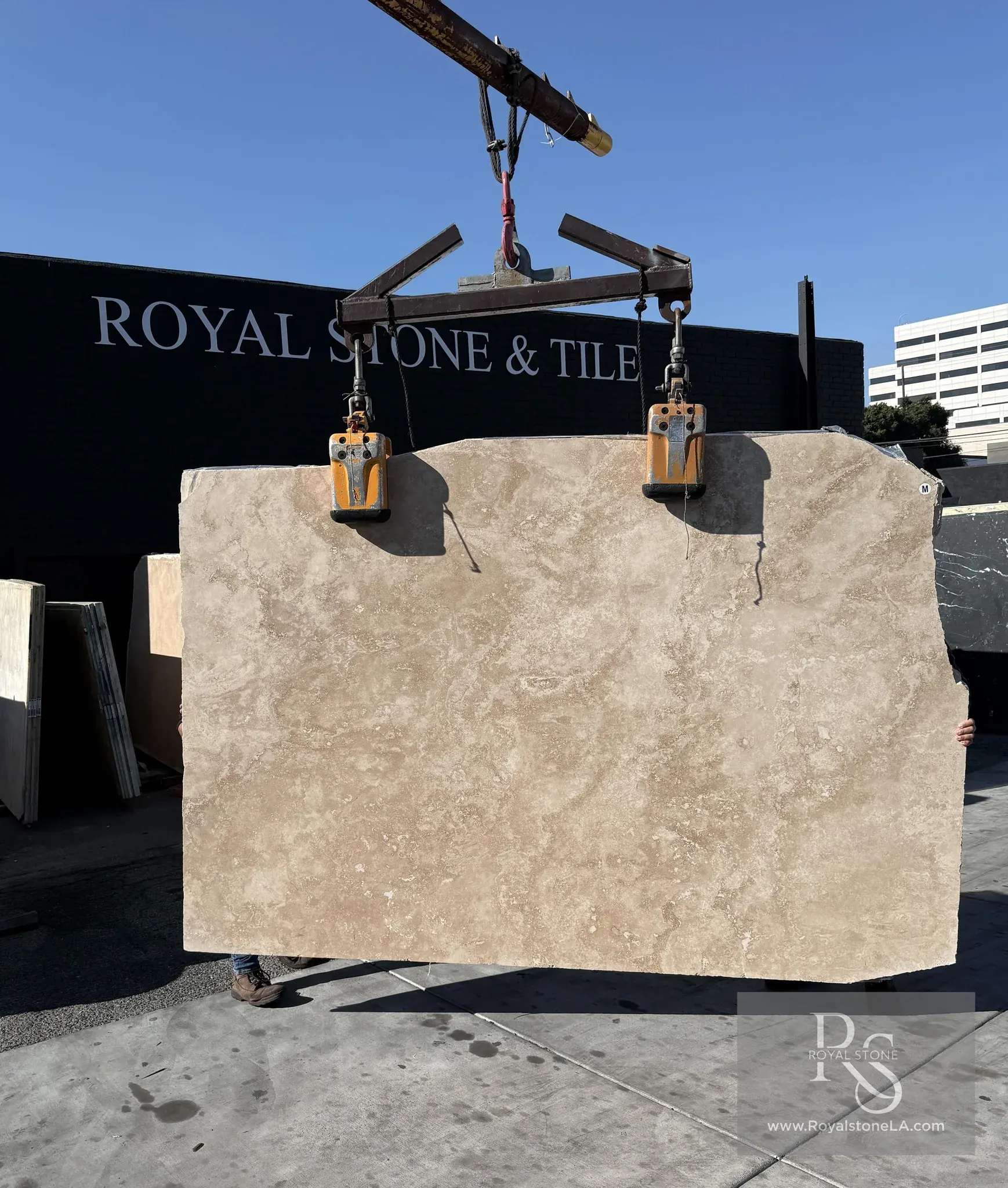
Side by Side
Vein cut or cross cut?
Start with the room.
The cut changes the entire read of Italian Ivory — long horizontal bedding lines against the softer cloud of a cross cut — before fill and finish refine the surface.
Read the comparisonItalian Ivory · Current Lots
Italian Ivory,
currently on the floor.
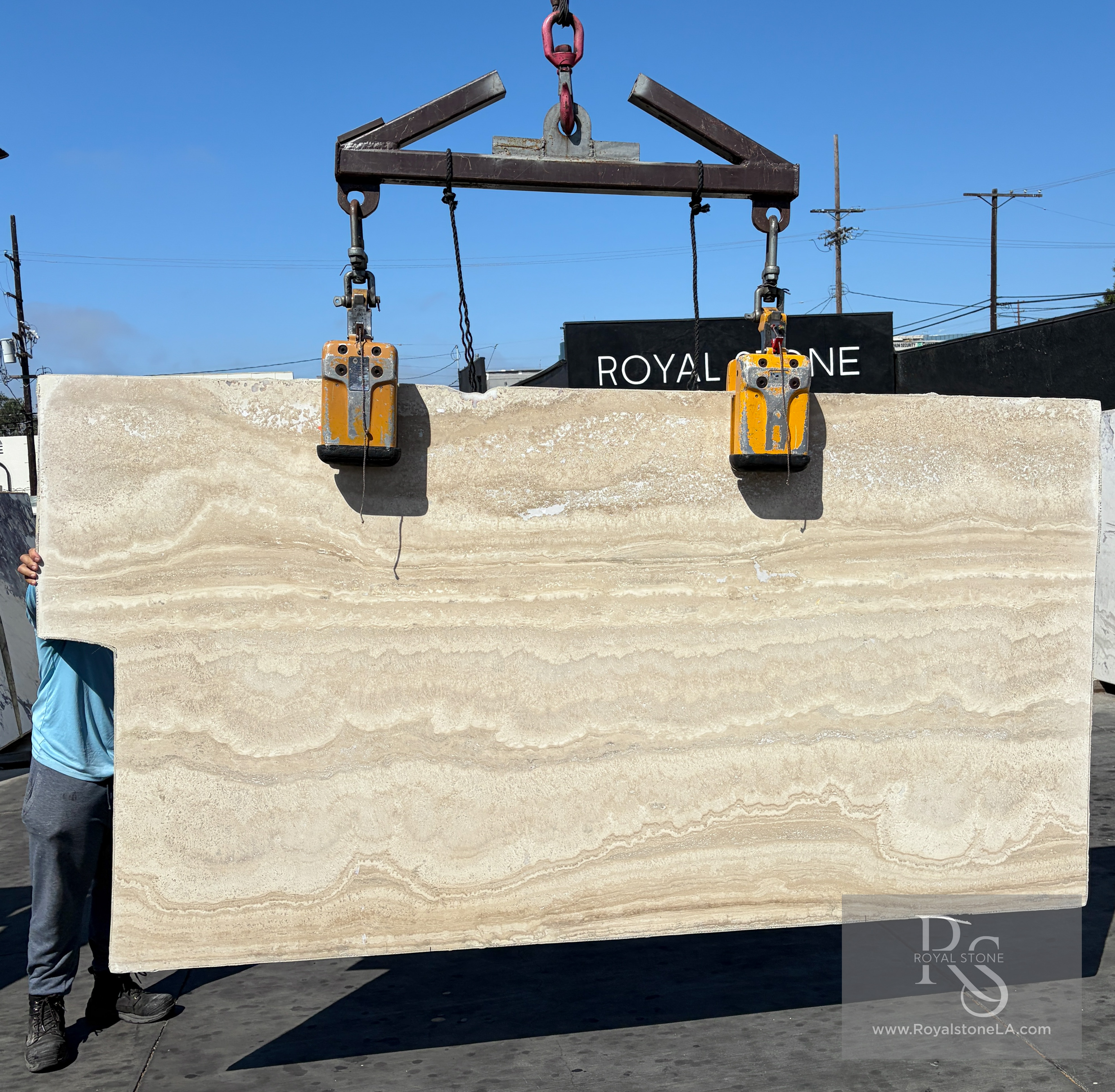
Warm Ivory Travertine in vein-cut, filled, honed and unfilled registers. Open any slab for its current photographs and specifications.
Showing 2 of 2 slabs
Common Questions
Italian Ivory
questions, answered.
- What is Italian Ivory Travertine?
- Italian Ivory is the warmest cream register of the Tivoli travertine family. Vein-cut slabs show long layered bedding lines; unfilled slabs leave the natural voids open, while filled-and-honed slabs close the cavities for a cleaner working surface.
- Where does Italian Ivory Travertine work best?
- It is suited to warm full-height bath and library compositions, fireplace walls, powder rooms, exterior cladding and quieter floors. Pair it with lime plaster, terracotta, oak and warm metal so the natural tone remains the material focus.
- Should Italian Ivory Travertine be filled or unfilled?
- Choose filled-and-honed when the surface needs to read as a continuous working plane. Choose unfilled or sandblasted when the natural cavities and tactile vugged register are part of the design, especially on vertical or exterior work.
- How is Italian Ivory different from Classico Light?
- Classico Light is the more neutral classical cream register. Italian Ivory is warmer and softer, with the natural voids or warm cream movement carrying more of the composition. The actual slabs should be compared in daylight.
- How do I see Italian Ivory Travertine in person?
- Royal Stone is at 2303 South Sepulveda Boulevard, West Los Angeles. Call (310) 477-3223 and we will pull current Ivory lots for a daylight comparison.
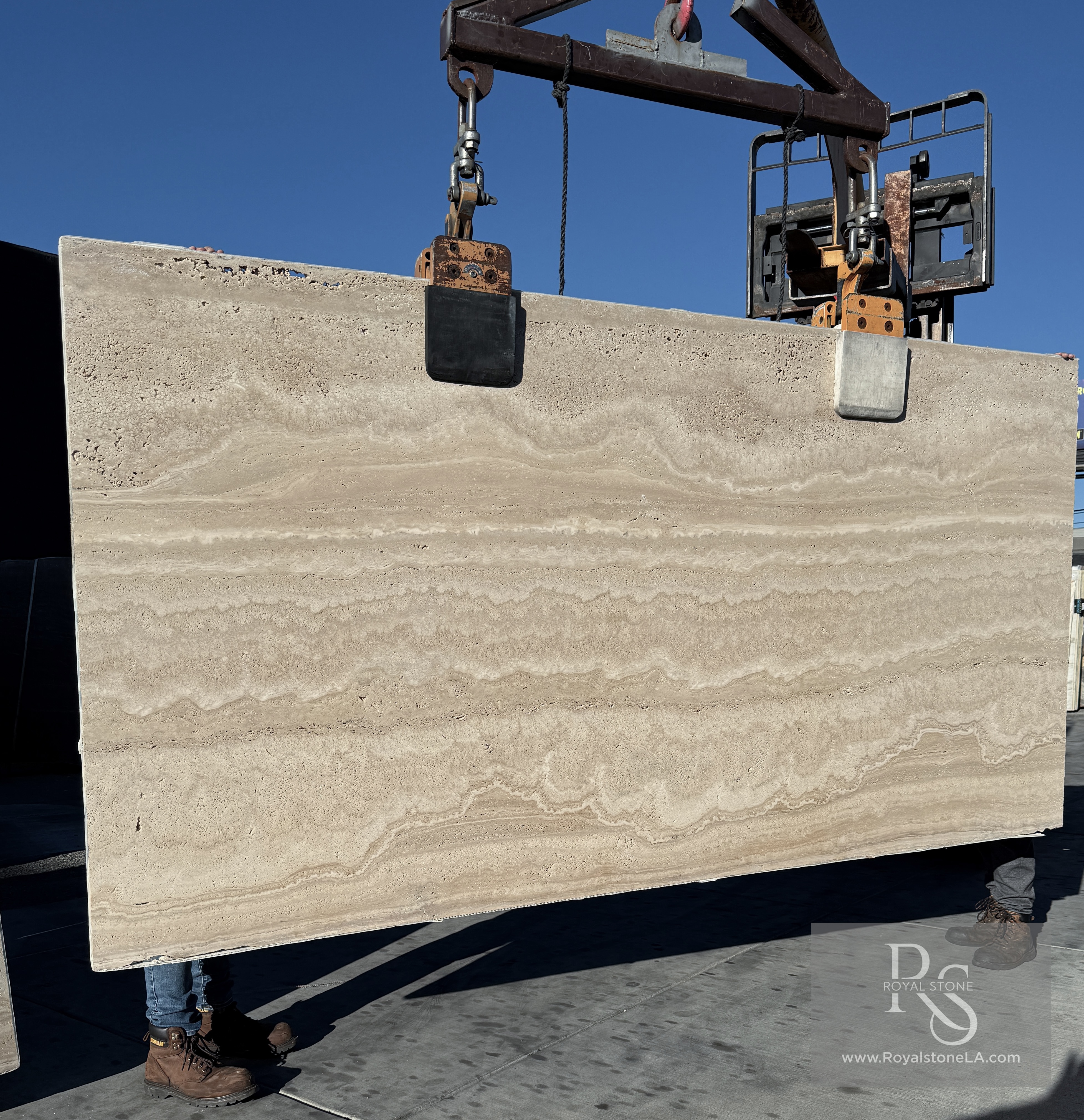
Current Photos · Ivory Travertine on the Floor
Warm cream,
with the voids open.
Current photographs from the yard — Antolini Ivory Petris and a current Italian Ivory slab. Read the linear bedding, warm register and open pore structure before choosing the finish.
Plan the Material
See the Italian Ivory lot
before you specify it.
Color, movement, finish, and scale change from lot to lot. Ask for current photographs or arrange a visit to review the actual piece with the Royal Stone team.